What is ABS Filament? A Guide for Digital Design and Hardware Engineers
What is ABS filament? This article explores the properties and applications of this robust thermoplastic.

22 Oct, 2025. 8 minutes read
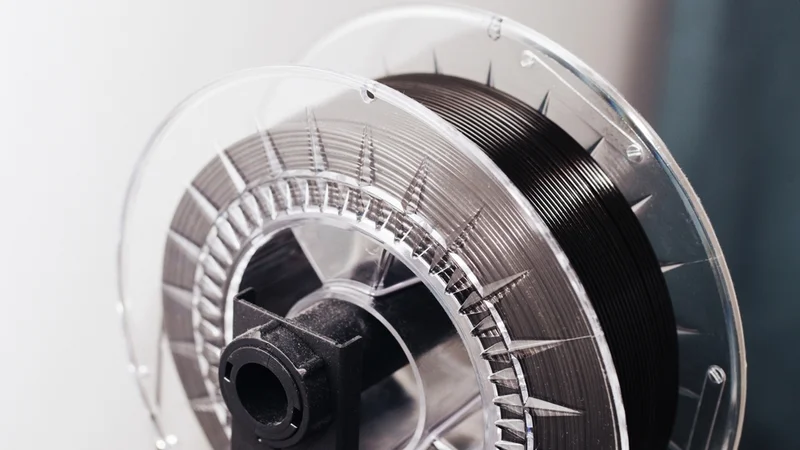
What is ABS filament and why is it so popular? Despite its notorious odor during printing, acrylonitrile butadiene styrene remains a cornerstone of fused deposition modelling (FDM) due to its balance of strength, toughness, and machinability.
This article goes over the basics of ABS filament, answering key questions such as: How does the chemistry of ABS influence performance of printed parts? When should engineers choose ABS over other low-cost materials like PLA or PETG? And what safety precautions are required during printing?
During the article, we aim to combine theoretical concepts with practical guidance. So whether you are designing ABS circuit housings, jigs, or robotic components, you will have the knowledge to optimize your designs.
The Chemistry of ABS Filament
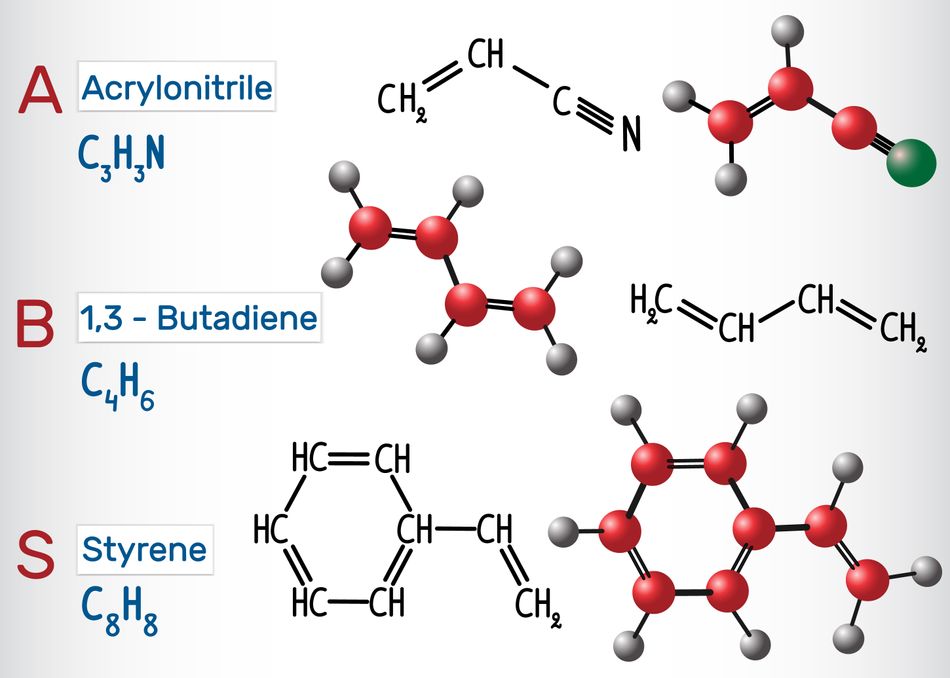
Acrylonitrile butadiene styrene (ABS) is one of the most widely used thermoplastics in 3D printing and traditional manufacturing. Its popularity comes from a balance of toughness, processability, and thermal resistance that can be tuned through its unique chemical structure.
Terpolymer Structure
ABS is a terpolymer synthesized by polymerizing three monomers: acrylonitrile, butadiene, and styrene. During polymerization, acrylonitrile and styrene form the rigid matrix, while polybutadiene elastomer particles are grafted onto this matrix.[1] Adjusting the proportion of each component tailors properties:
Acrylonitrile contributes chemical resistance and thermal stability.
Butadiene imparts toughness and impact resistance.
Styrene provides rigidity and improved processability.
These monomers are typically derived from petrochemical feedstocks such as propylene, butadiene, and ethylbenzene through steam cracking and dehydrogenation. The result is an opaque, amorphous plastic with a glass transition temperature (Tg) around 105 °C.
Molecular Weight and Grades
Manufacturers offer multiple grades of ABS tailored for different processing methods. Injection molding grades are optimized for melt flow and shock resistance. Machine-grade ABS exhibits tighter molecular weight distribution and minimal internal stresses for CNC machining. 3D printing filaments are formulated to extrude smoothly through a 0.4 mm nozzle while minimizing warpage. Specialty blends include ABS-ESD (electrostatic discharge safe) and ABS-FR (flame-retardant). Recycled and bio-based versions are also emerging to address sustainability concerns.
Mechanical and Thermal Properties
ABS’s popularity stems from its combination of strength, toughness and thermal stability. The table below summarizes its key properties:
Property | Value (typical) |
Young’s modulus | 2.28 GPa |
Tensile strength | 43 MPa |
Flexural strength | 77 MPa |
Elongation at break | 10–50 % |
Impact strength (Izod) | 20–50 kJ/m² |
Density | 1.04 g/cm³ |
Glass transition (Tg) | 105 °C |
Brief History of ABS as a 3D Printing Material
Acrylonitrile butadiene styrene (ABS) has a long industrial history, first developed in the 1940s as a tough, impact-resistant plastic for pipes, automotive parts and consumer goods.[2] Its combination of rigidity, toughness, and heat resistance made it a natural fit for injection molding and later for rapid prototyping.
When 3D printing began to transition from industrial research to desktop applications in the early 2000s, ABS quickly emerged as one of the first widely available filaments. Companies like Stratasys popularized it in fused deposition modeling (FDM), relying on its durability and machinability. ABS became a standard choice for engineers and hobbyists alike, particularly valued for functional prototypes and mechanical parts.
However, by the mid-2010s, PLA began to overtake ABS in popularity for desktop printers, and many printer users prefer working with more machine-friendly materials like PETG. Research shows that production of ABS filament has decreased, in line with a rise of alternatives like ASA.[3] However, ABS remains a cornerstone filament for technical and professional 3D printing.
ABS Filaments Available in 2025
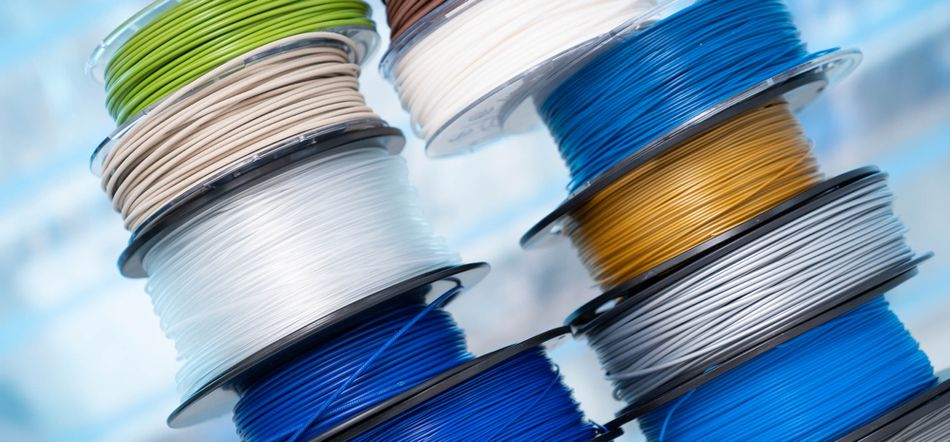
ABS 3D printer filament is still in demand, a fact reflected by the large number of filaments available in 2025, including some brand-new variants. A selection of ABS filaments is listed below.
Hobbyist
Bambu Lab ABS
eSUN ABS+HS
SUNLU ABS
Creality Hyper ABS
Buddy3D ABS (Prusa)
Professional/Industrial
3D Systems EXT Titan ABS
Stratasys ABS-M30
Raise3D Premium ABS
3DXTECH 3DXSTAT ESD-ABS (electrostatic-dissipative)
SUNLU ABS-FR (flame-retardant) [new in 2025]
Reinforced ABS
Reinforced ABS filaments are engineered variants of standard ABS that incorporate fibers such as carbon, glass, or aramid (Kevlar) to enhance strength, stiffness, and dimensional stability. Within filaments, these fibers are chopped and randomly oriented (though some novel printing technologies can print continuous fibers for extra strength).
Carbon-fiber ABS reduces warping and shrinkage while delivering a higher stiffness-to-weight ratio, making it suitable for functional prototypes, drones, and automotive components. Glass-fiber reinforcement improves impact resistance and rigidity, though it can increase brittleness. These reinforced grades often require hardened nozzles due to their abrasive nature, but they provide properties that far exceed standard hobbyist ABS.
ABS Blends
ABS blends are a combination of ABS and another polymer, rather than a reinforcing non-polymer like glass. One common example is ABS-PC (ABS blended with polycarbonate for higher heat resistance and toughness). Such blends aim to achieve a balance between the two (or more) constituent materials.
Comparing ABS with PLA, PETG, ASA
ABS is often contrasted with PLA, PETG, and ASA because these filaments are widely used. Key differences:
Property | ABS | PLA | PETG | ASA |
Tensile strength | Medium | High | High | Medium |
Toughness / impact | High | Low | Medium–High | High |
Flexibility | Medium | Low | Medium | Medium |
Heat resistance (Tg) | High (~105 °C) | Low (~60 °C) | Medium (~80 °C) | High (~105 °C) |
Printability | Moderate (warps easily) | Very easy | Easy | Moderate (like ABS) |
Chemical resistance | Medium | Low | High | Medium |
UV/weather resistance | Low | Low | Medium | High |
Recommended reading: ABS vs PLA: Which Filament Should You Use?
Printing Parameters and Practical Implementation
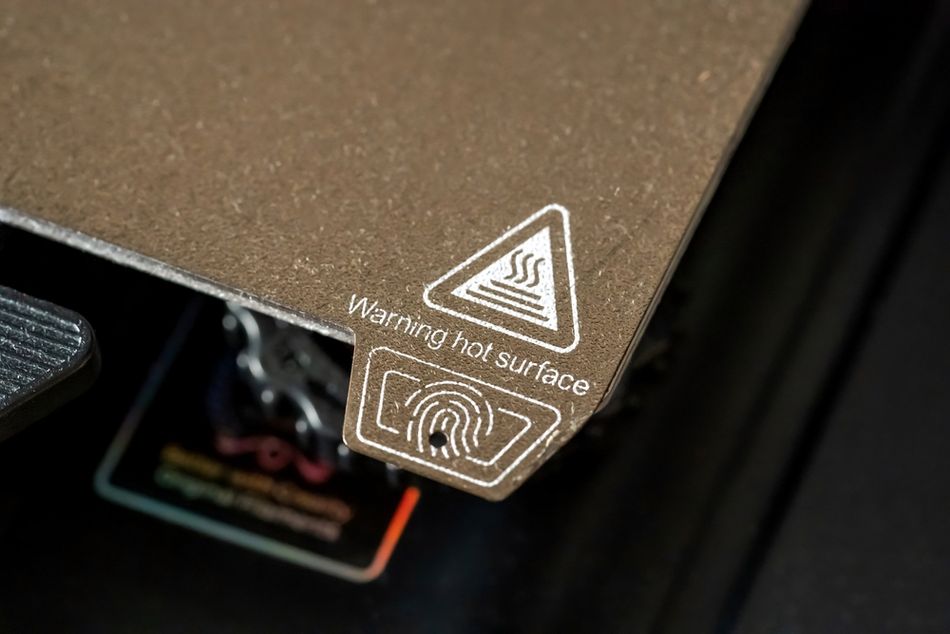
ABS requires more careful tuning than PLA or PETG because of its higher extrusion temperatures and tendency to warp. Manufacturer data sheets offer useful benchmarks for nozzle, bed, and speed settings, which can then be fine-tuned in practice.
Extruder and Bed Temperatures
The Overture ABS product page lists a recommended nozzle temperature range of 245–265 °C and a heated bed temperature of 80–100 °C to combat shrinkage, which is fairly typical among products on the market. These settings create proper melt flow while helping maintain adhesion during cooling.
Print Speed Considerations
According to eSun ABS datasheet, the recommended print speed spans 40–100 mm/s, with first layer speeds intentionally slower to improve adhesion. Although eSun allows high speeds, in practice many users stay in the 40–60 mm/s zone to maintain strong layer bonding.
Slicing and Part Orientation
Warping stems from uneven cooling and internal stresses. Use enclosures to stabilize temperature, brims or rafts to increase base adhesion, and orient large flat surfaces parallel to the bed. For prototypes, 20–40 % infill is typical; for parts needing strength, increase wall thickness or infill density.
Post-Processing Techniques
ABS dissolves in acetone vapor, enabling smoothing and gloss finishes. Parts can also be sanded or machined. For better dimensional control, designers often under-size holes in the CAD model and finish them via drilling or tapping post-print.
Recommended reading: ABS Smoothing: Acetone Vapor Baths & Other Ways to Remove Layer Lines
Applications of ABS Filament
The most widely cited use of ABS in popular culture is LEGO bricks. While this is true, LEGO bricks (and most toys) are molded, not 3D printed. For extrusion 3D printing, ABS’s properties translate into a variety of applications across disciplines:
Functional Prototypes and End-Use Parts
ABS is widely used for functional prototypes (and limited end-use parts) because it can be drilled, tapped, and solvent-welded after printing. Engineers employ ABS to make brackets, jigs, snap-fit enclosures, covers, and test fixtures. In automotive and aerospace, printed ABS is used for low-stress interior prototypes, mounting fixtures, and housings, where durability and machinability are important.
Example: 3DGence has used ABS (and other materials) to prototype a 120 kg robotic arm.[4]
Consumer Products
In the consumer space, ABS filament is often chosen for housings, mounts, and protective casings. For example, manufacturers and makers 3D printcustom phone holders, appliance covers, and VR headset parts from ABS because it combines rigidity with impact resistance and can be finished with sanding or acetone smoothing. Its ability to replicate injection-molded surface finishes makes it popular for small production runs or aftermarket parts.
Education and DIY / Maker Projects
ABS remains a staple in robotics clubs, university labs, and the maker community. Students frequently print robot chassis, RC car components, and sensor housings, taking advantage of ABS’s balance of toughness and machinability. Because it can be bonded with adhesives and reworked mechanically, ABS is a practical material for iterative projects where design changes are frequent.
Medical and Healthcare Devices
ABS is also available in specialized grades for healthcare. Stratasys ABS-M30i, for instance, is marketed as a biocompatible filament for non-implantable medical applications, meeting ISO 10993 and USP Class VI standards. It is used for producing drug-delivery device housings, inhalers, and anatomical teaching models. However, for parts requiring repeated sterilization or direct patient contact, higher-grade polymers such as nylon are typically preferred.
Industrial Tooling and Manufacturing Aids
In industrial environments, ABS filament is often used to print fixtures, drill guides, ergonomic handles, and assembly jigs. Because it machines well after printing, engineers can fine-tune ABS parts on CNC equipment to reach precise tolerances. This flexibility allows ABS to serve as a cost-effective tooling material for production lines, reducing turnaround time compared to traditional machining alone.
Example: Unilever has used Stratasys Digital ABS to make injection molds, blow molds and thermoform (vacuum) molds.[5]
How Much Does ABS Filament Cost?
ABS filament is generally priced in the mid-range of common 3D printing materials. Standard ABS spools typically cost around $20–30 per kilogram, which makes it more affordable than engineering-grade polymers like nylon, ASA, or polycarbonate (often $35–60/kg), but slightly more expensive than PLA, which is widely available at $15–25/kg.
Reinforced ABS composites, such as carbon-fiber or flame-retardant grades, can cost significantly more (often $50–100/kg) placing them closer to industrial materials in price.
Examples:
eSun ABS+ 1 kg: $23
Buddy3D ABS 750 g: $24
3DXTECH 3DXSTAT ESD-ABS 750 g: $105
MakerBot Method ABS Carbon Fiber 500 g: $99
Health and Safety Considerations
When heated, ABS filament emits ultrafine particles (UFPs) and volatile organic compounds (VOCs), with UFP emission worse than other common thermoplastics used in extrusion 3D printing.[6] At extreme temperatures (above 400 °C), ABS begins to decompose into hazardous monomers, including butadiene and acrylonitrile, both of which are classified as carcinogenic.
Mitigation Strategies
To reduce risks when printing with ABS, several measures are recommended:
Ventilation: Operate printers in well-ventilated areas. Dedicated enclosures equipped with HEPA and activated carbon filters are effective at reducing UFP and VOC exposure.
Temperature Control: Avoid overheating filament. Following the manufacturer-recommended extrusion ranges helps minimize decomposition and emission levels.
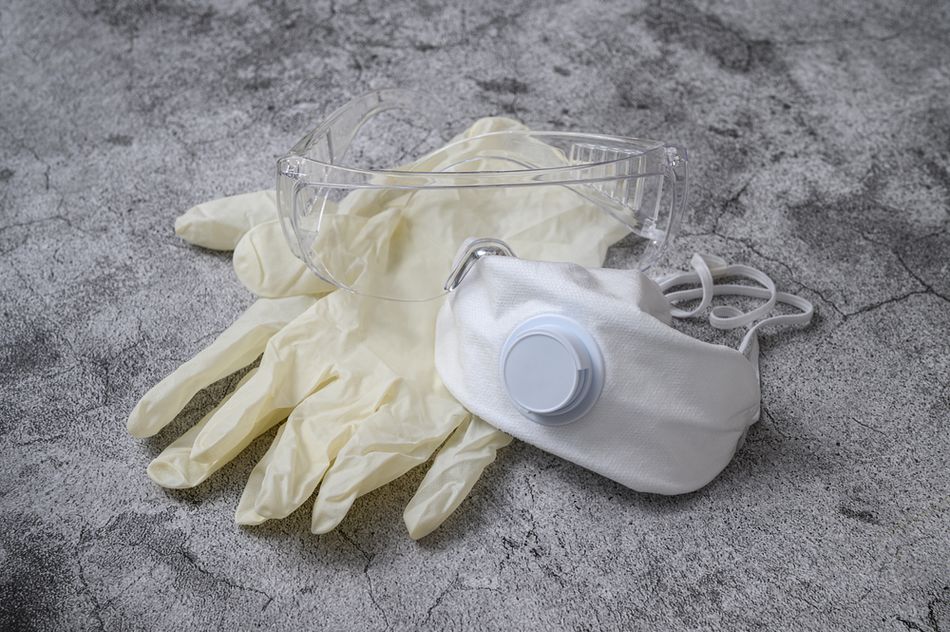
Personal Protective Equipment (PPE): Gloves and eye protection should be used when handling freshly printed parts or during acetone vapor smoothing. In industrial settings, respiratory protection may also be required.
Alternative Materials: In classrooms or shared spaces where emissions are a concern, alternatives such as PLA or low-odor ABS blends are preferable. Some manufacturers now market ABS variants with reduced VOC emissions.
Sustainability and Recycling
ABS is a non-biodegradable thermoplastic, contributing to long-term waste challenges. However, it can be mechanically recycled, and several suppliers now offer recycled ABS (rABS) filaments made from production scrap or post-consumer waste. While rABS may vary in color, its mechanical properties are generally comparable to virgin ABS. Engineers and educators seeking sustainable options might also consider PLA, PETG, or bio-based ABS formulations that incorporate renewable feedstocks.
Conclusion
Although less popular than it once was, ABS is still an important material in 3D printing, and most beginners should try printing with it before ruling it out for alternatives like PETG or ASA. The mechanical strength, impact resistance and thermal stability of ABS make it suitable for functional prototypes, enclosures and tooling. However, engineers must balance these advantages against its higher printing temperatures, warp‑prone behaviour, and emissions.
Frequently Asked Questions
What is ABS filament and why is it popular in 3D printing?
ABS is a thermoplastic made from acrylonitrile, butadiene, and styrene. It combines rigidity, toughness, and heat resistance, making it suitable for functional prototypes and end-use parts. It can also be machined, glued, and solvent-welded.
How does ABS compare to PLA and PETG in mechanical properties?
ABS has tensile strength around 40–50 MPa and high impact resistance (20–50 kJ/m²). PLA is stronger in tension (50–70 MPa) but brittle, while PETG offers intermediate strength with better chemical resistance. With a Tg of ~105 °C, ABS withstands higher temperatures than PLA.
What causes warping when printing ABS and how can it be prevented?
Warping results from uneven cooling and shrinkage. Prevention includes using a heated bed (90–110 °C), enclosing the printer, adding brims or rafts, orienting parts properly, and improving adhesion with PEI sheets, Kapton tape, or glue.
Are ABS fumes dangerous?
Yes. Printing releases ultrafine particles and VOCs that can irritate the respiratory system. Ventilation, HEPA-carbon filtration, and sticking to recommended temperatures help reduce exposure.
Can ABS parts be used outdoors?
Standard ABS degrades under UV light, becoming yellow or brittle. For outdoor use, ASA is preferred, as it maintains ABS’s mechanical strength while resisting weathering and UV damage.
References
[1] Chang MC, David B, Ray-Chaudhuri T, Sun LL, Wong RP. Acrylonitrile-butadiene-styrene (ABS) polymers. Handbook of thermoplastics. 1997 Mar 19:135-59. Available from: https://www.researchgate.net/publication/262642464_Handbook_of_Thermoplastics
[2] “Acrylonitrile-butadiene-styrene copolymer.” Encyclopædia Britannica. [cited 2025 Oct 17]. Available from: https://www.britannica.com/science/acrylonitrile-butadiene-styrene-copolymer
[3] “2022 3D Printing Filament Trend Report.” Filamentive. May 12, 2022 [cited 2025 Oct 17]. Available from: https://www.filamentive.com/2022-3d-printing-filament-trend-report/
[4] “Prototyping: fully functional 3D printed robotic arm.” 3DGence Case Studies [Internet]. [cited 2025 Oct 17]. Available from: https://3dgence.com/america/case-studies/prototyping-fully-functional-3d-printed-robotic-arm/
[5] “Consumer Goods’ Unilever Iterates Faster with 3D Printing.” Stratasys Case Studies [Internet]. January 26, 2022 [cited 2025 Oct 17]. Available from: https://www.stratasys.com/en/resources/case-studies/unilever/
[6] Azimi P, Zhao D, Pouzet C, Crain NE, Stephens B. Emissions of Ultrafine Particles and Volatile Organic Compounds from Commercially Available Desktop Three-Dimensional Printers with Multiple Filaments. Environmental Science & Technology. 2016;50(3):1260–8. https://doi.org/10.1021/acs.est.5b04983
in this article
1. The Chemistry of ABS Filament2. Mechanical and Thermal Properties3. Brief History of ABS as a 3D Printing Material4. ABS Filaments Available in 20255. Comparing ABS with PLA, PETG, ASA6. Printing Parameters and Practical Implementation7. Applications of ABS Filament8. How Much Does ABS Filament Cost?9. Health and Safety Considerations10. Sustainability and Recycling11. Conclusion12. Frequently Asked Questions13. References