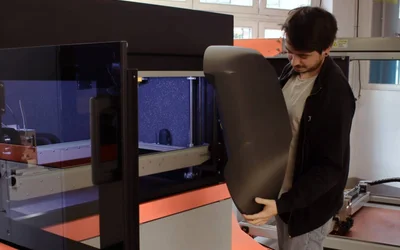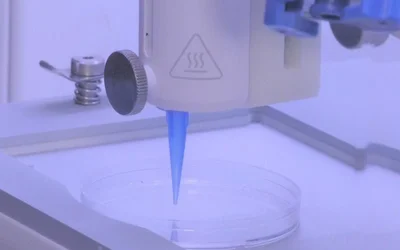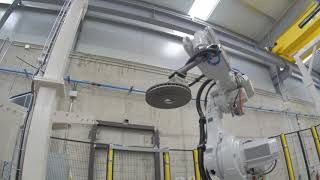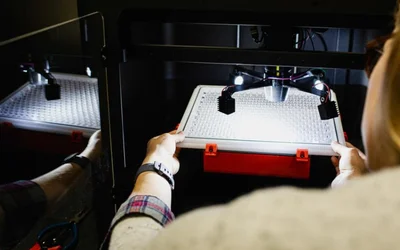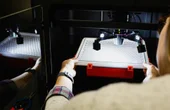

Automation in the postal service will play an important role in the upcoming years. Reaching challenging cycle times and pick rates is something where we continuously strive to push the boundaries further. The solution has an amazing 1.8 second cycle time allowing it to pick up to 2,000 objects/hour
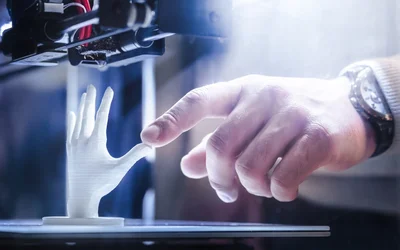
What is 3D printing? This article goes over the basics of 3D printing, otherwise known as additive manufacturing, covering its engineering principles and applications.
A bone-like composite developed at EPFL, in collaboration with researchers from ETH Zurich, Empa and the University of Fribourg, uses naturally occurring enzymes to accelerate mineralization through an energy-efficient, room-temperature process.
To help generative AI models create durable, real-world accessories and decor, the PhysiOpt system runs physics simulations and makes subtle tweaks to its 3D blueprints.
In this episode, we explore how Ocean Alliance uses 3D-printed drone systems to deploy wearable tags on whales, unlocking continuous data on how these giants move, dive, and live underwater.
A thorough tutorial for digital design engineers, hardware engineers, and electronics students on how to calibrate a 3D printer effectively. It covers theory and practical implementations.
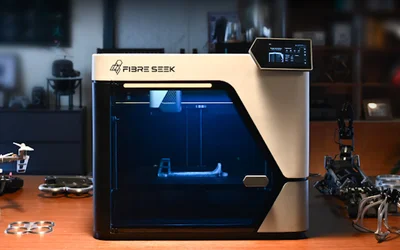
Harness the potential of additive manufacturing by learning how to use a 3D printer. This guide provides the basics for digital design engineers, hardware engineers, and electronics students.
This article focuses on the PNP transistor, exploring its structure, physics, operating modes, differences from its NPN counterpart, and how to design reliable switching, amplification, and power management circuits using it.
Automation in the postal service will play an important role in the upcoming years. Reaching challenging cycle times and pick rates is something where we continuously strive to push the boundaries further. The solution has an amazing 1.8 second cycle time allowing it to pick up to 2,000 objects/hour

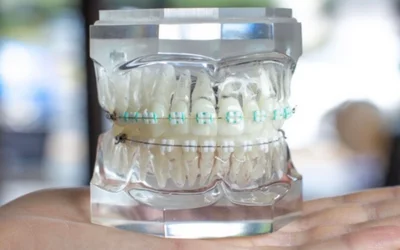
Find out more about how 3D printing can be used for implants, medical devices and custom-made products, as well as an outlook to what the future could hold for 3D printing in this field.
Researchers and companies unite to advance an established fabrication technique that builds up materials atom by atom for use in displays, batteries, and solar panels.
In this episode, we talk about the first full-size soft tissue 3D printed heart, an AI algorithm that knows what music is best for you, and the newest weather-monitoring satellite.
Recently, we released Robot Selector to the world. Featuring more than 700 robots from 70 robot brands, it is the first searchable library of every 6 degree of freedom (6 DOF) robot.
Over 70 different companies produce industrial robots today. The robotics market is also expanding at an accelerating rate, which means a company buying an industrial robot today has a wide variety of brands and models to choose from.
Metal 3D Printing is an advanced manufacturing method that builds metal parts from a CAD file using a layer-by-layer technique known as additive manufacturing.
From the subtle stipple of your laptop’s casing of to the geometric grip of your toothbrush handle, texture is a key consideration in the design process for any and every physical product. Read further to learn how I use nTop Platform to apply texturing to products I design.
A major factor that influences design decisions during the product development of medical devices is time-to-market. Accelerating or automating your design processes can give you a distinct advantage over your competitors.
Fast Radius had an internal design challenge to create a shoe that could be printed as one part using an elastomeric material on HP's Multi-Jet Fusion technology. They designed workflows within nTop Platform as a way to explore the industrial design of the shoe.