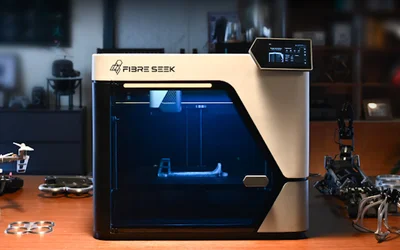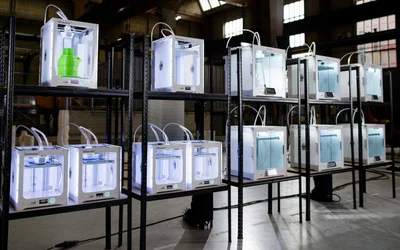

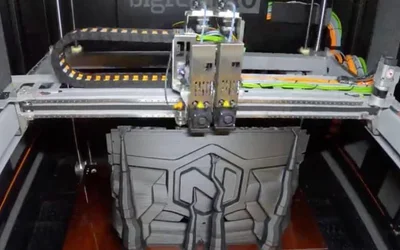
What is 3D printing? This article goes over the basics of 3D printing, otherwise known as additive manufacturing, covering its engineering principles and applications.
What is 3D printer filament made of? This guide examines polymers, additives, and composites, offering practical tips for digital design and hardware engineers.
Learn everything you need about the full adder circuit. From binary addition theory to low-power hardware implementations and modern ASIC/FPGA design flows, this technical article equips digital design engineers, hardware engineers with practical insights and current research trends.

Explore how a transistor works from first principles through practical circuit design. This in depth guide explains BJT and FET operation, switching and amplification modes, design calculations, modern market trends, and FAQs, ideal for digital design engineers, hardware engineers, and students.
Advanced 3D scanning delivers comprehensive, high-accuracy inspection for massive grinding roller shells. It replaces manual measurement with fast, traceable digital analysis, enabling smarter maintenance and reduced operational costs.
2020 has been a year of great change. We've barely assimilated the new modes of operating under Industry 4.0, and Industry 5.0 has begun to emerge over the horizon. This has been fuelled to a greater degree by the global pandemic, and the need for more reliance on human/machine collaboration.
Manual singulation of huge piles of parcels and envelopes, followed by sorting and placing them on a conveyor belt, gets challenging, especially during peaks. Automation of this process can increase productivity, save costs and time, and reduce injuries.
Flexible 3D printing filaments open up a lot of possibilities for designers and engineers. Complex elastic forms can be produced easily in-house, then used in a variety of different ways – from prototyping flexible features to creating custom tools.
At Ultimaker, we rigorously test our materials to provide the best possible results. Not only to ensure excellent mechanical and aesthetic properties, but also so that the preconfigured settings in our Ultimaker Cura software offer a hassle-free 3D printing experience.
Creating a mold or cast requires precision. To make a mistake – or to have second thoughts – can be expensive, both from a financial and a time standpoint. Every feature, every detail, every customization also comes at a price.
3D printing with metal can produce visually and physically impressive results. Metal is ideal for creating customized parts that are heat, chemical, and impact resistant.
UV resistance refers to a substance’s ability to resist ultraviolet (UV) light, including sunlight. UV light can cause discoloration or degradation in a final part.
James Beswick always had a bit of a thing for radio-controlled cars – especially high-speed drag racing. He’s been building them for a few years now but decided to take things to the next level. To do that he realized he was going to have to think outside the pre-built box and build his own!
Designing and building a vehicle means juggling a lot of moving parts – literally and figuratively. To inefficiently approach any task in the manufacturing or design process means extra time and money spent.
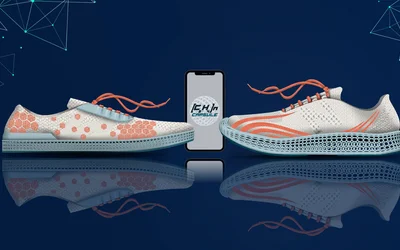
We are going to see in this blogpost how the additive manufacturing technology can revolutionize the sports field. Then, we are going to check what the best sports equipments made with 3D printing are.