Featured

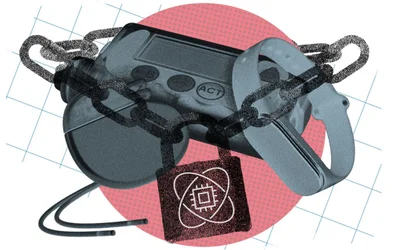
Surgical robotic controllers require comprehensive data and design to safely operate.

This guide is written for engineers and technical teams building connected devices who need clear, field-ready guidance without getting lost in standards documentation.
PCB Trace Width Calculator
Surgical robotic controllers require comprehensive data and design to safely operate.
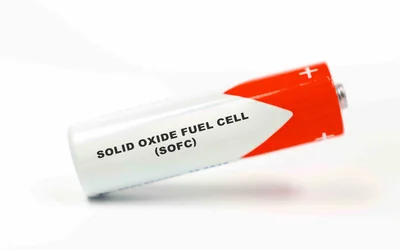
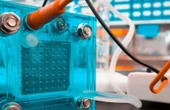
A solid oxide fuel cell converts fuel directly into electricity through a ceramic electrolyte that conducts oxygen ions at high temperatures. This guide covers the electrochemistry, the material choices, where the efficiency really comes from, and the degradation mechanisms.
A practical selection guide to the STM32 Nucleo family: the three form factors, what the order code tells you, what the on-board ST-LINK actually does, and how Nucleo compares to Discovery kits and to Blue Pill and Black Pill boards.
Half-duplex links take turns, while full-duplex links talk in both directions at once. This guide explains how each mode is built on real hardware, from Ethernet and RS-485 to Wi-Fi and 5G, what each costs you in throughput and latency, and how to choose between them.
14 minutes read.
15 minutes read.
17 minutes read.
26 minutes read.
24 minutes read.

Electronics
Mouser Electronics is a worldwide leading authorized distributor of semiconductors and electronic components.
219 Posts
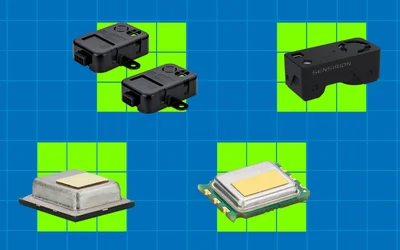
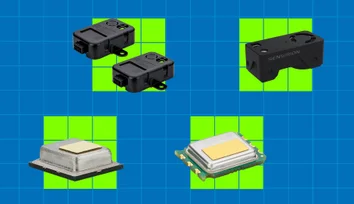
Discover how SGD4x, SFA40, STCC4, and SEN6x sensors by Sensirion help engineers measure refrigerants, formaldehyde, CO₂, and multiple air quality parameters in compact, low-power designs.
Exploring the shift to additive digital printing in modern electronics fabrication.
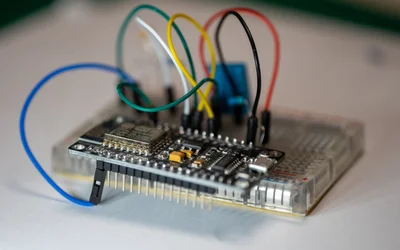
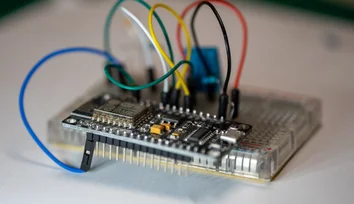
This article explains the ESP8266 pinout, covering GPIO mapping, boot-strapping pins, safe-to-use pins, flash connections, ADC limits, deep-sleep functions, and NodeMCU and D1 mini pin labels.
Learn how a Hall Effect Current Sensor works, including principles, topologies, specifications, comparisons and engineering applications.
Controlled impedance is the control of PCB trace impedance within specified tolerances. This article covers microstrip and stripline designs, IPC-2141A formulas, stackup selection, impedance tolerances, routing practices, and TDR testing for signal integrity.
Agent part of Cadence's ChipStack software generates Verilog RTL through C++ and high-level synthesis
One year after unveiling a first-of-its-kind 'microwave brain' microchip capable of computing on ultrafast data and wireless signals, researchers from the Cornell Duffield College of Engineering have shown how the chip can encode information into its own language.
Ultra-efficient chip design enables extremely strong cryptography algorithms to run on energy-constrained edge devices.
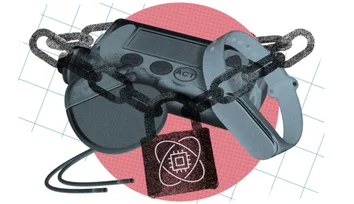
Surgical robotic controllers require comprehensive data and design to safely operate.
A solid oxide fuel cell converts fuel directly into electricity through a ceramic electrolyte that conducts oxygen ions at high temperatures. This guide covers the electrochemistry, the material choices, where the efficiency really comes from, and the degradation mechanisms.
A practical selection guide to the STM32 Nucleo family: the three form factors, what the order code tells you, what the on-board ST-LINK actually does, and how Nucleo compares to Discovery kits and to Blue Pill and Black Pill boards.
DIN rail terminal blocks are modular connectors that secure and organize wires on standardized DIN rails. This article explains rail profiles, ratings, connection methods, wire sizes, accessories, and assembly practices for reliable control panels.
A microbial fuel cell turns the metabolism of living bacteria into an electrical current. This guide covers the electrochemistry, microbiology, materials, real performance numbers from pilot plants, and the economics that still keep the technology out of mainstream power generation.
A new fabrication platform integrates molecules into electronic devices, opening the door to emerging computing technologies.
A terminal block provides a secure electrical and mechanical connection between conductors. This guide explains how to select terminal blocks based on connection technology, current and voltage ratings, conductor size, mounting method, environmental conditions, and potential failure modes.
A working reference for the STM32F103 line: the four density classes and what each gives you, why USB and CAN can't run together, the LQFP48 pin functions, how the Blue Pill is wired, and how to spot the clones on cheap boards.
A PEM fuel cell converts hydrogen and oxygen into electricity at around 80 degrees C, with water and heat as the only products. This guide covers electrochemistry, layer materials, efficiency limits, and cost and durability to help you understand the practical applications of this technology.
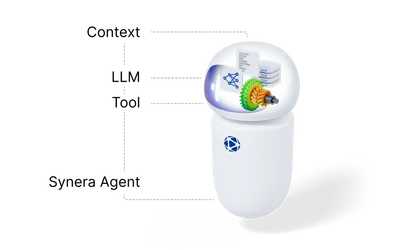
From Single Models to Scalable Agentic Systems

6 minutes read
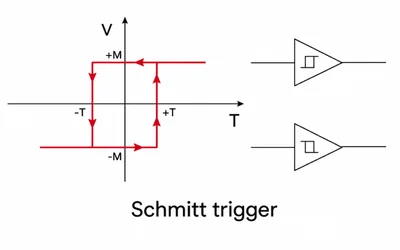
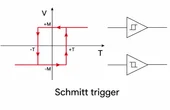
A Schmitt trigger is a circuit that converts slow or noisy inputs into clean digital signals using two switching thresholds. This guide explains hysteresis, op-amp and transistor designs, equations, real 74HC14, CD40106B, and 555 timer examples, and common design mistakes.
A 2-day show-floor hackathon in Anaheim will bring together nearly 50 university students to build and demonstrate on-device AI systems with support from industry mentors.
Researchers from ETH Zurich have developed a portable measuring device that detects the metabolic marker acetone in breath almost as accurately as a mass spectrometer. It can be used by laypeople and detects when the body starts burning fat when dieting or during exercise.
Polymer, tantalum, and other MLCC alternatives are giving engineers more design options to balance electrical performance, validation needs, lifecycle risk, and sourcing flexibility.
Build, test, and demonstrate on-device AI systems during a live engineering challenge on the embedded world North America show floor.