This Report shows how tools like artificial intelligence, digital twins, and on-demand manufacturing are no longer emerging concepts, but are already delivering measurable impact across the product lifecycle.
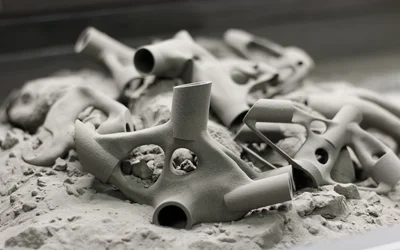
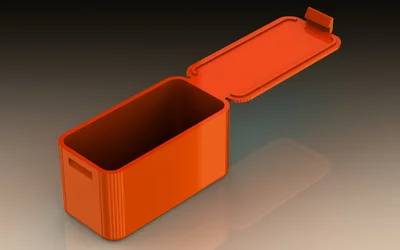
Multi-material 3D printing allows for the creation of parts with varying properties, such as flexible hinges integrated into a rigid structure. This capability streamlines manufacturing processes and enhances product performance.
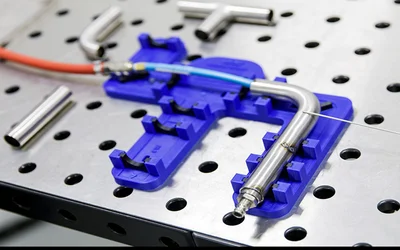
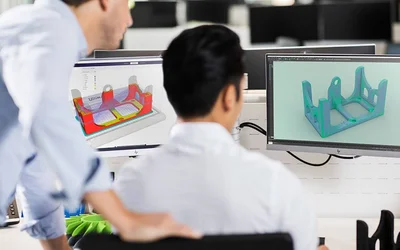
Many industries are turning to additive manufacturing (AM) - commonly known as 3D printing - as a smart, flexible solution. With 3D printing, companies can produce parts in-house and on demand, drastically reducing lead times and improving agility on the factory floor.
EPFL researchers have developed a way to use holograms to guide laser light for ultra-efficient, fast, and precise volumetric 3D printing. The innovation enables cell-compatible, high-resolution 3D printing at scales suitable for biomedical applications.
Princeton researchers have combined brain cells and advanced electronics into a 3D device that can be programmed to recognize patterns using computational techniques.
Discover how iAM Marketplace simplifies industrial additive manufacturing by unifying materials, validation services, and multi-brand technologies into one open ecosystem for efficient AM sourcing.
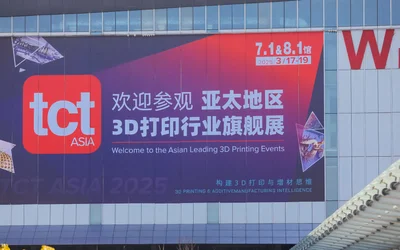
This article discusses what attendees can expect from TCT Asia 2026, including its conference format, focus areas, and the experts contributing to industry-specific discussions.
This article discusses the exhibitors, products, and industrial trends defining additive manufacturing across the Asia-Pacific region at TCT Asia 2026.
This article discusses how the Asia-Pacific region is advancing additive manufacturing and the role of TCT Asia as the leading 3D printing and additive manufacturing event in the Asia-Pacific.
Multi-material 3D printing allows for the creation of parts with varying properties, such as flexible hinges integrated into a rigid structure. This capability streamlines manufacturing processes and enhances product performance.
Many industries are turning to additive manufacturing (AM) - commonly known as 3D printing - as a smart, flexible solution. With 3D printing, companies can produce parts in-house and on demand, drastically reducing lead times and improving agility on the factory floor.
3devo's next-generation desktop extruder combines industrial precision with lab-scale simplicity enabling more controlled, higher-performance and data-driven 3D printing material workflows.
EPFL researchers have pioneered a 3D-printable, programmable lattice structure for robotics that mimics the vast diversity of biological tissues – from a flexible trunk to rigid bone – using a single foam material.
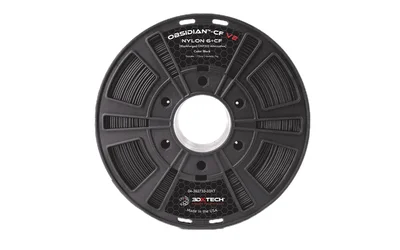
TPU is known for its impressive elasticity, wear resistance, and impact strength. These properties make it a go-to material for applications that require flexibility under pressure.
What is ASA filament and why is it so useful for 3D printer users? This article looks at why this thermoplastic is important for printed parts designed for outdoor use.
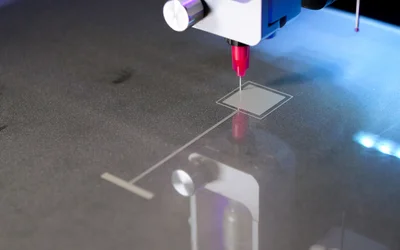
In this article, we will provide a brief overview of fluid dispensing systems, highlight their applications, discuss common challenges with the technology, and share an overview of NOVA, our materials dispensing system.
In this article we'll break down the key factors that define what makes a 3D printer reliable, from durable hardware, design engineering, software security and ecosystem integration. Whether you're scaling production or streamlining prototyping, here's what to look for and how UltiMaker stands out.
An AI pipeline developed by CSAIL researchers enables unique hydrodynamic designs for bodyboard-sized vehicles that glide underwater and could help scientists gather marine data.
Considering powder coating for your parts but unsure what to expect? You're not alone. Choosing the right surface finish can feel overwhelming, especially when factors like gloss, texture, and durability come into play. Let's break it down so you can request exactly what you need with confidence.
PhD candidate Sabrina Corsetti builds photonic devices that manipulate light to enable previously unimaginable applications, like pocket-sized 3D printers.