3D Printing & Digital Manufacturing
This Report shows how tools like artificial intelligence, digital twins, and on-demand manufacturing are no longer emerging concepts, but are already delivering measurable impact across the product lifecycle.
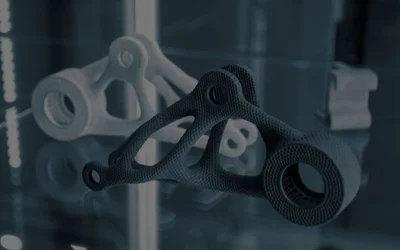

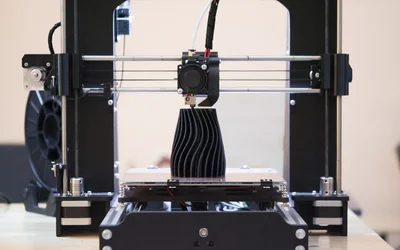
Discover the FDM printer meaning in practical terms, exploring how fused deposition modeling works and why it remains one of the most widely used technologies today.
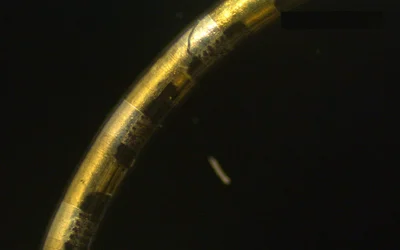
Developed by Stanford researchers, NeuroString is a hair-thin multichannel biosensor and stimulator with promising potential applications in drug delivery, nerve stimulation, smart fabrics, and more.

Engineers Wiki. Most Asked Questions.
An engineer’s guide to understanding the state of the art in metal 3D Printing
Microstepping Explained: Full Step, Half Step & Microstep
15 minutes read.
Closed-Loop Stepper Motor: How Encoder Feedback Works
22 minutes read.
Design for Additive Manufacturing: A DfAM Guide for Engineers
11 minutes read.
3D Printing Supports: Types, Settings, and Removal (2026)
18 minutes read.
What Is PLA? Composition, Properties, and Uses of Polylactic Acid
12 minutes read.
PETG vs PLA: Key Differences, Strength, and How to Choose
16 minutes read.
ORGANIZATIONS. SHAPING THE INDUSTRY.


The Next Byte
Entertainment
The Next Byte Podcast is hosted by two young engineers - Daniel and Farbod - who select the most interesting tech/engineering cont...
165 Posts




TAGGED WITH 3d printing
ADDITIV Medical 2026 will bring together more than 500 medical professionals
Choosing between 3D printing and injection molding is one of the key decisions in product development—especially in case of prototyping.
The choice between 3D printing and CNC machining is the most common decision regarding manufacturing methods that must be made before placing the first order for prototypes. The correct answer depends on tolerance requirements, material specifications, component geometry, and schedule.
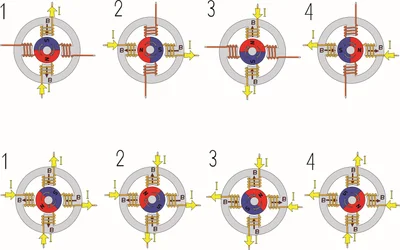
How microstepping works in stepper motors, the incremental torque cost of each resolution, and why finer microsteps do not improve positioning accuracy.
TAGGED WITH smart material printing

Discover how iAM Marketplace simplifies industrial additive manufacturing by unifying materials, validation services, and multi-brand technologies into one open ecosystem for efficient AM sourcing.


This article discusses what attendees can expect from TCT Asia 2026, including its conference format, focus areas, and the experts contributing to industry-specific discussions.


This article discusses the exhibitors, products, and industrial trends defining additive manufacturing across the Asia-Pacific region at TCT Asia 2026.


This article discusses how the Asia-Pacific region is advancing additive manufacturing and the role of TCT Asia as the leading 3D printing and additive manufacturing event in the Asia-Pacific.

Latest Posts
Thursday October 9th 2025
Discover the FDM printer meaning in practical terms, exploring how fused deposition modeling works and why it remains one of the most widely used technologies today.
Developed by Stanford researchers, NeuroString is a hair-thin multichannel biosensor and stimulator with promising potential applications in drug delivery, nerve stimulation, smart fabrics, and more.

4 minutes read
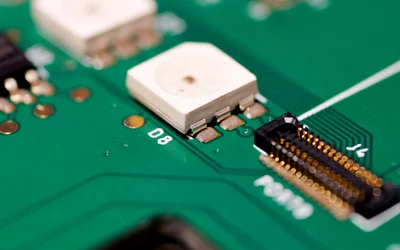
Everything you need to know about choosing the right solder paste when printing electronics, from composition and function to particle size and application.

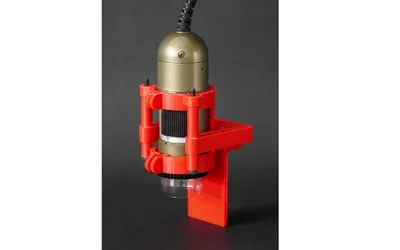
The method enhances 3D bioprinting capabilities, accelerating process optimization for real-world applications in tissue engineering.
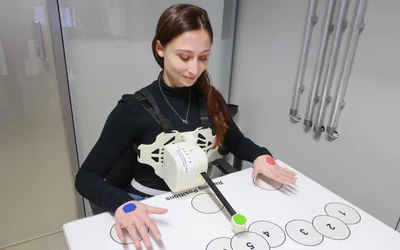
From robotic hands and arms to soft heart pumps, biomaterials, 3D-printed muscles and more, rapid advancements in robotics and biotechnology are giving rise to new techniques for repairing the human body.

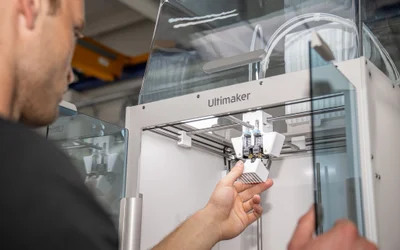
Let's deep-dive into why quality components matter when choosing a printer, and which components to look out for.

5 minutes read
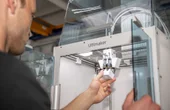

How long does a 3D printer take to print a typical plastic part? This article looks at the theory and practice behind 3D print time.


MIT CSAIL researchers developed SustainaPrint, a system that reinforces only the weakest zones of eco-friendly 3D prints, achieving strong results with less plastic.

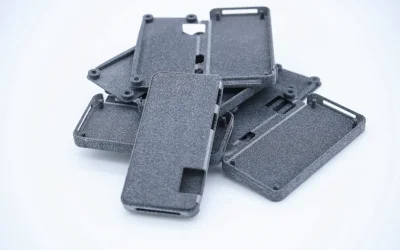
3D printing is no longer just a prototyping tool—it's a viable option for serial production. For small to mid-sized batches, especially where agility, customization, or geometric freedom matters, 3D printing can beat traditional methods like injection molding or CNC machining.

5 minutes read
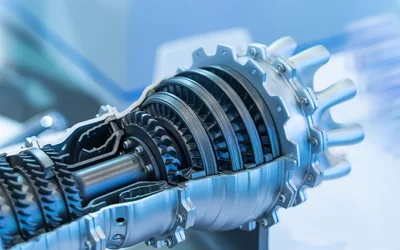
The applications of 3D printing span many industries, from aircraft fuel nozzles to dental aligners. Here we look at some of the most important uses of the technology.

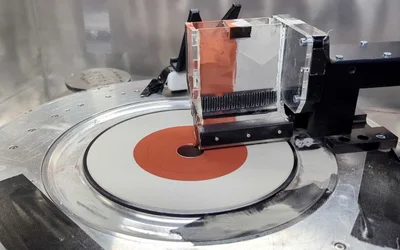
Students at ETH Zurich have developed a laser power bed fusion machine that follows a circular tool path to print round components, thereby being able to process multiple metals at once. The system significantly reduces manufacturing time and opens up new possibilities for aerospace and industry.

4 minutes read
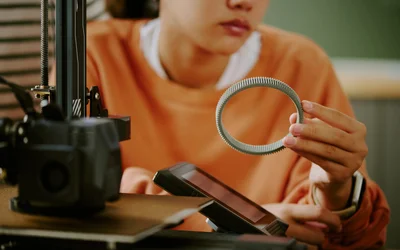
AI is reshaping 3D printing by optimizing workflows, cutting waste, and enhancing design. At Formnext 2025, industry leaders will showcase how these innovations are driving efficiency and pushing the boundaries of additive manufacturing.

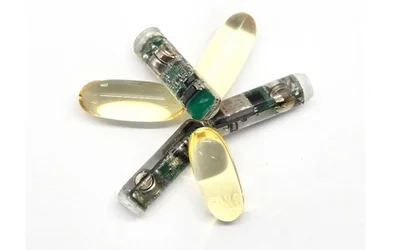
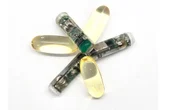
A team of Caltech engineers has developed a smart capsule called PillTrek, which can measure pH, temperature, and a variety of different biomarkers. It incorporates simple, inexpensive sensors in a miniature wireless electrochemical workstation that relies on low-power electronics.

3 minutes read

Researchers can now observe the phonon dynamics and wave propagation in self-assembly of nanomaterials with unusual properties that rarely exist in nature.

3 minutes read