FDM Printer Meaning Explained: Theory, Technology, Terminology
Discover the FDM printer meaning in practical terms, exploring how fused deposition modeling works and why it remains one of the most widely used technologies today.

Last updated on 22 Sep, 2025. 9 minutes read
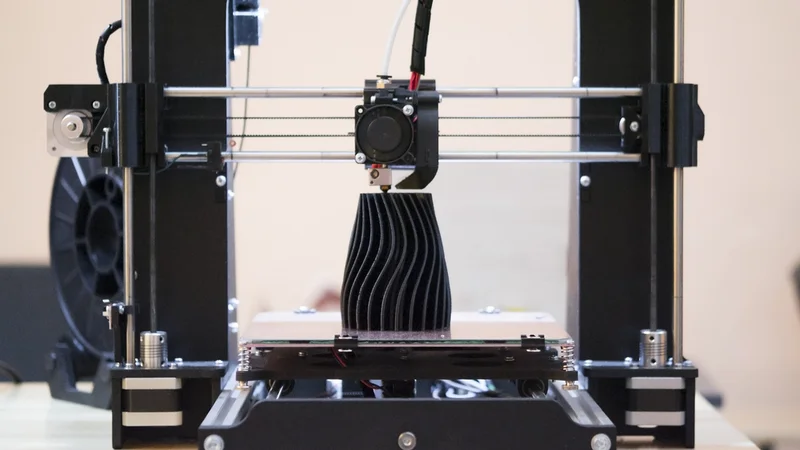
3D printing has become a cornerstone of modern manufacturing, design, and education. Among the many techniques available, fused deposition modeling (FDM) stands out as the most accessible and widely adopted. Understanding the FDM printer meaning is an important first step for anyone exploring how digital files transform into physical parts.
At its core, FDM works by heating and extruding thermoplastic filament through a nozzle, depositing material layer by layer. This straightforward process has made it the entry point for countless makers, engineers, and students. From prototypes and teaching models to industrial jigs and fixtures, the method balances affordability with practical functionality, even if surface finish and resolution may lag behind resin or powder-based approaches.
Yet the FDM printer meaning has also evolved. Once tied closely to Stratasys’s trademarked machines, it now refers broadly to extrusion-based 3D printing. Whether desktop or industrial, FDM continues to bridge accessibility with expanding industrial capabilities.
The Fundamentals of Material Extrusion
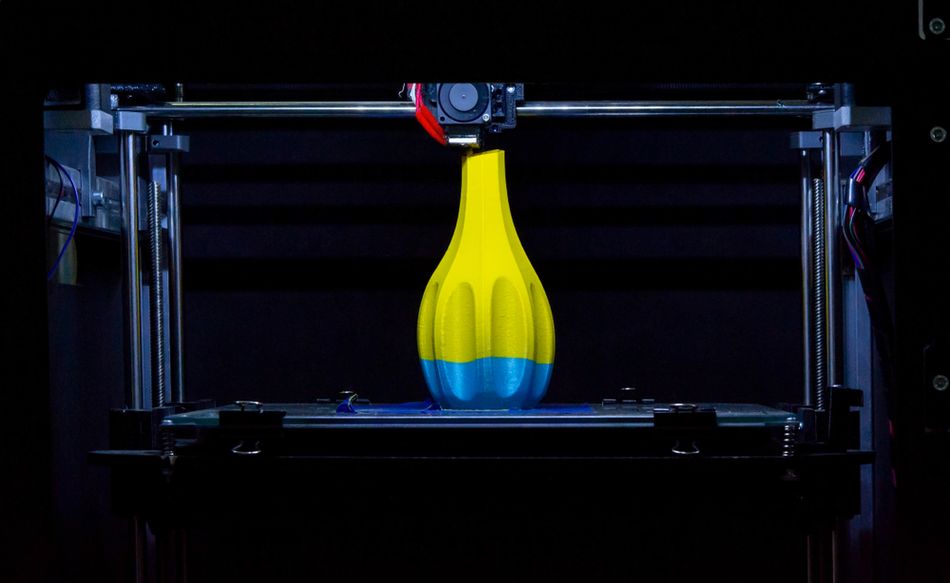
Fused deposition modeling (FDM) is one of the most accessible forms of 3D printing. It represents the essence of additive manufacturing: turning digital designs into physical parts by building them layer by layer. Unlike subtractive techniques that cut material away, FDM relies on extrusion, depositing thermoplastic precisely where it is needed. This combination of simplicity, affordability, and versatility has made it a popular choice across education, product design, and industrial applications.
The process begins with a continuous strand of filament stored on a spool. A drive motor pulls the filament into a heated hot end, where it softens or melts. The molten plastic is then extruded through a small nozzle, usually around 0.4 millimeters in diameter.[1]
The printer’s motion system guides this extrusion along the X and Y axes, tracing each cross-section of the design. After completing a layer, either the build plate or the print head shifts incrementally along the Z axis, enabling the next layer to be deposited. Cooling occurs almost immediately, and thermal bonding at the layer interfaces fuses the structure together.
Accessible technology: FDM turns digital designs into parts by extruding thermoplastic layer by layer, offering simplicity, affordability, and wide applicability.
Filament extrusion: A drive motor feeds filament into a heated hot end, where it melts and is pushed through a fine nozzle.
Layer-by-layer build: The motion system deposits each layer in sequence, with cooling and thermal bonding fusing the structure into a solid object.
History and Terminology
Fused deposition modeling (FDM) emerged in the late 1980s as one of the earliest additive manufacturing processes. The technique was patented by Scott Crump, who later co-founded Stratasys, in 1989.[2] Crump’s idea was deceptively simple: a heated nozzle extrudes thermoplastic material in thin strands, which are then stacked layer by layer to form a three-dimensional object. This process transformed the concept of prototyping, offering a faster, more flexible alternative to traditional methods like machining or molding.
In the early 1990s, Stratasys patented the FDM process and began commercializing professional 3D printers. These early machines were expensive and primarily used by engineers and designers for rapid prototyping, but they demonstrated the potential of additive manufacturing in reducing design cycles and enabling greater experimentation. Over time, improvements in materials, software, and hardware broadened the technology’s appeal.
By the 2000s, as patents on key aspects of the process began to expire, interest in desktop 3D printing grew. Open-source initiatives such as the RepRap project adopted and spread the technology, paving the way for widespread adoption by hobbyists, educators, and startups. Today, FDM remains one of the most recognized and accessible forms of 3D printing, used both in professional and consumer contexts.
Breaking Down the Name
The term Fused Deposition Modeling was chosen to capture the essential mechanics of the process in three words. Each part of the phrase highlights a key principle that distinguishes this 3D printing method from others.
Fused: Refers to how thermoplastic layers bond together. As each strand of molten filament is deposited, it partially melts into the layer below, creating adhesion through thermal fusion.
Deposition: Describes the act of placing material in a controlled manner. Instead of carving or curing, the process deposits softened plastic in precise toolpaths, gradually shaping the object.
Modeling: Emphasizes the creation of three-dimensional models. The process translates a digital design into a physical form, layer by layer, embodying the essence of additive manufacturing.
FDM vs. FFF: A Terminology Distinction
While the process is universally understood, its terminology reflects both legal and cultural divides. Fused Deposition Modeling (FDM) is a registered trademark of Stratasys, reserved for its branded machines and officially licensed use. To describe the same extrusion-based process in a more generic context, the term Fused Filament Fabrication (FFF) was coined in 2005 by members of the RepRap community.
Technically, FDM and FFF are identical: both describe the extrusion of thermoplastic filament through a heated nozzle to build parts layer by layer. The difference lies in branding and intellectual property rather than mechanics. Within industry, FDM often refers to professional, industrial-grade systems, while FFF is more commonly used in the open-source and consumer 3D printing world.
This distinction highlights the interplay between proprietary innovation and open development in the evolution of 3D printing. Though the names differ, both FDM and FFF refer to the same foundational technology that continues to shape additive manufacturing today.
FDM printer meaning: An FDM printer is a 3D printer that builds objects by extruding thermoplastic filament through a heated nozzle, stacking material layer by layer to form solid parts.
FFF printer meaning: An FFF printer refers to the same extrusion-based 3D printing process as FDM, but the term is used generically outside of Stratasys’s trademarked branding.
When Extrusion Isn’t FDM or FFF
Extrusion-based 3D printing is often equated with FDM or FFF, but Fused Granulate Fabrication (FGF) represents a distinct branch. Instead of filament, FGF systems use plastic pellets—the same feedstock used in injection molding. This drastically reduces material costs and allows direct use of recycled or commodity-grade polymers. FGF also supports extremely high deposition rates, making it ideal for large-format applications such as tooling, furniture, and automotive components. However, surface quality and fine detail typically lag behind filament-based printers. As a result, FGF occupies a unique niche where affordability, throughput, and scale outweigh the need for precision finishes.
Recommended reading: How Long Does a 3D Printer Take to Print Something? A Quick Guide for FDM Users
Anatomy of an FDM Printer
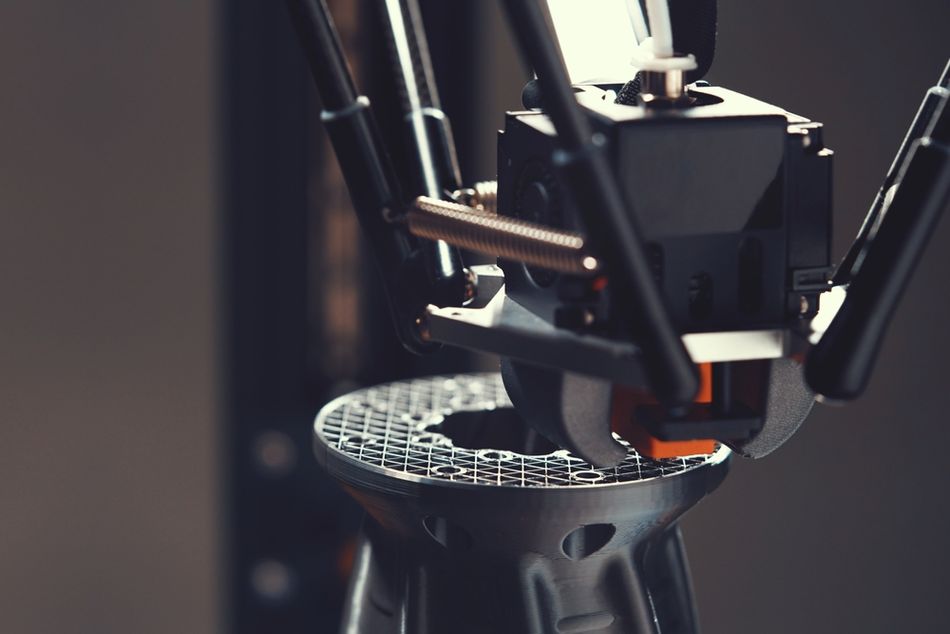
An FDM printer relies on several coordinated subsystems that work together to melt and deposit thermoplastic filament with precision. Each component plays a distinct role in transforming digital designs into physical parts, ensuring accuracy, consistency, and reliability throughout the 3D printing process.
Filament spool and feeder: Thermoplastic filament (PLA, ABS, PETG, nylon, etc.) is stored on a spool and unwound. A cold-end extruder, consisting of a stepper motor with a hobbed drive and idler, grips the filament and pushes it into the hot end.
Hot end: Made up of a heat break, heater block, and nozzle, the hot end melts the filament. A heater cartridge and thermistor regulate temperature, while nozzle diameter (typically 0.2–1.0 mm) determines bead width and resolution.
Motion system: Moves the print head along the X–Y plane and shifts the build platform in Z. Most printers use Cartesian kinematics, but alternatives such as Delta, CoreXY, Polar, or Scara systems balance speed, build volume, and complexity differently.
Build platform: A flat surface, often heated, where the part is built. Heating improves adhesion and reduces warping by controlling cooling rates during printing.
Controller, firmware, and slicer software: Firmware manages motors, heaters, and sensors, while slicing software converts 3D models into G-code, defining toolpaths, speeds, and temperatures for the print.
Bowden vs Direct‑Drive Extrusion
The way filament is delivered to the hot end has a direct impact on print quality and performance. Different extrusion setups influence speed, retraction, and the types of materials that can be printed effectively. Understanding these trade-offs helps users choose the right configuration for their needs.
Bowden extrusion: In a Bowden extruder, the stepper motor and drive gears are mounted on the printer frame, and the filament travels through a PTFE tube to the hot end. This design produces lightweight print heads and allows high travel speeds (200–300 mm/s). However, the long tube introduces elasticity, requiring higher retraction distances and torque, and it struggles with flexible filaments.
Direct-drive extrusion: In a direct-drive setup, the motor and drive gear are mounted directly above the hot end. This proximity provides precise control of extrusion and retraction, making it ideal for flexible filaments and multi-material printing. The trade-offs include additional weight on the moving axis, reduced acceleration, and more complex assembly. Engineers must weigh these factors when selecting or designing an FDM system.
Print Head Kinematics
The kinematic design of a 3D printer defines how the print head and build platform move relative to each other. Different architectures balance speed, accuracy, build volume, and complexity, making the choice of motion system an important factor in printer performance and application suitability.
Cartesian printers: The most common FDM machines use linear X, Y, and Z axes. The print head moves along X and Y rails while the bed lowers after each layer. Cartesian systems are simple, reliable, and consistent in print quality, though they occupy more space and face speed limits from inertia.
Delta printers: Delta machines employ three vertical arms connected to a central effector by parallel linkages.[3] Adjusting the arm lengths moves the nozzle within a cylindrical build volume. Delta printers excel at high speeds and tall builds but require precise calibration.
CoreXY printers: CoreXY designs use belts arranged in an H-pattern to move the carriage. This reduces moving mass and enables high print speeds with good accuracy.
Polar printers: Polar systems rotate the build plate and move the print head radially. They are compact and efficient for cylindrical or symmetrical parts.
Scara printers: Scara designs use articulated robotic arms to position the nozzle. They allow large build areas but can be mechanically complex.
Belt printers: Belt systems employ an angled conveyor belt as the build surface. This enables continuous printing and the production of extra-long parts beyond a fixed build volume.
Difference Between FDM and Other 3D Printing Technologies
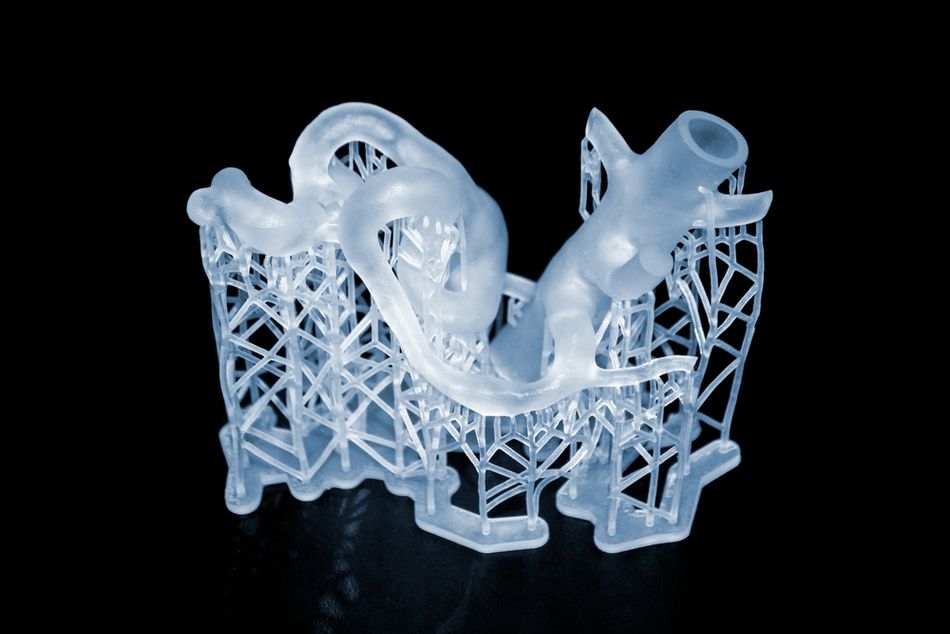
FDM 3D printing builds objects by extruding thermoplastic filament through a heated nozzle. It is cost-effective, widely accessible, and ideal for functional prototypes and durable parts. FDM 3D printers handle many FDM materials, including composites like carbon fiber, but are limited in layer height, surface finish, and tolerances compared to other processes.
SLA (stereolithography) differs from FDM by using a laser to cure liquid resin. Unlike filament-based extrusion, SLA produces exceptionally smooth surfaces and fine detail, making it ideal for healthcare models and high-quality visual prototypes. However, SLA parts are often brittle, less durable, and require more intensive post-processing than FDM.
PolyJet sprays photopolymer droplets and cures them with UV light. Unlike FDM, which builds one filament bead at a time, PolyJet enables full-color and multi-material printing. It produces highly detailed visual models but lacks the mechanical strength and durable functionality of FDM 3D printed parts.
SLS (selective laser sintering) replaces filament with nylon powder fused by a laser. Unlike FDM, it needs no support material, allowing free-form geometries. SLS parts are stronger and more complex than FDM prints but require industrial equipment and powder-handling systems, reducing accessibility. MJF (multi jet fusion) also processes nylon powder, but with fusing agents and heat[4]. Compared to FDM, it offers finer detail and more consistent tolerances, but at higher equipment cost.
Metal printing methods such as DMLS (direct metal laser sintering) and EBM (electron beam melting) extend additive manufacturing into alloys. Unlike FDM 3D printers, these create parts strong enough for aerospace and industrial use, but with far greater cost and complexity.
Recommended reading: Metal 3D Printing: A Comprehensive Guide for Engineers and Students
FDM Printing Workflow
The FDM workflow takes a digital design and turns it into a physical object through a series of clear steps. Each stage builds on the last to ensure a successful print.
Design: Create a 3D model in CAD software or download an existing one.
File export: Save the model in a printable format, usually STL or 3MF.
Slicing: Use slicer software to convert the model into G-code instructions that the printer can follow.
Printer setup: Load filament, prepare the build plate, and check that the printer is calibrated.
Printing: The printer deposits melted filament layer by layer, following the G-code.
Monitoring: Watch for issues like poor adhesion or shifting; adjust or pause if needed.
Support removal: Take away any temporary support structures used during the print.
Finishing: Sand, smooth, or paint the part to improve appearance or performance.
Conclusion
The FDM printer meaning has grown to represent far more than its original industrial use. It now describes a versatile extrusion process capable of producing prototypes, functional components, and even low-volume production parts. By heating and depositing filament material onto a print bed, FDM creates objects with dependable mechanical properties that can serve real-world applications.
Although visible layer lines and limited resolution distinguish it from resin or powder-based 3D printing methods, FDM balances cost, speed, and accessibility. Short lead time remains a defining strength, enabling users to move quickly from design to tangible parts without complex tooling.
As printer hardware improves and materials diversify, FDM continues to gain reliability and repeatability, reinforcing its role as both an entry point into additive manufacturing and a practical solution for professional use. Its meaning today reflects both simplicity and expanding industrial relevance.
Frequently Asked Questions (FAQ)
What does FDM actually mean in 3D printing?
FDM stands for Fused Deposition Modeling, a method where melted filament is extruded through a nozzle to build parts layer by layer. It’s the most widely used 3D printing process.
Is FDM the same as FFF?
Yes, in practice. FDM is the trademarked term owned by Stratasys, while FFF (Fused Filament Fabrication) is the open-source equivalent. Both describe the same extrusion-based process.
Why do FDM prints show visible layer lines?
Because FDM builds objects in layers, each deposition step creates slight ridges. These layer lines are normal but can be minimized with finer layer settings, sanding, or smoothing.
What kinds of filament materials can FDM printers use?
Common options include PLA, ABS, PETG, and nylon. More advanced printers can handle engineering materials with higher mechanical properties, such as carbon-fiber-reinforced blends.
How is the meaning of FDM different from other 3D printing methods?
Unlike SLA (resin curing) or SLS (powder sintering), FDM uses spooled filament. This makes it more accessible and cost-effective, but it offers lower resolution (measured in microns) and different strengths.
References
[1] Chua BL, Klarissa L, Eng WL, et al.Numerical investigation of deposition characteristics of an additive manufacturing process. Materials. 2021;14(15):4294.
[2] Crump SS. Apparatus And Method For Creating Three-Dimensional Objects, Stratasys. Inc., Assignee. Patent US. 1989;5121329.
[3] Daneshjo N, Scerba M, Sevcikova R, Al-Rabeei S, Mir S. Simulation Modeling of Kinematic Structures of Parallel Mechanisms. Engineering, Technology & Applied Science Research. 2025 Apr 1;15(2).
[4] Xu Z, Wang Y, Wu D, Ananth KP, Bai J. The process and performance comparison of polyamide 12 manufactured by multi jet fusion and selective laser sintering. Journal of Manufacturing Processes. 2019 Nov 1;47:419-26.