Featured
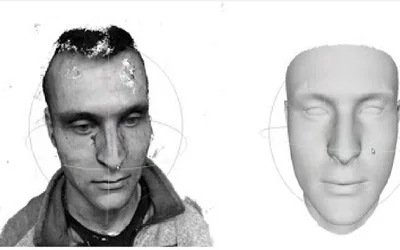
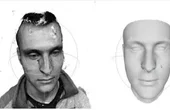
Carnegie Mellon method foregoes expensive scanners, camera setups, studios
This Report shows how tools like artificial intelligence, digital twins, and on-demand manufacturing are no longer emerging concepts, but are already delivering measurable impact across the product lifecycle.
Carnegie Mellon method foregoes expensive scanners, camera setups, studios
What are the differences between injection molding and 3D printing? Discover which manufacturing technique is best for your project.
CSAIL's SprayableTech system lets users create large-scale interactive surfaces with sensors and displays using airbrushed inks.
An engineer’s guide to understanding the state of the art in metal 3D Printing
11 minutes read.
15 minutes read.
22 minutes read.
11 minutes read.
18 minutes read.
12 minutes read.


Entertainment
The Next Byte Podcast is hosted by two young engineers - Daniel and Farbod - who select the most interesting tech/engineering cont...
165 Posts
Need a material that bends but doesn't break? Discover how ductility shapes design and performance
From Functional Prototypes to Complex, Low-Volume Parts.
Nylon parts are used widely, but when standard nylon is not tough enough, glass filled nylon is a good candidate. This polyamide engineering plastic offers higher strength, stiffness and heat resistance by adding powdered glass to nylon resin or compounding nylon with glass fibres.
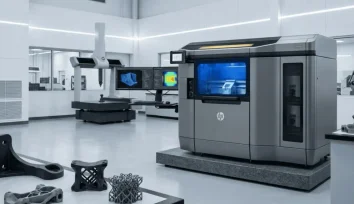
MJF 3D printing is a polymer powder-bed fusion process engineered for high throughput and mechanical consistency. Unlike legacy methods, it delivers functional, end-use parts with near-isotropic properties, making it a highly viable alternative to injection molding for low-to-mid volume production.
Discover how iAM Marketplace simplifies industrial additive manufacturing by unifying materials, validation services, and multi-brand technologies into one open ecosystem for efficient AM sourcing.
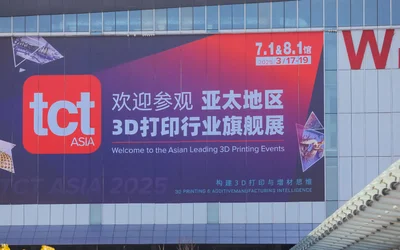
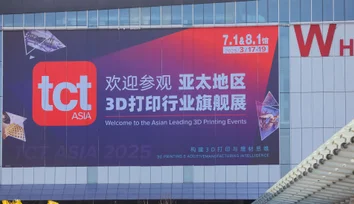
This article discusses what attendees can expect from TCT Asia 2026, including its conference format, focus areas, and the experts contributing to industry-specific discussions.
This article discusses the exhibitors, products, and industrial trends defining additive manufacturing across the Asia-Pacific region at TCT Asia 2026.
This article discusses how the Asia-Pacific region is advancing additive manufacturing and the role of TCT Asia as the leading 3D printing and additive manufacturing event in the Asia-Pacific.
Carnegie Mellon method foregoes expensive scanners, camera setups, studios

3 minutes read
What are the differences between injection molding and 3D printing? Discover which manufacturing technique is best for your project.

5 minutes read
CSAIL's SprayableTech system lets users create large-scale interactive surfaces with sensors and displays using airbrushed inks.
Four trends are setting the scene for 3D printing to become ever more versatile and deliver products that are closer to end-use, production level
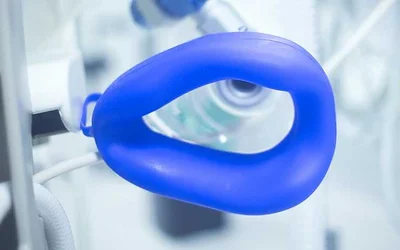
Right now, the 3D printers at the ETH spin-off Spectroplast are working at full capacity as never before: the young company has started producing silicone attachments for breathing masks on behalf of medical companies.

2 minutes read
Cloud manufacturing may not be a familiar term to everyone. But there are good reasons to get acquainted with it.

6 minutes read
DLP (Digital Light Processing) 3D printing uses photopolymerization to create 3D objects. Understanding the photopolymerization process can help you mitigate common problems that make your prints fail or that reduce print quality.
This article aims to provide insight into the many ways some of the biggest automobile manufacturers in the world use 3D printing in their workflow.
Do-it-yourself bio and maker communities can help NASA meet needs of long-distance missions.
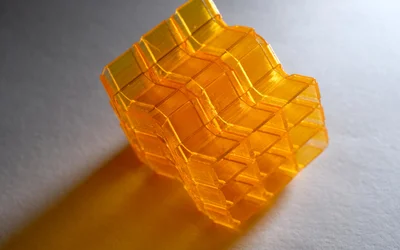
By merging the ancient art of origami with 21st century technology,researchers have created a one-step approach to fabricating complex origami structures whose light weight,expandability,and strength could have applications in everything from biomedical devices to equipment used in space exploration

3 minutes read
The FDM process creates plastic 3D models by superimposing multiple layers of melted thermoplastic polymer material into a predefined area via a computer controlled printing nozzle.

2 minutes read
What is DLP is a 3D printing? This article aims to provide an in-depth understanding of DLP 3D printing, its working principles, advantages, limitations, and diverse applications in various sectors.
Research using quantum-mechanical computation will be used to identify combinations of elements that have the most promise for load-bearing applications
A new understanding of the mechanics of dragonfly larvae respiration and maneuvering could lead to the next generation of prosthetic heart valves, say Caltech engineers.

2 minutes read
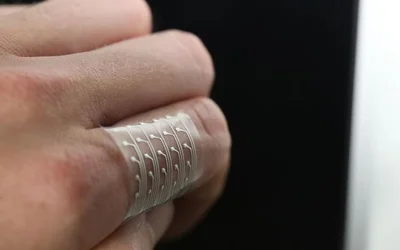
New method combines precision printing of stretchable conductive inks with pick-and-place of electronic components to make flexible, wearable sensors

4 minutes read