Featuredwebinar

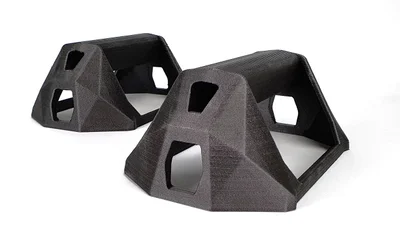
In this video we start with a recap on why you would choose MJF rather than other 3D printing technologies and explore TPU, looking at the advantages of the material and how it can be used.

This Report shows how tools like artificial intelligence, digital twins, and on-demand manufacturing are no longer emerging concepts, but are already delivering measurable impact across the product lifecycle.
In this video we start with a recap on why you would choose MJF rather than other 3D printing technologies and explore TPU, looking at the advantages of the material and how it can be used.
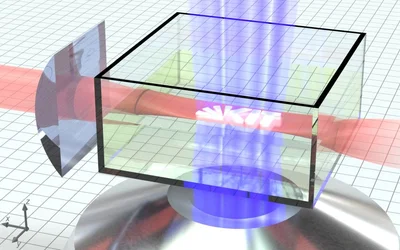
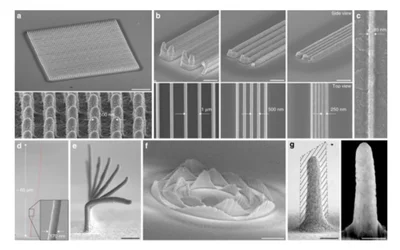
Researchers from the Cluster of Excellence "3D Matter Made to Order" Print Microstructures by Crossing Red and Blue Laser Beams - Publication in Nature Photonics
The careful study of materials for 3D printed medical models has enabled Medics to simulate bone structure in prototypes, offering physicians the most realistic, highly customized simulation possible, and at the same time, eco-friendly and with a simplified storage and refill process.
An engineer’s guide to understanding the state of the art in metal 3D Printing
15 minutes read.
22 minutes read.
11 minutes read.
18 minutes read.
12 minutes read.
16 minutes read.


Entertainment
The Next Byte Podcast is hosted by two young engineers - Daniel and Farbod - who select the most interesting tech/engineering cont...
165 Posts
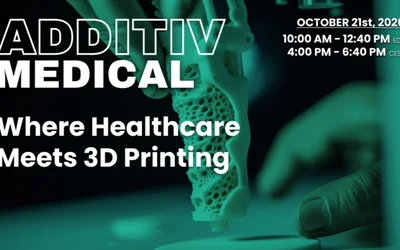
ADDITIV Medical 2026 will bring together more than 500 medical professionals
Choosing between 3D printing and injection molding is one of the key decisions in product development—especially in case of prototyping.
Explore how the right finishes and coatings can improve aerospace parts by boosting durability, extending service life, enhancing environmental resistance, and delivering the performance and appearance required for demanding applications.
The choice between 3D printing and CNC machining is the most common decision regarding manufacturing methods that must be made before placing the first order for prototypes. The correct answer depends on tolerance requirements, material specifications, component geometry, and schedule.
Discover how iAM Marketplace simplifies industrial additive manufacturing by unifying materials, validation services, and multi-brand technologies into one open ecosystem for efficient AM sourcing.
This article discusses what attendees can expect from TCT Asia 2026, including its conference format, focus areas, and the experts contributing to industry-specific discussions.
This article discusses the exhibitors, products, and industrial trends defining additive manufacturing across the Asia-Pacific region at TCT Asia 2026.
This article discusses how the Asia-Pacific region is advancing additive manufacturing and the role of TCT Asia as the leading 3D printing and additive manufacturing event in the Asia-Pacific.
In this video we start with a recap on why you would choose MJF rather than other 3D printing technologies and explore TPU, looking at the advantages of the material and how it can be used.

3 minutes read
Researchers from the Cluster of Excellence "3D Matter Made to Order" Print Microstructures by Crossing Red and Blue Laser Beams - Publication in Nature Photonics

3 minutes read
The careful study of materials for 3D printed medical models has enabled Medics to simulate bone structure in prototypes, offering physicians the most realistic, highly customized simulation possible, and at the same time, eco-friendly and with a simplified storage and refill process.

4 minutes read
As one of the most durable low-cost filaments, ABS is an essential material for most 3D printer users. But ABS print speed can be a limitation on productivity.
As a raw material, PETG is considered food-safe. However, the 3D printing process and filament brand can influence how food-safe it really is.
At the e-Swiss conference last week we came across an interesting technology showcased in a poster. Here, the process is called "Multi-metal electrohydrodynamic redox 3D printing" and developed by R. Spolenak's team at ETH Zurich.

When we think of 3D Printing, perhaps the first thing that comes to mind is a plastic component that is not quite strong enough to be used for industrial applications. However, carbon fiber filament is changing the history of 3D Printing with its reliable and highly strong mechanical properties.

3 minutes read
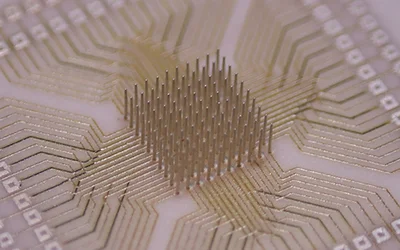
Carnegie Mellon University collaborators pioneer the CMU Array—a customizable, 3D nano-printed, ultra-high-density microelectrode array platform for next-generation brain-computer interfaces. This technology can transform the way doctors are able to treat neurological disorders.

3 minutes read
The causes behind 3D printing delamination and eight ways to improve inter-layer adhesion for stronger 3D prints.
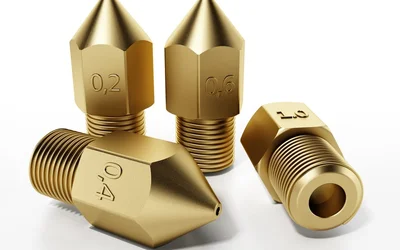
Whether you’re using the classic, V2, or Pro model, the Creality Ender 3 is a reliable entry-level 3D printer. Here we take a look at the various Ender 3 nozzle sizes you can use.
"How strong are 3D printed parts?" That’s the question most engineers ask when they consider 3D printing. After all, it’s crucial to know what’s possible with the tools at your disposal.
5 minutes read
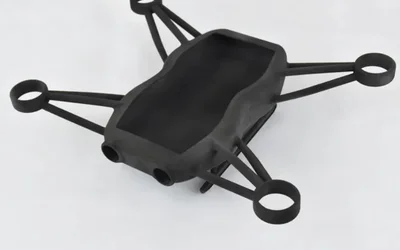
Additive Manufacturing is starting to play an essential role in the drone industry, offering new innovative manufacturing opportunities.

7 minutes read
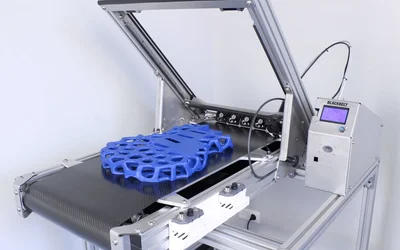
Conveyor belt 3D printers promise ultra-long parts and effortless batch printing. But are these hybrid FDM machines reliable enough for serious printing projects?
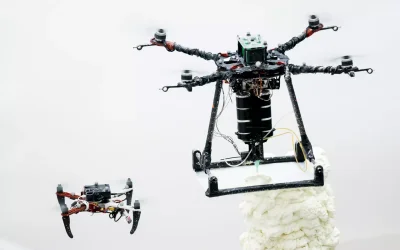
In this episode, we talk about how a team from TUM has developed a system composed of collaborative drones that can create structure in remote and/or disastrous areas.

One of the great plus points of 3D printing is that you can design pretty much any shape or geometry that you want, and Nylon is a great general-purpose material to use. But there are some key considerations to keep in mind when designing nylon parts to make sure you get the parts you want.
3 minutes read