OCXO Design Guide: Oven Controlled Crystal Oscillator
An OCXO maintains its quartz crystal at a controlled temperature for exceptional frequency stability. This guide covers OCXO design for timing engineers, including oven systems, temperature-control loops, crystal selection, specifications, variants, applications, and emerging trends.

19 Aug, 2026. 38 minutes read
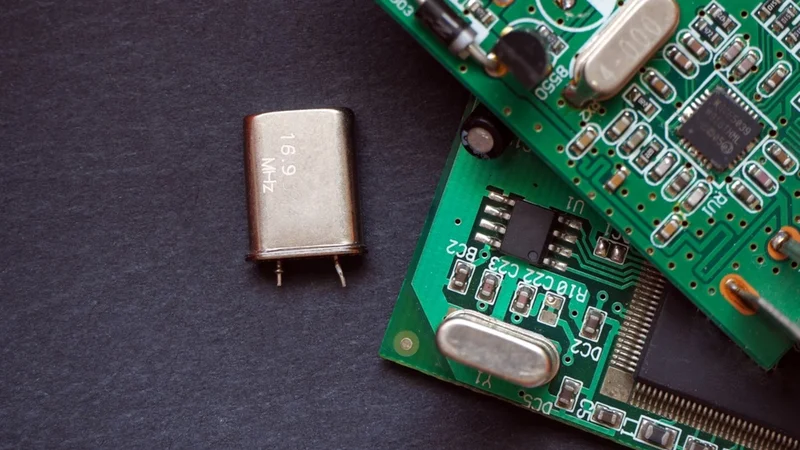
Quartz crystal resonators and oscillator circuits on printed circuit boards
Key takeaways
OCXO principle: A quartz crystal’s resonant frequency varies with temperature, but its frequency–temperature characteristic has a turnover point where the first-order temperature coefficient approaches zero. An OCXO uses a heater, temperature sensor, and closed-loop control circuit to maintain the crystal near this temperature, greatly reducing frequency changes caused by variations in ambient temperature.
High frequency stability: By isolating the resonator from external temperature variations, an OCXO can achieve frequency stability ranging from tens of parts per billion (ppb) in general-purpose devices to sub-ppb levels in high-performance designs. Exceptional devices can reach still lower instability under tightly specified conditions, but performance depends on the crystal cut, operating temperature range, control architecture, and measurement interval.
Performance trade-offs: The oven and temperature-control system introduce additional power consumption, warm-up time, size, cost, and circuit complexity compared with simpler crystal oscillators. Warm-up can range from seconds to several minutes depending on the device and the required frequency tolerance; power consumption is also typically highest during warm-up before falling toward its steady-state value.
Crystal cuts matter: Both AT-cut and SC-cut quartz crystals are used in OCXOs. AT-cut resonators offer a cost-effective solution with good overall performance, while SC-cut crystals generally provide a broader, flatter turnover characteristic, higher Q, and improved resistance to stress and acceleration effects, making them attractive for high-performance timing applications.
Applications: OCXOs are used where a stable frequency reference is critical, including telecommunications, cellular base stations, GNSS/GPS receivers, frequency counters, instrumentation, radar systems, and military communications equipment. The required combination of frequency stability, phase noise, aging, environmental tolerance, size, and power consumption determines whether an OCXO is preferable to alternatives such as a TCXO, VCXO, micro-electro-mechanical systems (MEMS)-based oscillator, or other frequency-reference technologies.
Introduction
A quartz crystal oscillator generates a precise reference frequency by exploiting the piezoelectric resonance of a quartz crystal. However, the resonant frequency of quartz changes with temperature, and the magnitude and direction of this change depend strongly on the crystal cut and its operating point. For commonly used AT-cut resonators, the frequency–temperature characteristic can be approximated by a cubic function over the relevant temperature range, producing a turnover region where the first-order temperature coefficient approaches zero.
An oven-controlled crystal oscillator (OCXO) minimizes temperature-induced frequency drift by placing the crystal resonator and, in some designs, other temperature-sensitive oscillator components inside a thermally controlled enclosure. A heater raises the internal temperature above the expected ambient temperature, while a temperature sensor and feedback controller regulate the oven around a selected setpoint, typically close to the crystal's turnover temperature. Maintaining the resonator at a nearly constant temperature prevents changes in the external environment from producing comparable changes in crystal temperature, improving frequency stability and reducing temperature-related frequency drift.
The result is a frequency reference capable of substantially better temperature stability than an uncompensated crystal oscillator and, in many applications, better stability than a temperature-compensated crystal oscillator (TCXO). This performance comes with trade-offs: an OCXO requires a heater and control loop, consumes more power, requires a finite warm-up time, and is generally larger and more expensive than simpler oscillator architectures.
The key engineering challenge is therefore not simply generating a resonant frequency but controlling the thermal environment in which that frequency is generated. Crystal selection, oven temperature, heater placement, thermal insulation, sensor location, loop dynamics, and the stability of the oscillator circuit all interact to determine the final performance. Understanding these interactions is essential when optimizing an OCXO for high-precision timing, particularly where temperature variations, aging, vibration, and other environmental conditions can otherwise limit the stability of the frequency reference.
Recommended reading: Crystal Oscillator: Fundamentals, Models, and Design Guidelines
Temperature-frequency Turnover and Oven Setpoint
The central design principle of an OCXO is to control the crystal's thermal environment rather than compensate for temperature-induced frequency changes after they occur. Selecting the right turnover point and maintaining the resonator there requires careful coordination between crystal characteristics, oven temperature, thermal design, and control-loop performance.
Turnover temperature of quartz resonators
The resonant frequency of a quartz crystal changes with temperature because temperature alters the elastic and piezoelectric properties of the quartz resonator. The magnitude of this change depends strongly on the crystal cut, orientation, resonator geometry, and operating temperature. For an AT-cut resonator, the frequency-versus-temperature characteristic is commonly approximated by a cubic function over its useful range, producing a broad turnover region in which the first-order temperature coefficient approaches zero.
The turnover temperature is the point at which the local slope of the frequency-temperature characteristic is approximately zero:
df/dT ≈ 0
At this point, small changes in crystal temperature produce only a second-order change in frequency, making the region particularly useful for an OCXO. The goal of the oven is therefore not simply to keep the crystal at an arbitrary constant temperature but to maintain it close to a carefully selected point on its frequency-temperature characteristic.
AT-cut crystals are widely used because they are relatively economical and offer good temperature performance across a broad range. SC-cut (stress-compensated) crystals are double-rotated quartz resonators developed for higher-performance applications. Their frequency-temperature characteristic is generally flatter around the elevated temperatures used in OCXOs, while their reduced sensitivity to certain mechanical stresses and acceleration effects can improve aging, vibration performance, and short-term stability. These advantages come with higher manufacturing complexity and cost, so an SC-cut resonator is not automatically the best choice for every OCXO.
Recommended reading: Crystal Oscillator: Fundamentals, Models, and Design Guidelines
Setting the oven temperature
The oven set point is selected according to the turnover temperature of the particular crystal and the operating temperature range of the oscillator. It must be sufficiently above the maximum specified ambient temperature for the heater to retain control authority. If the surrounding environment becomes hotter than the oven set point, the heater cannot remove heat, and the crystal temperature can rise with the environment, defeating the purpose of the oven.
For this reason, many OCXOs operate their resonators at an elevated temperature, often in the approximate 70–100 °C region, although the actual set point varies substantially with crystal cut, design objectives, package construction, and environmental requirements. The set point is normally optimized during development and production rather than assumed from a generic nominal value. Raising the turnover temperature can improve immunity to high ambient temperatures, but it also increases the required heater power and can narrow the useful flat region of the frequency-temperature characteristic.
During warm-up, the heater initially operates at high power to bring the oven and resonator toward the target temperature. The oscillator can exhibit a substantial temporary frequency excursion because the crystal is moving through a large portion of its frequency-temperature characteristic. As the oven approaches thermal equilibrium, the controller reduces heater power, and the frequency converges toward its final value. Warm-up performance is therefore determined not only by heater power but also by thermal mass, insulation, crystal characteristics, controller behavior, and the required definition of “ready” performance. Current commercial devices illustrate the range: Rakon specifies approximately three minutes of typical warm-up at 25°C for one smart OCXO, while other high-stability devices require substantially more power and longer thermal settling.
Temperature control loop and oven design
An OCXO oven is a thermal-control system whose purpose is to minimize changes in the crystal's actual temperature, not merely the temperature measured at one point inside the package. Its principal elements typically include:
Quartz crystal and oscillator circuit: The resonator is mounted within a thermally controlled region. Depending on the architecture, the oven may contain the crystal alone or the crystal together with temperature-sensitive oscillator components. Keeping these components at a common, stable temperature can reduce additional temperature-dependent frequency errors.
Temperature sensor: A thermistor, RTD, semiconductor sensor, or another temperature-sensing element monitors the controlled region. Sensor placement is important because the measured temperature must accurately represent the temperature of the crystal rather than merely the temperature of the heater or package.
Heater: A resistive element, transistor, or integrated heating structure converts electrical power into heat. The heater must provide enough thermal power during start-up while also allowing sufficiently fine control near steady-state.
Temperature-control loop: The controller compares the measured temperature with the target set point and adjusts heater power to compensate for heat loss to the surrounding environment. The implementation can range from relatively simple proportional control to PI/PID or digitally assisted control schemes. The critical design objectives are low steady-state temperature error, adequate disturbance rejection, minimal overshoot, and stable operation across the full environmental range.
Thermal insulation and thermal mass: Insulation reduces heat flow from the controlled region to the package and surrounding environment, lowering steady-state heater demand. Thermal mass and the thermal time constants of the oven also attenuate rapid external temperature fluctuations, although excessive thermal mass can increase warm-up time.
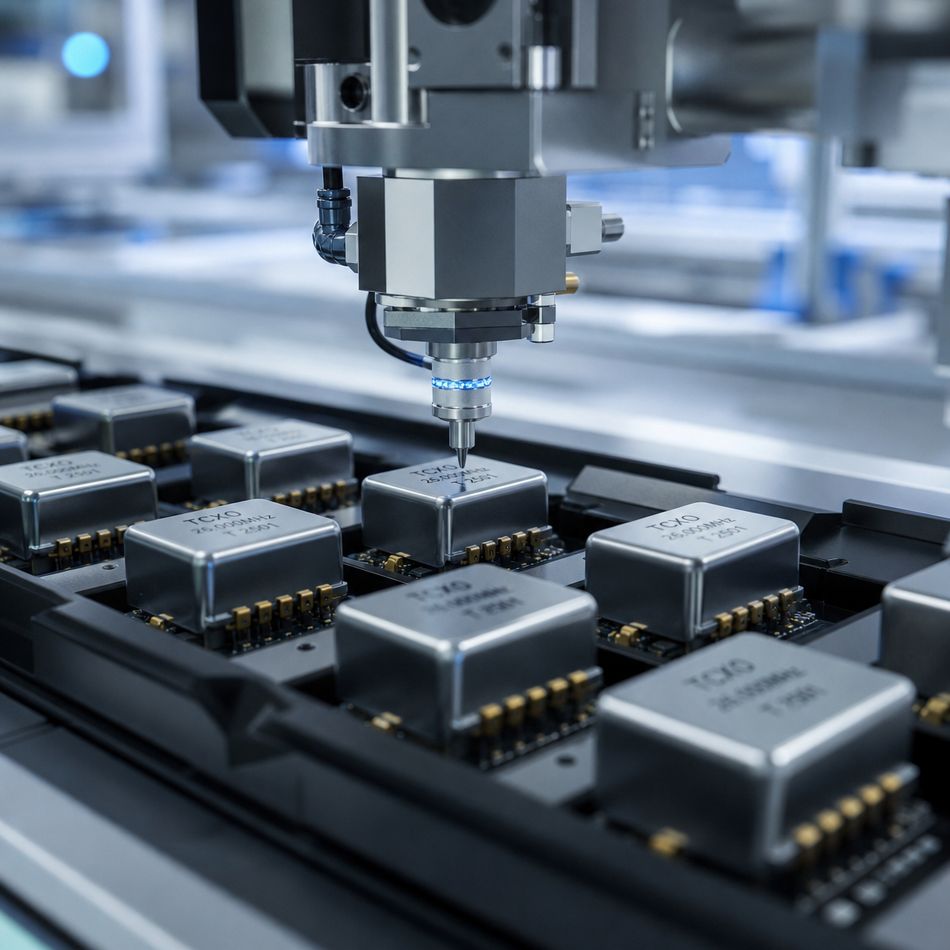
A useful way to evaluate the thermal design is to consider the oven's ability to attenuate ambient temperature changes. If a change in ambient temperature produces only a small corresponding change in crystal temperature, the resulting frequency perturbation is reduced. This is one reason why thermal insulation, careful mechanical construction, sensor placement, and heater control are as important as the nominal oven set point.
Power consumption is one of the principal trade-offs. During warm-up, the heater can require substantially more power than during steady-state operation because it must supply both the energy required to raise the oven's thermal mass to the set point and the continuing heat loss to the environment. Once thermal equilibrium is reached, heater demand falls and depends strongly on ambient temperature, package insulation, oven set point, and construction. Commercial specifications demonstrate the wide range: Rakon's MercuryX telecom OCXO specifies 1.2 W typical warm-up power and 0.4 W steady-state power at 3.3 V, whereas higher-stability OCXOs can require several watts.
Warm-up time is similarly application-dependent. A compact, low-power OCXO may reach its specified performance within a few minutes, while high-stability laboratory and instrumentation designs can require considerably longer thermal settling. Importantly, the time at which an output signal first becomes available is not necessarily the same as the time required to achieve the specified frequency stability. For example, a current Rakon smart OCXO can provide an output within one second while specifying a typical three-minute warm-up at 25°C for its tighter frequency-stability condition.
The control loop must also manage thermal transients without introducing unnecessary temperature modulation. Small periodic changes in heater power can couple directly into the crystal's frequency and appear as short-term instability or phase modulation. Consequently, a well-designed OCXO balances loop bandwidth against the thermal time constants of the oven: sufficiently fast control is needed to reject disturbances, but excessive loop bandwidth can amplify sensor noise and heater-induced thermal fluctuations.
Recommended reading: Crystal Oscillator Circuit Design: Pierce Oscillator Guide for Precision Frequency Generation
Crystal Cuts for OCXOs
The crystal cut determines much of an OCXO's temperature behavior, mechanical sensitivity, aging characteristics, and achievable stability. AT-cut and SC-cut resonators dominate precision quartz oscillators, but they represent different compromises between cost, performance, manufacturing complexity, and environmental sensitivity.
AT-cut OCXOs
AT-cut crystals are widely used in OCXOs because they provide a practical combination of frequency stability, manufacturability, and cost. The cut angle can be selected to position the resonator's turnover temperature within the range required by the oscillator design, so an AT-cut crystal does not inherently have a turnover point at room temperature. In an OCXO, the resonator is typically operated at an elevated temperature selected to minimize its frequency sensitivity to temperature while remaining compatible with the required operating temperature range.
An AT-cut resonator generally has a third-order frequency-temperature characteristic. Around its turnover region, the first-order temperature coefficient approaches zero, allowing the oven to suppress the remaining temperature-dependent frequency error. AT-cut OCXOs can therefore achieve stability in the tens-of-ppb range and, in optimized designs, considerably better performance. Their relatively simple crystal construction also makes them attractive where cost, availability, and package size are more important than achieving the lowest possible environmental sensitivity.
The trade-off is that AT-cut resonators generally have greater sensitivity to acceleration, mounting stress, and other mechanical disturbances than high-performance SC-cut resonators. Their temperature-frequency characteristic also tends to be less favorable for the most demanding OCXO applications. Consequently, an AT-cut design can provide excellent performance for telecommunications, instrumentation, and general precision timing without the additional cost and complexity of an SC-cut resonator.
SC-cut OCXOs
The SC-cut is a doubly rotated quartz cut developed to improve the environmental performance of precision resonators. Its orientation is defined by two successive rotations of the quartz plate, producing a resonator with a temperature characteristic and stress sensitivity that can be advantageous for high-performance OCXOs.
SC-cut resonators are commonly operated at elevated temperatures near their turnover region, often around the temperature range used by precision OCXO ovens. Their frequency-temperature characteristic can be flatter around the selected operating point than that of an AT-cut resonator, reducing the amount of frequency change caused by residual temperature fluctuations inside the oven. The SC-cut also provides improved resistance to certain mounting-stress effects and can offer better acceleration sensitivity, making it particularly valuable when short-term stability, low aging, and environmental robustness are important.
Another advantage is the resonator's high quality factor and suitability for demanding oscillator designs. A high-Q resonator stores energy efficiently and can support excellent close-in phase-noise performance when combined with a low-noise oscillator circuit. However, the crystal cut alone does not guarantee a particular phase noise or stability specification. The final performance depends on the resonator's Q, overtone mode, drive level, oscillator topology, sustaining circuit, power supply, thermal environment, and mechanical construction.
SC-cut OCXOs therefore tend to occupy the higher-performance end of the market. They are appropriate when the additional crystal and manufacturing complexity is justified by requirements for high-precision frequency references, low phase noise, low acceleration sensitivity, or superior environmental stability. Their higher operating temperature can also increase heater requirements, although total power consumption depends strongly on the package, insulation, ambient temperature, and oven architecture.
Other Cuts and Specialized Resonators
Other quartz cuts can be selected when a particular temperature characteristic, frequency range, or environmental response is required. These designs are less common in general-purpose OCXOs but can be useful for specialized timing and frequency-control applications. The appropriate choice depends on the required combination of turnover temperature, Q, aging, stress sensitivity, acceleration sensitivity, and manufacturing constraints.
High-performance OCXOs may also use overtone resonators rather than operating the crystal at its fundamental mode. An overtone resonator can provide a higher operating frequency while retaining the high-Q characteristics of quartz, making it useful when the reference frequency, phase-noise requirement, or oscillator architecture benefits from operation at a higher frequency.
It is also important to distinguish quartz OCXOs from MEMS-based temperature-controlled oscillators. MEMS devices use micromechanical resonators rather than an AT-cut or SC-cut quartz crystal, although some architectures use thermal control to stabilize the resonator. MEMS technology can offer advantages in size, integration, shock resistance, and manufacturing scalability, while high-performance quartz OCXOs continue to offer compelling advantages in Q, frequency stability, aging, and close-in phase noise for demanding reference applications.
Performance Metrics and Specifications
OCXO performance cannot be captured by a single frequency-stability number. Engineers typically evaluate temperature stability, short-term stability, phase noise, warm-up behavior, retrace, aging, acceleration sensitivity, and sensitivity to supply and load changes. Because these parameters depend strongly on measurement conditions, crystal cut, oscillator architecture, and environmental requirements, specifications should always be interpreted against the manufacturer's stated test conditions.
Frequency stability over temperature
Frequency stability over temperature describes how much the oscillator's output frequency changes as the specified ambient temperature varies across its operating range. It is commonly expressed as a fractional frequency deviation in parts per billion (ppb) or parts per million (ppm).
Fractional frequency deviation = Δf / f₀
where:
Δf = change in output frequency
f₀ = nominal output frequency
For example, a specification of ±50 ppb means that the measured frequency deviation remains within ±50 parts per billion of the nominal frequency over the stated temperature range and under the specified test conditions.
The achievable stability depends on the crystal cut, oven set point, thermal isolation, temperature-control accuracy, oscillator circuit, and residual temperature sensitivity of the resonator. High-performance OCXOs can achieve sub-ppb temperature stability, but such performance should not be treated as representative of all devices.
Telecommunications timing requirements also need to be distinguished from the standalone temperature stability of an OCXO. Standards such as Stratum 3 and Stratum 3E define performance within a broader synchronization system, including frequency accuracy and holdover behavior. They should therefore not be presented as generic OCXO specifications.
Short-term stability and Allan deviation
Short-term stability describes frequency fluctuations over relatively short averaging intervals and is commonly quantified using Allan deviation (ADEV). Unlike a conventional standard deviation, Allan deviation is specifically suited to characterizing the different noise processes found in oscillators and frequency references.
A commonly used expression for Allan deviation is:
σᵧ(τ) = √[1/2 × ⟨(ȳₖ₊₁ − ȳₖ)²⟩]
where:
σᵧ(τ) = Allan deviation at averaging time τ
ȳₖ = average fractional frequency during the kth measurement interval
τ = averaging time
ADEV is normally reported at multiple values of τ because different noise mechanisms dominate at different timescales. An OCXO may exhibit excellent stability at 1 s while showing increasing instability at longer averaging times because of environmental effects, aging, or other low-frequency processes.
ADEV and phase noise are related but are not interchangeable. ADEV characterizes frequency instability in the time domain, whereas phase noise describes oscillator noise in the frequency domain. Their relationship depends on the underlying noise type, so an ADEV specification should not be converted directly into a phase-noise specification without considering the oscillator's noise model and measurement bandwidth.
Warm-up time and thermal retrace
Warm-up time is the period between power application and the point at which an OCXO reaches a specified performance condition. The definition is important because an oscillator may begin producing a usable output within seconds while requiring several minutes to reach its specified frequency stability.
During warm-up, the crystal passes through different temperatures and therefore different points on its frequency-temperature characteristic. The output frequency can initially deviate substantially before converging as the oven reaches its controlled operating temperature. Thermal mass, heater power, insulation, control-loop behavior, crystal characteristics, and the required final accuracy all influence warm-up time.
"Retrace" describes the frequency difference observed after an OCXO has been powered down and restarted compared with its previous frequency state. Retrace can result from temperature history, mounting-stress relaxation, hysteresis, and changes in the mechanical condition of the resonator. Low-retrace performance is particularly important in systems that periodically power-cycle their frequency reference.
An OCXO with a short warm-up time is not necessarily the best choice for a precision application. Faster thermal response can require higher heater power or reduced thermal mass, while a design optimized for extremely low frequency instability may deliberately use greater thermal mass and thermal insulation.
Power consumption
The oven heater is normally the dominant contributor to an OCXO's additional power consumption. During warm-up, the heater must raise the crystal and surrounding thermal structure from ambient temperature to the oven set point, so input power can be substantially higher than during steady-state operation.
Once the oven reaches thermal equilibrium, the heater supplies primarily the heat lost through the package, electrical connections, and other thermal paths. Steady-state power therefore depends strongly on the difference between oven and ambient temperature, thermal insulation, package construction, oven set point, and thermal design.
This creates an important engineering trade-off. Increasing thermal insulation can reduce steady-state heater demand and improve rejection of external temperature variations, but excessive thermal mass or insulation can increase warm-up time. Similarly, increasing the oven set point provides greater margin above the maximum ambient temperature but generally increases heater requirements.
Commercial OCXOs illustrate the wide range of possible power requirements. Compact low-power devices can operate at well below 1 W under steady-state conditions, while high-performance laboratory and instrumentation OCXOs can require several watts. The relevant figure for system design is therefore the manufacturer's specified warm-up and steady-state consumption under the intended operating conditions rather than a generic OCXO value.
Aging and long-term stability
Long-term stability describes how the oscillator's frequency changes over periods ranging from days to years. One of the dominant mechanisms is aging of the crystal, which can result from material defects, surface contamination, mounting-stress relaxation, and gradual changes in the mechanical properties of the resonator.
Aging is commonly specified in ppb/day during an initial period and ppb/year over longer periods. The rate is not necessarily constant. Crystal aging often decreases with time, meaning that the initial aging rate can be substantially greater than the rate observed after the resonator has operated for an extended period.
For example, a specification of 2 ppb/year does not mean that the oscillator will shift by exactly 2 ppb every year. It describes an expected or guaranteed rate under the manufacturer's specified conditions.
For systems requiring a stable reference over many years, the aging specification should, therefore, be considered alongside temperature stability, retrievability, environmental sensitivity, calibration capability, and any available frequency-adjustment mechanism. An OCXO suppresses temperature-induced frequency changes but does not eliminate the intrinsic aging of the quartz resonator.
G-sensitivity
G-sensitivity quantifies the frequency change produced by acceleration. Mechanical acceleration can deform the resonator, change mounting stress, or alter the mechanical relationship between the crystal and its package, producing a frequency shift.
It is commonly expressed as a fractional frequency change per unit acceleration, such as ppb/g. Lower values indicate better resistance to acceleration.
SC-cut resonators can provide substantially lower acceleration sensitivity than conventional AT-cut resonators when combined with appropriate mounting structures. This makes low-g OCXOs attractive for airborne systems, navigation equipment, radar systems, and other applications exposed to vibration or acceleration.
However, the crystal cut is only one contributor to the final result. Package mechanics, mounting geometry, electrode configuration, vibration modes, and mechanical isolation can all influence g-sensitivity. Highly demanding systems may therefore use specialized mounting structures or active g-compensation in addition to a low-g resonator.
Phase noise
Phase noise describes random fluctuations in the phase of an oscillator in the frequency domain. It is normally specified in dBc/Hz at a particular frequency offset from the carrier and is particularly important in radio transmitters, radar systems, frequency synthesis, telecommunications, and precision instrumentation.
The relationship between instantaneous frequency deviation and phase deviation can be expressed as:
δf(t) = (1 / 2π) × dφ(t)/dt
where:
δf(t) = instantaneous frequency deviation
φ(t) = instantaneous phase deviation
t = time
A high-Q quartz resonator can help reduce certain oscillator noise mechanisms because it provides strong frequency selectivity and energy storage. However, the resonator does not determine phase noise by itself. Noise from the sustaining amplifier, active devices, bias circuitry, power supply, output buffer, and other components can contribute to the final phase-noise profile.
The crystal's drive level and operating mode also matter. Consequently, an SC-cut OCXO does not automatically have lower phase noise than every AT-cut OCXO. The complete oscillator architecture and measurement conditions must be considered.
Phase-noise specifications should always be compared at the same carrier frequency and offset frequency. A specification of -150 dBc/Hz at 10 kHz offset, for example, cannot be directly compared with -130 dBc/Hz at 1 Hz offset because the two measurements represent different regions of the oscillator's noise spectrum.
Recommended reading: Phase Locked Loop (PLL): How It Works and How to Design One
Supply and load sensitivity
An OCXO's output frequency can change when its supply voltage or output load changes. These effects are commonly described as supply pushing and load pulling.
Supply pushing occurs when a change in supply voltage alters the operating point of the oscillator circuit. The resulting change in active-device characteristics or circuit reactance can shift the frequency of oscillation. Low-noise voltage regulation, supply filtering, appropriate grounding, and good power-supply rejection can reduce this sensitivity.
Load pulling occurs when changes in the electrical load connected to the output influence the oscillator or output buffer. A properly designed output buffer can isolate the resonator and sustaining circuit from variations in the external load.
These effects are normally specified as a frequency change for a defined change in supply voltage or load. For example, a manufacturer might specify supply sensitivity in ppb/V or specify a maximum frequency change for a ±5% supply variation.
The electrical interface also matters. An OCXO may provide a sine-wave, CMOS, or another output format, and the choice affects output power, loading, rise/fall behavior, harmonic content, and system-level noise. A CMOS output, for example, may be convenient for digital timing systems but can introduce switching transients that require careful power and grounding design.
OCXO selection should be based on the complete performance envelope rather than a single headline specification. A system requiring low phase noise may prioritize resonator Q and oscillator noise, while a battery-powered design may prioritize power consumption and warm-up time. An airborne or mobile system may place greater emphasis on g-sensitivity and environmental robustness, whereas a laboratory frequency reference may prioritize long-term stability, low phase noise, and minimal retrace.
Comparison of Oscillator Types
The appropriate frequency-reference technology depends on the required combination of frequency stability, phase noise, power consumption, size, warm-up behavior, aging, and environmental performance. An OCXO generally occupies the high-performance end of the quartz-oscillator family, while TCXOs and conventional XOs offer lower power and simpler implementation. Atomic references can provide different advantages, particularly for long-term frequency accuracy and holdover.
The values below are representative engineering ranges rather than universal specifications. Actual performance varies substantially with frequency, resonator technology, temperature range, package construction, control architecture, and manufacturer test conditions.
Recommended reading: Crystal vs Oscillator: Choosing the Right Timing Component
Oscillator type | Typical temperature stability | Warm-up | Typical power | Short-term stability | Primary strengths | Typical applications |
XO / SPXO | ~±10 to ±100 ppm | None | mW to tens of mW | ~10⁻⁸ to 10⁻⁹ at 1 s | Low cost, low power, simple architecture | Microcontrollers, consumer electronics, general digital clocks |
TCXO / VCTCXO | ~±0.1 to ±2 ppm | None or very short | ~10–150 mW | ~10⁻¹⁰ to 10⁻¹¹ at 1 s | Good temperature performance with low power | Wireless equipment, GNSS receivers, mobile and IoT devices |
OCXO | ~±100 ppb to sub-ppb | Seconds to several minutes | Hundreds of mW to several W | ~10⁻¹¹ to 10⁻¹³+ at 1 s | Excellent temperature stability and low phase noise | Telecommunications, radar, instrumentation, frequency counters, GNSS-disciplined references |
Double-oven OCXO (DOCXO) | Sub-ppb to tens of ppt in specialized designs | Several minutes or longer | Typically higher than single-oven OCXOs | ~10⁻¹³ or better in specialized designs | Improved thermal isolation and environmental stability | Metrology, laboratory references, precision master clocks |
Rubidium atomic reference | Typically ppb-class short-term accuracy; device-dependent | Minutes | Several W | ~10⁻¹² to 10⁻¹³ at suitable averaging times | Excellent long-term frequency reference and holdover | Telecom synchronization, GNSSDOs, laboratory and network references |
Chip-scale atomic clock (CSAC) | Device-dependent, often ppb-class | Typically seconds to minutes | Sub-W to around 1 W | ~10⁻¹⁰ to 10⁻¹² at 1 s, depending on device | Atomic reference in a compact, low-power package | Portable instruments, GNSS holdover, defense and field systems |
XO and SPXO
A conventional crystal oscillator, often called an XO or simple packaged crystal oscillator (SPXO), is the simplest technology in this comparison. The oscillator uses the quartz resonator directly without active temperature compensation or an oven. As a result, its frequency is strongly affected by ambient temperature, supply voltage, aging, and mechanical conditions.
The principal advantage is simplicity. An XO can consume very little power, start almost immediately, and occupy a small package, making it appropriate when ppm-level frequency stability is sufficient.
TCXO and VCTCXO
A TCXO improves temperature performance by measuring or predicting the crystal's temperature dependence and applying an electrical correction to the oscillator frequency. Unlike an OCXO, it does not maintain the crystal at a constant elevated temperature.
This approach substantially reduces power consumption and warm-up time while providing much better temperature stability than an uncompensated XO. A voltage-controlled TCXO, or VCTCXO, adds a control input that allows the output frequency to be adjusted electronically.
The trade-off is that compensation cannot completely eliminate every temperature-dependent mechanism in the resonator. Residual frequency errors, calibration accuracy, aging, and environmental sensitivity therefore remain important considerations.
OCXO
An OCXO takes a fundamentally different approach: instead of electronically correcting the crystal's temperature response across the entire operating range, it places the resonator in a controlled thermal environment. The oven maintains the crystal near a carefully selected operating temperature, reducing the frequency sensitivity to changes in external temperature.
This architecture can provide substantially better temperature stability, short-term stability, and phase-noise performance than many TCXO implementations. The penalty is additional heater power, warm-up time, package complexity, and cost.
For systems such as telecommunications infrastructure, radar, frequency counters, precision instrumentation, and GNSS-disciplined oscillators, these trade-offs can be worthwhile because the frequency reference may be one of the most important determinants of overall system timing performance.
Double-oven OCXO
A double-oven OCXO, or DOCXO, uses two levels of thermal isolation or temperature control. The inner oven provides a highly stable environment for the resonator, while the outer thermal stage reduces the temperature disturbances reaching the inner oven.
The additional thermal isolation can improve rejection of environmental temperature changes and reduce the heater's response to external disturbances. However, the architecture increases size, power consumption, thermal complexity, and warm-up time.
DOCXOs are therefore specialized devices rather than a universal replacement for single-oven OCXOs. They are most appropriate when the improvement in environmental stability justifies the additional system-level cost and power.
Rubidium atomic references
A rubidium reference derives its frequency from an atomic transition rather than the mechanical resonance of quartz. Quartz oscillators can still form part of the control and output architecture, but the atomic transition provides the long-term frequency reference.
This distinction is important when comparing an OCXO with a rubidium oscillator. An OCXO can offer excellent short-term stability and very low phase noise, while a rubidium reference provides superior long-term frequency accuracy. In systems requiring both characteristics, an atomic reference may discipline a high-performance quartz oscillator rather than replace it directly.
Chip-scale atomic clocks
A chip-scale atomic clock (CSAC) miniaturizes the physics and electronics required for an atomic frequency reference into a much smaller package than conventional laboratory or rack-mounted atomic standards. Their low power consumption and compact size make them attractive when an application needs atomic-level long-term reference performance but cannot accommodate the size or power requirements of a conventional rubidium standard.
CSACs generally occupy a different performance envelope from high-end OCXOs. An OCXO can offer excellent short-term stability and low phase noise, while a CSAC can provide superior long-term frequency accuracy in applications where holdover is important. The appropriate choice therefore depends on whether the dominant requirement is short-term noise, long-term accuracy, power consumption, environmental robustness, or a combination of these factors.
Choosing between oscillator technologies
The selection is ultimately an optimization problem:
Choose an XO/SPXO when cost, size, and power are more important than high frequency stability.
Choose a TCXO when good temperature stability is required without the power and warm-up penalty of an oven.
Choose an OCXO when high frequency stability, low phase noise, and strong temperature isolation justify additional power and thermal complexity.
Choose a DOCXO when environmental temperature rejection beyond a conventional OCXO is required and the additional power and size are acceptable.
Choose a rubidium reference when long-term frequency accuracy and holdover are more important than minimum power and size.
Consider a CSAC when atomic-reference performance is required in a compact, low-power system.
In many precision timing systems, these technologies are complementary rather than mutually exclusive. For example, a GNSS-disciplined oscillator may use a quartz OCXO as its low-noise local reference while an external GNSS signal provides long-term correction. This allows the system to combine the OCXO's short-term stability and low phase noise with the long-term accuracy of an external frequency reference.
OCXO Variants and Enhancements
The basic OCXO architecture can be adapted to meet different requirements for frequency adjustment, environmental stability, size, power consumption, and long-term accuracy. These variants extend the usefulness of the OCXO from standalone frequency references to disciplined timing systems and compact embedded applications.
Voltage-controlled OCXO (VC-OCXO)
A voltage-controlled OCXO adds an electronic frequency-adjustment mechanism that allows the output frequency to be fine-tuned using an external control voltage. Depending on the oscillator architecture, the control voltage can adjust a varactor or another frequency-sensitive element in the sustaining circuit.
The tuning range is normally much narrower than that of a conventional VCXO because the purpose is precision frequency steering rather than large frequency excursions. A typical VC-OCXO may provide tuning over tens to hundreds of parts per billion, although the available range varies considerably between devices.
The control input is particularly important in frequency-disciplined systems. In a GNSS-disciplined oscillator (GNSSDO), the GNSS receiver compares the local oscillator with the received reference and generates a correction signal. A control loop then applies a slowly varying correction voltage to the OCXO, allowing the oscillator to maintain long-term frequency accuracy while preserving the excellent short-term stability of the quartz reference.
The control interface must be designed carefully. Noise or unwanted signals on the control voltage can modulate the oscillator frequency and appear as phase or frequency noise at the output. The loop bandwidth must also be selected carefully: a bandwidth that is too wide can transfer reference noise into the OCXO, while a bandwidth that is too narrow can make the system slow to correct frequency errors.
Double-oven OCXO (DOCXO)
A double-oven OCXO, or DOCXO, uses two stages of thermal control. The inner oven maintains the crystal at its controlled operating temperature, while the outer oven provides an additional layer of thermal isolation from the external environment.
The outer oven reduces the magnitude and rate of temperature changes reaching the inner oven. This can improve rejection of ambient temperature variations, reduce thermal gradients, and decrease the amount of work required from the inner temperature-control loop. The resulting improvement can be particularly valuable for applications where extremely low-frequency instability is required.
However, adding a second oven does not automatically produce parts-per-trillion performance. The ultimate stability remains dependent on the crystal cut, resonator Q, oscillator noise, temperature-control accuracy, thermal gradients, mechanical stress, aging, and environmental sensitivity. A DOCXO is, therefore, a thermal-engineering technique rather than a guaranteed performance class.
The additional oven also increases power consumption, package size, circuit complexity, and warm-up time. These penalties limit DOCXOs primarily to applications such as precision frequency standards, metrology, laboratory instrumentation, and high-end telecommunications infrastructure where the improvement in environmental isolation justifies the additional resources.
Miniature and low-power OCXOs
Traditional OCXOs can consume substantial power because the oven must continuously compensate for heat lost to the surrounding environment. Advances in low-power heaters, temperature sensors, control electronics, package construction, and thermal insulation have enabled much smaller and more efficient designs.
Modern surface-mount OCXOs can occupy packages only a few tens of millimeters across, while specialized low-power devices can reduce steady-state heater consumption to well below 1 W. These improvements are particularly useful in systems where an OCXO is required but board area, thermal loading, or battery capacity is limited.
Low-power operation is achieved through a combination of techniques rather than simply reducing heater power. Improved insulation reduces heat loss, smaller thermal masses reduce the energy required during warm-up, and optimized control loops minimize unnecessary heater modulation. The trade-off is that aggressive miniaturization can reduce thermal isolation and make the resonator more susceptible to temperature gradients and external disturbances.
Manufacturer specifications illustrate the range available in practice. For example, low-power OCXOs are available with steady-state consumption in the hundreds-of-milliwatts range, while conventional and laboratory-grade devices can require several watts. Such figures should always be evaluated alongside the specified temperature range, stability, warm-up condition, and output configuration rather than considered in isolation.
GNSS-disciplined and rubidium-disciplined OCXOs
A GNSS-disciplined oscillator (GNSSDO) combines a local oscillator, commonly an OCXO, with a GNSS receiver and control loop. The GNSS signal provides a long-term frequency and timing reference, while the OCXO provides the low-noise, short-term local signal.
The control system normally operates much more slowly than the OCXO's own oscillation frequency. It measures the phase or frequency difference between the local reference and the GNSS-derived reference, filters the measurement, and applies a small correction through the OCXO's frequency-control input. When the GNSS signal is unavailable, the OCXO can continue operating in holdover, with its performance then determined primarily by the oscillator's aging, temperature sensitivity, and prior calibration.
This architecture illustrates why the best frequency reference is not always the one with the lowest standalone frequency error. A GNSS receiver can provide excellent long-term accuracy but is vulnerable to antenna problems, interference, signal blockage, and loss of satellite reception. The OCXO provides the local short-term stability needed to bridge these interruptions.
A rubidium-disciplined OCXO uses a similar complementary architecture but replaces the GNSS reference with a rubidium atomic frequency standard. The rubidium oscillator supplies excellent long-term frequency accuracy, while the OCXO can provide lower short-term phase noise and a cleaner local output. The resulting combination is useful in applications requiring both atomic-level long-term reference performance and a low-noise quartz output.
In both GNSSDO and rubidium-disciplined architectures, the discipline-loop bandwidth is a critical design parameter. A narrow loop allows the OCXO to retain more of its short-term stability and suppresses high-frequency reference noise, while a wider loop corrects frequency errors more quickly at the expense of transferring more reference noise to the local oscillator. The optimum bandwidth therefore depends on the reference quality, OCXO stability, required holdover performance, and application.
Applications of OCXOs
An OCXO is valuable wherever the stability of a local frequency reference directly affects system timing, synchronization, measurement accuracy, or signal quality. Its combination of high frequency stability, low phase noise, and strong rejection of ambient temperature changes makes it useful across telecommunications, navigation, instrumentation, radar, broadcasting, and precision measurement. The required performance, however, varies significantly between applications, so an OCXO optimized for a telecom base station may have very different characteristics from one designed for laboratory metrology.
Telecommunications and network synchronization
Modern telecommunications networks depend on stable frequency references to coordinate clocks, data transmission, radio carriers, and distributed network equipment. OCXOs are commonly used as local references in network synchronization equipment and wireless infrastructure because their low frequency drift allows the equipment to maintain timing performance when an external reference is temporarily unavailable.
Standards such as Telcordia GR-1244 define performance requirements for network synchronization clocks, including frequency accuracy, stability, and holdover behavior. These requirements apply to the clocking system, rather than defining a universal specification for the OCXO itself. The oscillator is one component within that synchronization architecture and must be selected according to the required clock performance.
In cellular base stations, an OCXO can provide a stable local reference for radio-frequency synthesis and timing functions. It may also operate as part of a GNSS-disciplined or packet-synchronized clock, where the external reference provides long-term correction while the OCXO supplies a cleaner short-term local reference.
This distinction becomes increasingly important in technologies such as synchronous Ethernet (SyncE), where frequency synchronization is distributed through the network. In these systems, the OCXO's role is to maintain a stable local frequency while the broader synchronization architecture manages traceability and network timing.
Radar, electronic warfare, and instrumentation
Radar systems and electronic warfare equipment can be highly sensitive to the spectral purity and stability of their frequency references. Frequency fluctuations in a local oscillator can translate into phase errors, degraded coherent processing, frequency uncertainty, or reduced measurement performance.
High-performance OCXOs, particularly those using SC-cut resonators, can provide low phase noise and low sensitivity to mechanical disturbances. However, the required specification depends strongly on the radar architecture and operating frequency. A statement that every SC-cut OCXO provides a particular phase-noise or g-sensitivity value would therefore be misleading; these characteristics must be evaluated from the complete device specification.
Instrumentation presents another important application. Frequency counters, signal generators, spectrum analyzers, network analyzers, and other precision instruments often use a quartz frequency reference to establish their internal timebase. An OCXO can provide the combination of short-term stability, temperature stability, and low phase noise required to maintain measurement accuracy.
In the most demanding laboratory instruments, the OCXO may be combined with an external reference or atomic standard. This allows the quartz oscillator to provide a clean local signal while the external reference establishes long-term frequency accuracy.
Recommended reading: RF Design Methodology: From Specification to Verification
GNSS-disciplined oscillators and navigation
GNSS receivers provide access to highly accurate timing and frequency references derived from satellite signals, but the received signal is not continuously available under all operating conditions. Antenna blockage, interference, multipath, signal loss, and other environmental factors can interrupt the reference.
A GNSS-disciplined oscillator (GNSSDO) combines a GNSS receiver with a local oscillator, commonly an OCXO. The GNSS receiver provides the long-term reference, while the OCXO provides a stable local frequency with substantially lower short-term phase variation than the raw timing signal. A control loop slowly adjusts the OCXO to remove long-term frequency error without allowing rapid GNSS timing fluctuations to dominate the local output.
When the GNSS reference disappears, the OCXO enters holdover. During holdover, its performance depends on factors such as aging, temperature sensitivity, calibration, and recent operating history. An OCXO with excellent long-term stability and low temperature sensitivity can therefore maintain useful timing performance during relatively long interruptions.
Navigation and positioning equipment can similarly use OCXOs when the local frequency reference must remain stable during periods of degraded or unavailable external synchronization. The required performance depends on the navigation architecture and whether the oscillator is supporting GNSS processing, inertial sensors, communications, or another timing function.
Broadcast and aerospace systems
Broadcasting systems require stable frequency references to maintain carrier and sampling accuracy across transmission equipment. OCXOs can provide the local reference required by digital radio, television, and other communications equipment, particularly where low phase noise and stable frequency generation are important.
A common reference output such as 10 MHz may be distributed throughout a facility and used to synchronize frequency synthesizers, converters, transmitters, and measurement equipment. In larger broadcast systems, the OCXO may itself be disciplined by a higher-level reference rather than operating as an isolated frequency standard.
Aerospace applications impose additional constraints because oscillator performance must be maintained despite vibration, acceleration, thermal cycling, limited power availability, and, in some missions, radiation exposure. Specialized space-qualified oscillators may therefore use radiation-tolerant components, hermetic packaging, redundant architectures, and extensive qualification testing.
Not every aerospace OCXO is radiation-hardened, however. Radiation tolerance is a property of the complete device design and qualification process rather than an inherent characteristic of the OCXO architecture. Mission requirements determine whether a commercial, industrial, military, or radiation-qualified oscillator is appropriate.
Seismic monitoring and low-power remote applications
Seismic and geophysical monitoring systems can require accurate timing to correlate measurements from sensors separated by large distances. At the same time, remote stations may operate from batteries, solar power, or other energy-limited sources.
Low-power OCXOs provide a useful compromise between the temperature stability of a conventional OCXO and the energy requirements of a remote instrument. Advances in thermal insulation, miniaturized heaters, and control electronics have reduced steady-state power consumption substantially in some designs.
The required stability depends on the measurement system and synchronization architecture. A seismic instrument may specify ADEV at a particular averaging time and an aging limit rather than simply requiring a generic “high-stability OCXO.” Engineers should therefore select the device using the complete stability profile, power requirement, warm-up behavior, and environmental specification.
OCXOs versus atomic and MEMS references
OCXOs compete with, and are often combined with, atomic and MEMS-based frequency references rather than simply replacing them.
Rubidium frequency standards derive their long-term frequency reference from an atomic transition and can provide excellent long-term frequency accuracy. They generally consume more power and require more complex electronics than quartz oscillators. In systems where short-term phase noise is important, a rubidium reference may be used to discipline a high-performance OCXO rather than directly providing the final low-noise output.
Chip-scale atomic clocks (CSACs) reduce the size and power requirements of atomic references and can provide useful long-term frequency stability in portable systems. Their performance envelope differs from that of a high-performance quartz OCXO: the CSAC's atomic transition provides an excellent long-term reference, while a quartz OCXO can offer very strong short-term stability and low phase noise.
MEMS oscillators provide another alternative. Their advantages can include small size, mechanical robustness, integration, and low power. However, high-performance quartz resonators continue to offer important advantages in Q factor, aging, and phase-noise performance for demanding frequency-reference applications.
Consequently, the most effective architecture may combine technologies rather than select only one. A GNSS receiver, atomic reference, or other external standard can establish long-term accuracy, while an OCXO supplies a low-noise local signal and maintains stable operation during interruptions. The choice ultimately depends on the required combination of frequency stability, long-term accuracy, phase noise, power consumption, environmental robustness, and holdover performance.

Selecting and designing with an OCXO
Selecting an OCXO is a system-level decision rather than a matter of choosing the device with the smallest frequency-stability number. The oscillator must satisfy the required stability while fitting the available power budget, control architecture, mechanical environment, operating temperature range, and space constraints. The following considerations provide a practical starting point for selecting or integrating an OCXO.
1. Define the frequency-stability requirement
Start by defining the maximum allowable frequency error over the complete operating temperature range and required time interval. Specify whether the requirement refers to temperature stability, short-term stability, aging, retrace, or overall frequency accuracy because these are different performance parameters.
For example, a telecommunications design may require stability on the order of tens or hundreds of ppb, while a laboratory frequency reference may require sub-ppb or substantially lower instability. Avoid selecting an OCXO solely from a headline specification; examine the manufacturer's test conditions, averaging time, frequency, temperature range, and aging assumptions.
2. Choose the appropriate crystal technology
Crystal selection should consider more than the target frequency stability. AT-cut resonators can provide excellent performance at comparatively low cost and are suitable for many general-purpose OCXOs. SC-cut resonators are generally preferred when the application demands lower environmental sensitivity, improved acceleration performance, high Q, or very low short-term instability.
The crystal cut should therefore be evaluated together with phase noise, g-sensitivity, aging, drive level, turnover temperature, package construction, and availability. An SC-cut resonator is not automatically justified simply because the required stability is below a particular ppb threshold.
3. Budget warm-up time and power
Determine the maximum acceptable warm-up time and both the peak and steady-state power requirements. The system power supply must accommodate the higher current drawn by the heater during start-up, while the enclosure and PCB must be capable of dissipating the steady-state heat generated during operation.
Low-power OCXOs can substantially reduce thermal loading, but their lower energy consumption may involve compromises in thermal isolation, operating range, warm-up performance, or environmental disturbance rejection. Evaluate these parameters together rather than optimizing power consumption independently.
4. Select tuning and frequency-control requirements
Determine whether the oscillator requires electronic frequency adjustment. A fixed-frequency OCXO may be sufficient for a standalone reference, while a voltage-controlled OCXO is useful when the frequency must be calibrated, remotely adjusted, or disciplined by an external reference.
For a GNSSDO, network-synchronized clock, or other disciplined architecture, evaluate the available tuning range, tuning sensitivity, control voltage range, tuning linearity, and control port noise. The control voltage should be sufficiently clean because noise coupled into the frequency-control path can modulate the oscillator and degrade close-in phase noise.
The required tuning range should also be kept as small as practical for the intended application. Excessive tuning range can increase sensitivity to control-voltage noise and may make the oscillator more susceptible to unwanted frequency modulation.
5. Consider package size and thermal management
OCXOs range from compact surface-mount devices to relatively large laboratory modules. Package dimensions should therefore be considered together with thermal behavior rather than treated as a simple PCB footprint constraint.
The oscillator generates heat continuously, and nearby components can influence its thermal environment. Avoid placing high-power components, switching regulators, processors, or other heat sources immediately adjacent to the OCXO when possible. Rapidly changing heat sources can introduce temperature gradients that the oven cannot completely reject.
The PCB layout should also provide appropriate mechanical support and thermal paths. In some applications, intentionally isolating the OCXO from the main PCB or using a dedicated thermal region can reduce environmental coupling. Conversely, completely enclosing an OCXO without considering heat dissipation can raise the local ambient temperature and increase steady-state heater demand.
6. Mitigate vibration and acceleration
Evaluate the mechanical environment early in the design. Vibration and acceleration can produce frequency shifts through deformation and mounting stress in the resonator and package.
For demanding mobile, airborne, marine, or radar applications, consider an SC-cut or specifically characterized low-g OCXO. Check the manufacturer's g-sensitivity specification over the relevant frequency range and acceleration conditions rather than relying only on the crystal cut.
Where the disturbance environment is severe, mechanical isolation, specialized crystal mounting, vibration compensation, or active g-compensation may be required. These techniques add complexity, so the mechanical environment should be quantified before selecting the oscillator.
7. Account for aging and retrace
Include crystal aging in the system's long-term frequency-error budget. Aging can cause the oscillator frequency to change gradually even when the oven temperature remains tightly controlled.
The design should account for both the initial aging rate and the longer-term aging specification. If the system requires extremely tight long-term accuracy, periodic calibration or external disciplining may be necessary.
GNSS, network synchronization, or an atomic reference can periodically correct the OCXO and compensate for accumulated frequency error. In a disciplined system, however, the correction loop should be designed so that it does not unnecessarily transfer reference noise into the OCXO's otherwise clean short-term output.
8. Evaluate the electrical interface
Check the required supply voltage, output format, output amplitude, load, startup behavior, and frequency-control interface. The output may be a sine wave, CMOS signal, or another format, and each has different implications for loading, harmonics, power consumption, and system-level noise.
The power supply should provide adequate regulation and filtering because supply variations can produce frequency shifts or add noise to the oscillator. The output network should likewise prevent changes in external loading from significantly pulling the oscillator frequency.
Recommended reading: Signal Integrity Testing for High-Speed PCB Design
9. Evaluate alternatives before committing to an OCXO
An OCXO is not automatically the best solution for every precision-timing problem. If the required stability can be achieved with lower power and lower cost, a TCXO may be more appropriate. MEMS oscillators may be preferable when size, mechanical robustness, integration, or supply availability dominates the design.
Conversely, applications requiring exceptional long-term frequency accuracy may benefit from an atomic reference such as a rubidium oscillator or CSAC. A hybrid architecture can also provide the best overall performance—for example, using an OCXO for low-noise short-term stability while GNSS or an atomic reference provides long-term frequency correction.
The final selection should therefore be based on a complete system-level error budget covering temperature stability, short-term stability, phase noise, aging, retrace, g-sensitivity, power consumption, warm-up time, supply sensitivity, package constraints, and cost. This approach prevents over-specifying the oscillator in one parameter while overlooking another limitation that ultimately dominates system performance.
Emerging trends and future directions
The evolution of the OCXO is increasingly focused on improving the balance between frequency stability, size, power consumption, environmental robustness, and integration. Rather than pursuing stability alone, manufacturers are using improved resonator fabrication, thermal packaging, control electronics, and system-level integration to make oven-controlled references practical in applications that previously required larger or more power-hungry timing solutions.
Miniaturization and lower power
One of the clearest trends is the development of miniature surface-mount OCXOs. Improvements in heater efficiency, temperature sensing, thermal insulation, and package construction are reducing both physical size and steady-state power requirements.
This is particularly important for communications infrastructure, portable instrumentation, GNSS equipment, and other systems where an OCXO must fit within a constrained thermal and electrical budget. However, miniaturization introduces a fundamental trade-off: a smaller thermal structure generally has less thermal mass and a shorter thermal path, making the resonator potentially more exposed to external temperature variations.
Consequently, the smallest OCXO is not necessarily the most stable. Designers must balance package volume, power consumption, warm-up behavior, thermal isolation, and environmental sensitivity according to the application.
MEMS-based temperature-controlled oscillators
MEMS technology is another important development in precision timing. MEMS resonators offer advantages in manufacturing scalability, mechanical robustness, integration, and package size. Temperature-controlled MEMS oscillators can use thermal control or compensation to reduce the frequency sensitivity that normally limits uncompensated MEMS devices.
The goal is not simply to reproduce a conventional quartz OCXO in a smaller package. Instead, researchers and manufacturers are exploring architectures that combine MEMS resonators with advanced temperature sensing, compensation, control electronics, and thermal packaging to achieve an attractive combination of stability, shock resistance, size, and power consumption.
Quartz remains highly competitive for the most demanding frequency-reference applications because of its high Q, mature manufacturing technology, low phase noise, and established aging characteristics. MEMS-based approaches therefore represent an expanding alternative rather than a universal replacement for quartz.
Low-g and environmentally robust frequency references
As precision timing moves into aircraft, autonomous systems, mobile platforms, and other mechanically demanding environments, acceleration sensitivity is becoming increasingly important. Future OCXOs are likely to place greater emphasis on reducing frequency shifts caused by vibration, shock, and acceleration.
SC-cut resonators, optimized mounting structures, mechanical isolation, and active compensation can all contribute to lower g-sensitivity. Packaging is particularly important because the mechanical structure surrounding the resonator can convert external acceleration into stress on the crystal.
The same principle applies to thermal disturbances. Improved thermal modeling and multilayer insulation can reduce thermal gradients and help maintain the crystal close to its optimum operating temperature even when the ambient temperature changes rapidly.
Integration with atomic references and GNSS
Another trend is the convergence of different frequency-reference technologies. Chip-scale atomic clocks continue to provide an increasingly compact way to obtain an atomic frequency reference, particularly for systems requiring good holdover without the size and power requirements of conventional atomic standards.
However, atomic references and OCXOs have complementary strengths. An atomic reference can provide excellent long-term frequency accuracy, while a high-performance quartz oscillator can provide very low short-term frequency noise and phase noise. Hybrid architectures can therefore use an atomic reference to discipline an OCXO rather than treating the two technologies as competing alternatives.
GNSS integration follows a similar approach. An integrated GNSSDO can combine a GNSS receiver with a voltage-controlled OCXO and the associated discipline electronics. The GNSS signal establishes long-term frequency and time accuracy, while the OCXO provides a clean local reference and maintains operation during periods of GNSS interruption.
Integrated timing and frequency synthesis
The boundary between the oscillator and the rest of the timing system is also becoming less distinct. Integrated modules can combine an OCXO with frequency synthesis, clock distribution, monitoring, and external reference inputs, reducing the number of discrete components required by the system designer.
For telecommunications, instrumentation, radar, and high-speed digital systems, this integration can simplify board design while providing controlled clock outputs at multiple frequencies. The challenge is ensuring that synthesizer and distribution circuitry do not compromise the low phase noise and short-term stability provided by the underlying OCXO.
Future designs will therefore increasingly treat the oscillator as part of a complete timing subsystem rather than an isolated component.
Where OCXOs are heading
The long-term direction is not simply toward “better” OCXOs. Instead, the technology is moving toward application-specific frequency references optimized for different combinations of stability, power, size, environmental robustness, and cost.
For battery-powered equipment, the priority may be a miniature OCXO with low steady-state power. For aerospace and defense systems, low g-sensitivity and environmental robustness may dominate. Telecommunications systems may prioritize holdover, low phase noise, and integration with GNSS or network synchronization, while laboratory instruments may continue to favor large, thermally isolated oscillators capable of exceptional frequency stability.
Quartz-based oven-controlled crystal oscillators, therefore, remain highly relevant even as MEMS and atomic technologies advance. Their combination of mature resonator technology, high Q, low phase noise, and excellent short-term stability makes the OCXO likely to remain an important component of precision timing systems, while newer architectures expand where and how that performance can be deployed.
Frequently asked questions (FAQ)
What makes an OCXO more stable than a TCXO?
A temperature-compensated crystal oscillator (TCXO) measures or compensates for the crystal's temperature dependence electronically. An OCXO, by contrast, places the quartz resonator inside a controlled thermal environment and maintains it near a temperature where the frequency-temperature characteristic is relatively flat.
Near the resonator's turnover temperature, the first-order temperature coefficient approaches zero:
dF/dT ≈ 0
This greatly reduces the effect of changes in the external environment on the crystal's frequency. The trade-off is additional heater power, thermal-management requirements, warm-up time, size, and cost. The actual performance advantage depends on the specific TCXO and OCXO being compared; high-performance TCXOs can already provide excellent temperature stability, while specialized OCXOs can reach sub-ppb performance.
Why do OCXOs require warm-up time?
An OCXO must heat its crystal and associated thermal structure from the starting ambient temperature to its controlled oven temperature. During this period, the resonator moves through its frequency-temperature characteristic, so the output frequency can initially differ substantially from its final value.
The heater typically operates at a high power level during startup and then reduces its duty cycle once the oven approaches the set point. The required warm-up time depends on the thermal mass, heater power, insulation, oven temperature, control-loop design, and the frequency accuracy that must be reached before the oscillator is considered ready.
Compact low-power OCXOs can reach their specified performance relatively quickly, whereas highly stable laboratory oscillators may require several minutes or longer. Engineers should therefore use the manufacturer's defined warm-up specification rather than assuming a universal value.
What is the difference between AT-cut and SC-cut crystals in an OCXO?
AT-cut and SC-cut quartz resonators have different temperature-frequency characteristics and mechanical sensitivities.
AT-cut crystals are widely used because they provide good frequency stability, are relatively mature and cost-effective, and can support a broad range of oscillator applications. SC-cut crystals use a different crystal orientation designed to reduce sensitivity to temperature and mechanical stress. They are particularly attractive for high-performance OCXOs where low frequency instability, low g-sensitivity, and low phase noise are important.
The SC-cut resonator's higher turnover temperature also makes it well suited to an oven operating above normal ambient temperatures. However, SC-cut devices generally require more demanding manufacturing and packaging, so they can cost more than comparable AT-cut designs.
How is short-term stability measured, and why is Allan deviation important?
Allan deviation (ADEV) is one of the principal methods used to characterize oscillator frequency instability in the time domain. It evaluates how the average fractional frequency changes between successive measurement intervals and is reported as a function of averaging time, τ.
A commonly used expression is:
σᵧ(τ) = √[1/2 × ⟨(ȳₖ₊₁ − ȳₖ)²⟩]
where:
σᵧ(τ) = Allan deviation at averaging time τ
ȳₖ = average fractional frequency during the kth measurement interval
τ = averaging time
ADEV is useful because different oscillator noise mechanisms dominate at different averaging times. Engineers can therefore use an ADEV plot to determine whether an oscillator meets the required stability at 1 s, 10 s, 100 s, or another relevant interval.
ADEV should not, however, be treated as a direct measurement of phase noise or timing jitter. These are related but distinct metrics, and the relationship between them depends on the oscillator's noise characteristics and the measurement bandwidth.
What is holdover stability, and why does it matter in telecommunications?
Holdover describes the ability of a timing system to maintain acceptable frequency performance after its external reference has been lost. For example, a telecommunications clock may normally be synchronized to GNSS, another network clock, or a precision external reference. If that reference becomes unavailable, the local oscillator must maintain the required frequency accuracy until synchronization is restored.
The holdover performance belongs to the complete timing system, not simply to the OCXO. It depends on the oscillator's temperature sensitivity, aging, calibration, retrace, environmental conditions, and the design of the synchronization and holdover algorithms.
Telecommunications standards define requirements for different classes of synchronization equipment. Engineers should therefore distinguish the performance requirement of a Stratum clock or network synchronization function from the standalone frequency specification of the OCXO inside that system.
A high-quality OCXO can significantly improve holdover because its frequency changes slowly after the external reference disappears. However, even an excellent OCXO cannot eliminate long-term drift caused by crystal aging and environmental effects.
When should I use a DOCXO or an atomic reference instead of a standard OCXO?
A double-oven OCXO (DOCXO) is appropriate when additional thermal isolation is required beyond what a single oven can provide. The second thermal stage reduces the temperature disturbances reaching the inner oven and can improve environmental stability. DOCXOs are therefore used in demanding laboratory, metrology, instrumentation, and precision timing applications.
A DOCXO should not automatically be equated with parts-per-trillion performance. The achievable stability depends on the resonator, oscillator circuit, thermal architecture, mechanical design, and measurement conditions.
An atomic reference becomes attractive when long-term frequency accuracy is more important than minimizing size, power, or complexity. Rubidium standards and CSACs use an atomic transition as their long-term reference and can complement a quartz oscillator's short-term stability.
For demanding systems, a hybrid architecture can provide the best overall performance. An atomic or GNSS reference can establish long-term accuracy while an OCXO supplies a low-noise local frequency reference and maintains useful performance during reference interruptions.
Can I operate an OCXO from a battery?
Yes, but the power budget requires careful consideration. The oven heater can consume substantially more power during startup than during steady-state operation, creating a potentially significant demand on a battery-powered system.
Low-power OCXOs can reduce this burden and are suitable for some portable instruments, remote sensors, and navigation equipment. However, the relevant specification is not simply the steady-state power. Engineers should also consider startup current, warm-up time, duty cycle, operating temperature, thermal environment, and the battery's ability to supply the required peak power.
If the application can tolerate lower frequency stability, a TCXO or MEMS oscillator may provide a substantially lower-power solution. Conversely, when long-term frequency accuracy is critical and the available power budget permits it, a CSAC or another atomic reference may be worth considering.
The best choice is therefore determined by the complete system requirement: frequency stability, warm-up time, power consumption, size, phase noise, aging, holdover, and environmental performance should all be evaluated together.
References
[1] J. R. Vig, Introduction to Quartz Frequency Standards, U.S. Army Communications-Electronics Command, Fort Monmouth, NJ, Tech. Rep. CECOM-TR-97-3, Jun. 1997. [Online]. Available: https://ieee-uffc.org/media/introduction-quartz-frequency-standards-john-r-vig
[2] F. L. Walls and J.-J. Gagnepain, “Environmental sensitivities of quartz crystal oscillators,” IEEE Trans. Ultrason., Ferroelectr., Freq. Control, vol. 39, no. 2, pp. 241–249, Mar. 1992. [Online]. Available: https://www.nist.gov/publications/environmental-sensitivities-quartz-crystal-oscillators-0
[3] A. Ayodele, “Crystal Oscillator Circuit Design: Pierce Oscillator Guide for Precision Frequency Generation,” Wevolver. [Online]. Available: Wevolver article
[4] J. A. Barnes, A. R. Chi, L. S. Cutler, D. J. Healey, D. B. Leeson, T. E. McGunigal, J. A. Mullen, W. L. Smith, R. L. Sydnor, R. F. C. Vessot, and G. M. R. Winkler, “Characterization of frequency stability,” IEEE Trans. Instrum. Meas., vol. IM-20, no. 2, pp. 105–120, May 1971, doi: 10.1109/TIM.1971.5570702. [Online]. Available: IEEE DOI record.
[5] J. Rutman, “Characterization of phase and frequency instabilities in precision frequency sources: Fifteen years of progress,” Proc. IEEE, vol. 66, no. 9, pp. 1048–1075, Sep. 1978, doi: 10.1109/PROC.1978.11080. [Online]. Available: IEEE DOI record.
[6] W. J. Riley, Handbook of Frequency Stability Analysis, NIST Special Publication 1065, Gaithersburg, MD, USA, 2008. [Online]. Available: NIST handbook.
[7] A. Ayodele, “Crystal Oscillator: Fundamentals, Models, and Design Guidelines,” Wevolver, Jun. 15, 2026. [Online]. Available: https://www.wevolver.com/article/crystal-oscillator-fundamentals-models-and-design-guidelines
in this article
1. Key takeaways2. Introduction3. Temperature-frequency Turnover and Oven Setpoint4. Temperature control loop and oven design5. Crystal Cuts for OCXOs6. Performance Metrics and Specifications7. Comparison of Oscillator Types8. OCXO Variants and Enhancements9. Applications of OCXOs10. Selecting and designing with an OCXO11. Emerging trends and future directions12. Frequently asked questions (FAQ)13. References