Featured
Cybernetics can help to create a safe, sustainable and responsible future in a complex world.
Cybernetics can help to create a safe, sustainable and responsible future in a complex world.
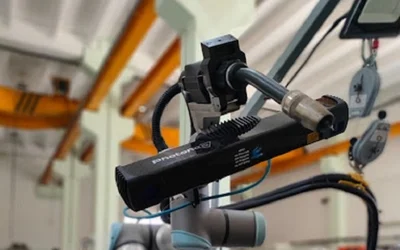
In this welding application, IKNOWHOW uses the Photoneo PhoXi 3D Scanner to navigate a robot safely and avoid obstacles in their welding application.
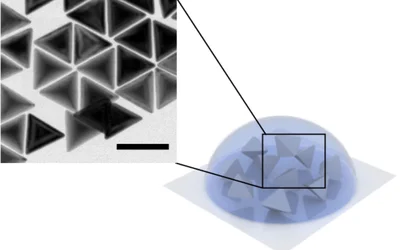
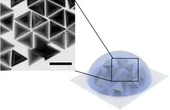
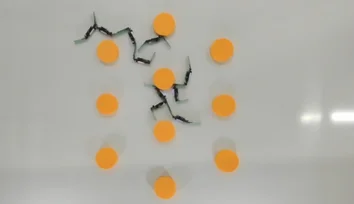
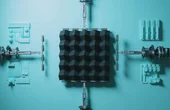
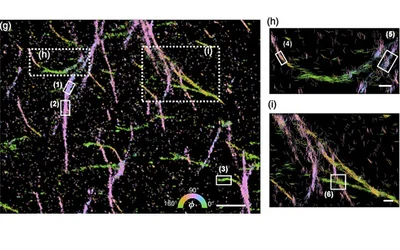
Producing chirality, a property found throughout nature, through large-scale self-assembly could lead to applications in sensing, machine perception and more.
This comprehensive article dives deep into the world of robotics, exploring the history, types, engineering components, applications, and future trends of robots, offering readers an in-depth understanding of how these remarkable machines work and shape our lives.
16 minutes read.
21 minutes read.
16 minutes read.
23 minutes read.
19 minutes read.
27 minutes read.


University
At the Harvard John A. Paulson School of Engineering and Applied Sciences (...
42 Posts

Robotics & Automation
READY Robotics is a robotics software company that vastly simplifies robot ...
24 Posts

Automation Machinery Manufacturing
We are a company in flying robotics, specializing in Non-destructive inspec...
23 Posts
Everyone, guess how fast is it?
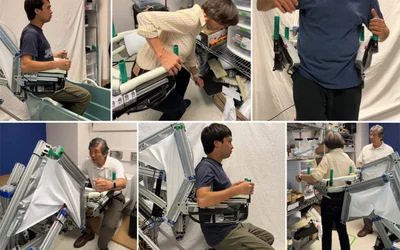
The new design could assist the elderly as they age in place at home.
The hospitality industry can leverage the gender characteristics of service robots to influence customers' decisions, according to new research from a team in the Penn State School of Hospitality Management.
Service robots have evolved from simple automated machines to intelligent adaptive systems that can navigate unpredictable environments and interact with humans.
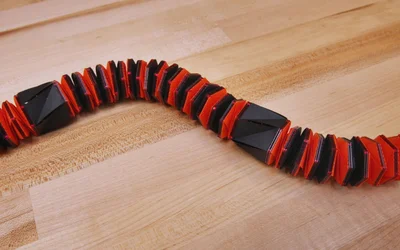
Engineers at Princeton and North Carolina State University have combined ancient paper folding and modern materials science to create a soft robot that bends and twists through mazes with ease.
A research team from ETH Zurich and the University of Zurich (UZH) has developed a novel approach to treating spinal cord injuries: controllable microrobots deliver stem cells directly to the site of an injury, where they promote nerve cell regeneration.
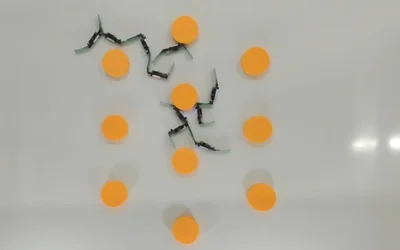
Cornell engineers have developed a robotic collective that behaves less like a machine and more like a material that flows, reshapes and adapts to its environment without centralized control.
From hospital wards to crop fields, from microscopic swarms to biohybrid machines powered by fungi, robotics research at Cornell spans an astonishing range of scale, application and ambition.
Cybernetics can help to create a safe, sustainable and responsible future in a complex world.
In this welding application, IKNOWHOW uses the Photoneo PhoXi 3D Scanner to navigate a robot safely and avoid obstacles in their welding application.

Producing chirality, a property found throughout nature, through large-scale self-assembly could lead to applications in sensing, machine perception and more.

4 minutes read
The student winners of the High-Temperature Carbon-Fiber 3D printing challenge have ambitions to build better rovers.
Intelligent Flying Robots is a revolutionary approach to Non-Destructive Testing (NDT) that enables accurate contact-based inspection to fulfill industrial asset inspection standards with many advantages.

3 minutes read
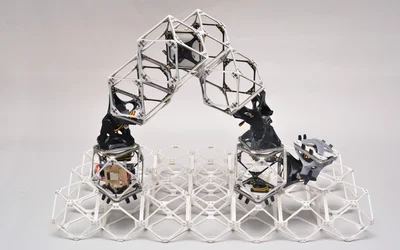
Researchers make progress toward groups of robots that could build almost anything, including buildings, vehicles, and even bigger robots.
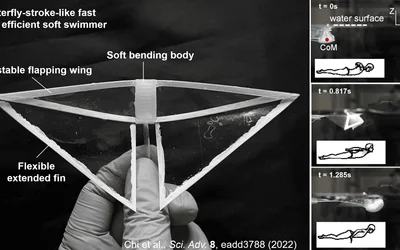
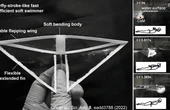
Inspired by the biomechanics of the manta ray, researchers at North Carolina State University have developed an energy-efficient soft robot that can swim more than four times faster than previous swimming soft robots.

3 minutes read
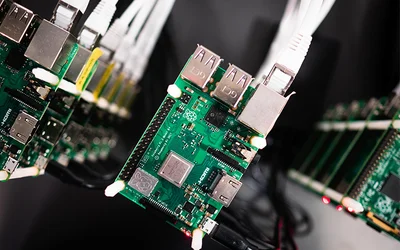
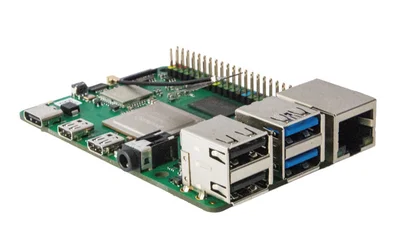
Raspberry Pi is a UK invention, which started out as a small single-board computer (SBC) intended for educational purposes. It was originally developed by the Raspberry Pi Foundation, who wanted to produce a low-cost SBC for teaching basic computer science.
Article #5 of the "Why Edge?" Series Moving Computer Vision to the Edge offers advantages in security and latency.
Article #6 Electronics Innovation Series. Engineers are turning to an edge computing model using SBCs to create more secure, high-performance IoT applications.
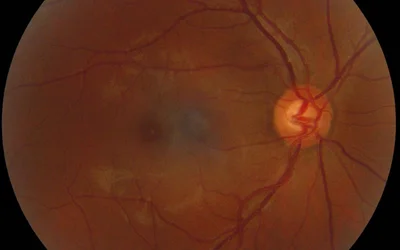
Matroid's deep-learning system comprising of 3D-CNN helps to automatically detect Glaucoma from a single raw Optical Coherence Tomography (OCT) scan. The results are close to human doctors across heterogeneous datasets and scanning environments.

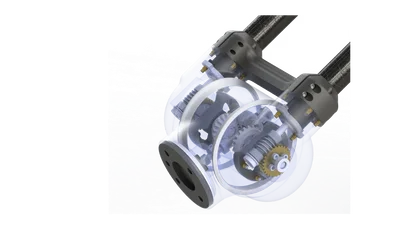
Robotic actuators stand at the forefront of technological innovation, transforming energy into motion to breathe life into robots, enhancing their capabilities in an ever-evolving landscape of industrial automation.
DEEP Robotics recently released its newest robotics technique, which is autonomous coordinated multi-robot exploration; the experiment is operated under a 3,000 m2 unknown environment with five Jueying X20 robot dogs.

2 minutes read
Springs, squeegees and soda straws function with a common property — they are rigid in one direction and flexible in another. Structures like these, with properties that vary across dimensions, have played critical roles in human technology from the longbow to the booster rocket.
Newly developed method does it all with just a few pixels