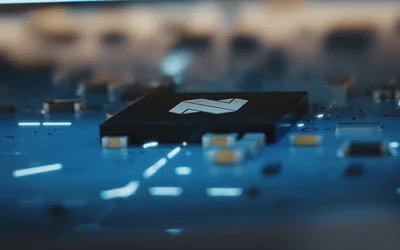
This article explores TPU vs GPU differences in architecture, performance, energy efficiency, cost, and practical implementation, helping engineers and designers choose the right accelerator for AI workloads today!
The landscape of IoT development is evolving rapidly, and staying ahead requires more than just technical know-how, it demands a strategic shift in how we approach building connected devices.
Discover how no-code/low-code platforms are transforming embedded development by enabling rapid prototyping and deployment with minimal coding. Explore tools like LabVIEW, Node-RED, and XOD that simplify IoT, automation, and industrial system design.
Teams that are looking at alternative programming languages have two options today: Ada and Rust. Both languages raise the bar in terms of safety and security

Join Prof. Fei Chen as he explores advanced bimanual manipulation and teleoperation techniques shaping the future of intelligent human-like robots in this expert-led robotics session.

The ETH spin-off Flink Robotics wants to revolutionize the handling of packages. Its founders Moritz Geilinger and Simon Huber have developed software that allows robots to work together and quickly take on new tasks.
Switzerland experiences notable seasonal fluctuations with expected water demand on the rise. In this article, we look at how IoT systems can play a crucial role to ensure efficient conservation of water.
Based on the revised Food Sanitation Act, the institutionalization of hygiene management in accordance with HACCP started in Japan in June 2021. HACCP is an acronym for Hazard Analysis and Critical Control Point.
In the evolving landscape of IoT, explore how microcontroller-based IoT development kits such as the Particle Photon 2 are driving innovation in product research and development.
As IoT evolves, projects are shifting from being experimental and exploratory to business critical. This makes them more complex, ensures they receive more scrutiny and, inevitably, increases the opportunities for things to go wrong. This is even more true when you consider that IoT devices and solutions have a long shelf life, making long-term success only possible if you’re properly planning and building today for the unknown factors in the future.
Choosing between computing on the cloud or on the edge is a decision that can impact things like your device’s cost or efficiency. Here’s how you can ensure you make the right decision early on in your product development roadmap.
A guide to resources related to the Nordic Semiconductor nRF9160 Development Kit and Soracom connectivity to help you launch your Connect For Good Low Power Wireless Sustainability Challenge submission.
Ring topology is one of the early implementations in the world of computer networking. Its simplicity in transmission, fair access control for modes, sequential data management, and other concepts continue to influence the evolution and designs of modern computer science.
Discover the intricacies of cybersecurity operations as we delve into the intricacies of Red Team vs. Blue Team, a comprehensive understanding of their roles, methodologies, and practical applications in the field of cybersecurity.
Batteries are essential for billions of IoT products worldwide, and demand looks set to grow. The global Li-ion battery market was estimated to be worth over $40 billion in 2020 and is expected to increase to more than ten times this amount by 2030 according to analyst Statista.
Mesh topology is the most used network topology, as all computer networks are connected. Each computer sends signals and relays the data from other computer networks. The dedicated link transmits information from one node to another and connects all the nodes.
When deciding if cellular connectivity or LoRaWAN is right for your IoT project, it helps to start with the use case and work backward to the tech. This guide will give you what you need to know to do just that.
Today, billions of people benefit from GNSS daily, whether navigating at sea, surveying, mapping, farming, guiding heavy machinery or performing thousands of other tasks. GNSS is also now providing a foundation for many IoT applications in the logistics and transportation sectors.
A washable wearable biometric device using printed electronics technology provides real-time data for telemedicine. Integrated into a sleeve, the sensors monitor muscle activity. The data, transmitted to an online platform, facilitates remote health monitoring.