Featured
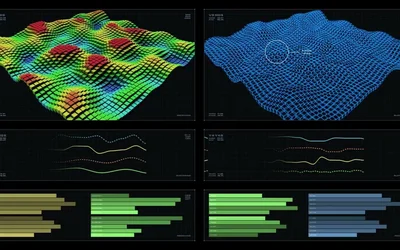
Learn more about a groundbreaking solution called Temporal Event-based Neural Networks (TENNs) developed by BrainChip, which efficiently combines spatial and temporal convolutions to process sequential data like never before.
Learn more about a groundbreaking solution called Temporal Event-based Neural Networks (TENNs) developed by BrainChip, which efficiently combines spatial and temporal convolutions to process sequential data like never before.
Learn more about a groundbreaking solution called Temporal Event-based Neural Networks (TENNs) developed by BrainChip, which efficiently combines spatial and temporal convolutions to process sequential data like never before.
Transforming utility metering
Learn how SBCs take advantage of the different operating systems and ensure stability and robustness in different applications
How Bluetooth mesh works: managed flooding, node features, provisioning, security keys, Mesh 1.1, measured latency, and how it compares with Zigbee and Thread.
26 minutes read.
15 minutes read.
18 minutes read.
19 minutes read.
18 minutes read.
17 minutes read.
Semiconductors
Nordic Semiconductor is a fabless semiconductor company specializing in wireless technology that powers the IoT.
181 Posts

High Tech
High Tech Campus Eindhoven is Europe's smartest square km and has the ultim...
49 Posts

University for science and technology
Freedom and individual responsibility, entrepreneurial spirit and open-min...
43 Posts

Higher Education
Work together. Create smart machines. Serve society. University of Michiga...
40 Posts
A JFET is a normally-on, voltage-controlled semiconductor device that regulates current through a conductive channel by varying its depletion region using an electric field.
A common-source MOSFET amplifier is a voltage-amplifier circuit with input at the gate, output at the drain, and source as the common reference. It provides voltage gain with an approximately 180 degree phase shift between input and output.
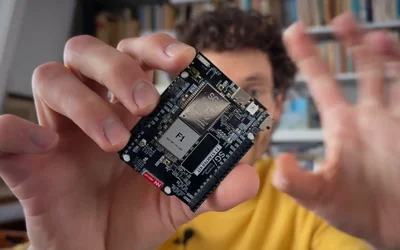
The F1 Starter Kit, built around the F1 Smart Module which supports cellular, LoRa, BLE and WiFi
This guide to robotics programming covers offline, lead-through, and teach pendant methods, key vendor languages, C++ alongside Python, ROS 2 integration, and safety limit implementation.
ROS is not an operating system. It is the open-source middleware and toolset that much of the robotics industry builds on, and this guide explains what is ROS, how it works, what changed in ROS 2, and when you should use it.
Mario Mauerer, maxon's Global Business Development Manager, Robotics, discusses what it takes for robotic deployments to be successful in complex real-world environments.
Join Prof. Fei Chen as he explores advanced bimanual manipulation and teleoperation techniques shaping the future of intelligent human-like robots in this expert-led robotics session.
Learn more about a groundbreaking solution called Temporal Event-based Neural Networks (TENNs) developed by BrainChip, which efficiently combines spatial and temporal convolutions to process sequential data like never before.
Transforming utility metering

4 minutes read
Learn how SBCs take advantage of the different operating systems and ensure stability and robustness in different applications
Discover the technical and application details of the latest WiFi standard.
Device control is the backbone of any IoT ecosystem. Without it, connected devices are just isolated islands of data. In today's expanding IoT landscape, efficient, secure IoT device control matters more than ever. Enter LwM2M.
4 minutes read
Here we describe a movement known as “Edu Tech” that encourages the development of new technology to bring about major changes in educational methods

7 minutes read
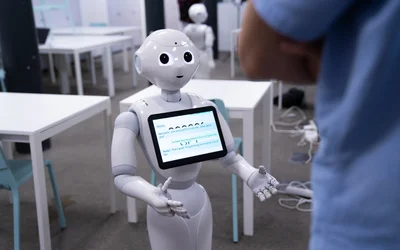
Lessons learnt from integrating ChatGPT in Pepper and NAO

4 minutes read
Cities around the world are experiencing a period of rapid expansion. According to the United Nations (UN), 57 percent of people already live in urban areas - and this is set to increase to almost 70 percent by 2050.

4 minutes read
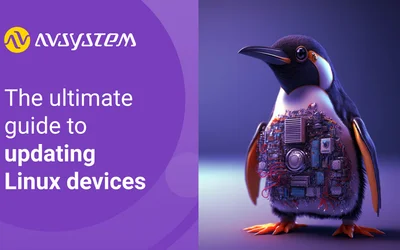
The Year of the Linux Desktop may get postponed every year, but Linux has come to dominate pretty much every other market segment - from servers, industrial machines and mobile phones (via Android), to a host of embedded devices.
17 minutes read
Create sustainable and thriving communities that are well-equipped to face future challenges. Win up to $7,000+ in prizes!
On November 3, Unitree Robotics released the new industrial quadruped robot B2, continuing to lead the global quadruped robot industry application.

2 minutes read
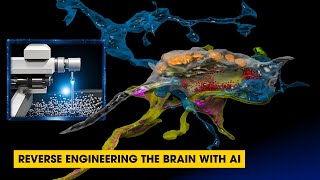
In this episode, we talk all about connectomics - the study of animal brains - and how researchers at MIT have started leveraging AI to break through the primary bottleneck: brain image acquisition.

18 minutes read
The concept of IIoT has begun to shift from one centered around things to one centered around people, and a large number of solutions and use cases have emerged with the aim of providing a more sophisticated user experience (UX).
9 minutes read
In the modern era it’s reasonable to assume that expensive items moving around the world are carefully tracked and protected and therefore never go astray. But no, there are still a disturbing number of mishaps resulting in key assets disappearing – sometimes forever.
4 minutes read
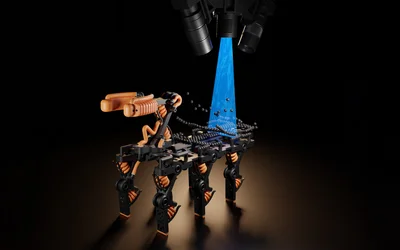
Computer vision enables contact-free 3D printing, letting engineers print with high-performance materials they couldn’t use before.