Robots in the Real World: What It Takes to Build Motion Systems That Deliver
Mario Mauerer, maxon's Global Business Development Manager, Robotics, discusses what it takes for robotic deployments to be successful in complex real-world environments.

11 Jun, 2026. 7 minutes read
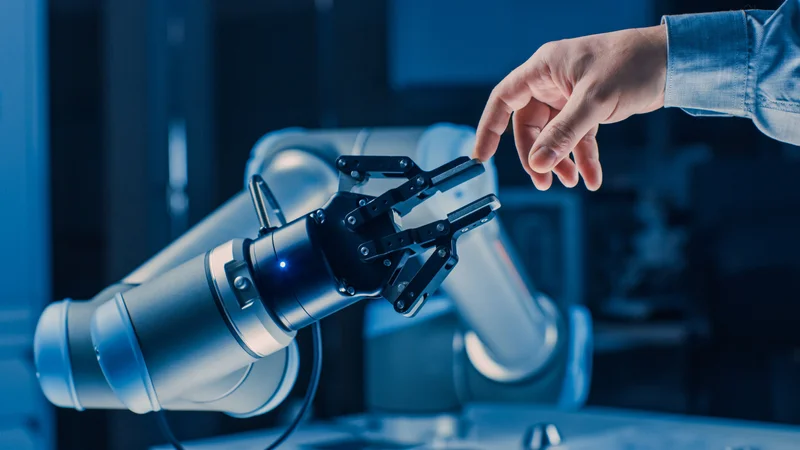
Interview with Mario Mauerer
Robotics is entering a new phase. The industry conversation is no longer centred on whether robots can perform impressive demonstrations in controlled environments, but whether they can operate reliably, safely, and efficiently in the real world.
Across industrial automation, logistics, humanoids, service robotics, surgical systems, and autonomous mobility, robotics teams are facing the same reality: success depends on far more than intelligence alone. Motion systems, actuator integration, thermal management, reliability, safety, and system architecture all play a critical role in determining whether a robot becomes a scalable product or remains a promising prototype.
As the Global Business Development Manager, Robotics, at maxon, Mario Mauerer works closely with robotics developers across a broad range of applications. In this interview, he shares his perspective on what separates successful robotic deployments from demos, why motion-system design must happen early, and what robotics teams should prioritize as the industry scales into increasingly complex real-world environments.
Robotics Beyond the Demo
Robotics is advancing quickly, but real-world deployment still looks very different from the lab. In your view, what separates robots that demo well from robots that succeed in the field?
Robots that work well in the field typically show one or both of two traits. First, they are designed for a very narrow and often relatively simple task, such as transporting materials, moving carts, or performing repeatable inspections. Second, they are deployed in controlled environments, with close collaboration between the robotics company and the customer.
According to Mauerer, successful deployment is only partially about the robot itself.
“An equally important aspect is the business approach of the deploying company,” he explains. “Tasks must be sharply defined, product understanding must be consciously nurtured, and growth has to be sensible.”
He believes one of the biggest risks for robotics companies is scaling too aggressively before systems are truly ready for deployment.
“Companies cannot sell robots that barely work too aggressively,” he says. “Otherwise, their hardware will be overtaken by real-world disappointment.”
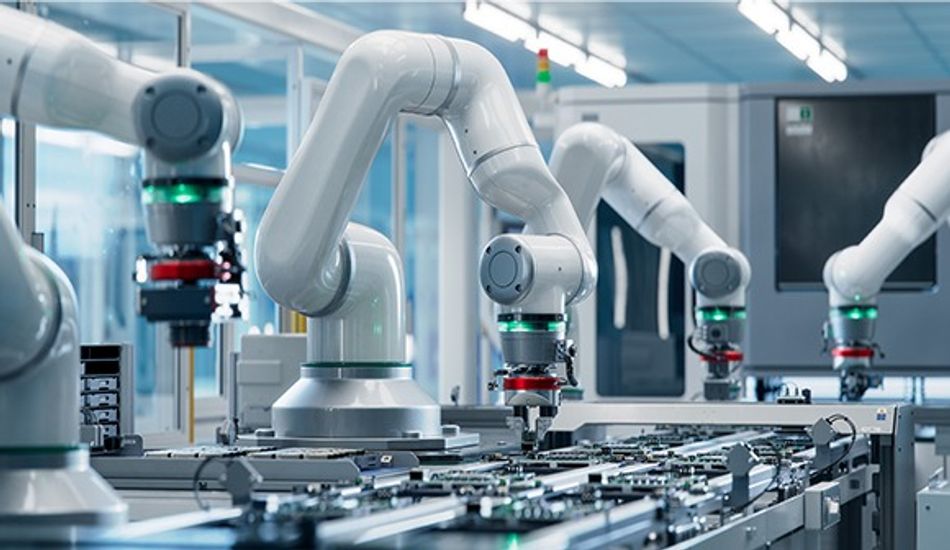
Across today’s robotics landscape, industrial robots, mobile robots, humanoids, service robots, and others, what engineering challenges keep showing up regardless of application?
Mauerer points out that robotics remains one of the most multidisciplinary engineering fields today.
“The challenges span the entire software stack, locomotion, perception, autonomy, manipulation, as well as hardware, including actuators, power electronics, compute, communication, batteries, mechanics, polymers, fabrication, and supply chain,” he says.
Among those challenges, motion systems remain especially important.
“Actuators are a very critical aspect because they are everywhere in modern robots,” Mauerer explains. “They need to operate reliably and with high performance while still remaining cost-effective.”
That balance between torque, velocity, efficiency, controllability, robustness, and cost continues to define many of the industry’s toughest engineering trade-offs.
There is a lot of attention on AI and autonomy right now. What motion-related realities do teams still underestimate when turning robotic intelligence into physical performance?
For Mauerer, safety remains one of robotics’ most underestimated challenges.
“Robots are terribly strong, while humans and surrounding equipment are often comparatively soft and weak,” he says.
As robots move into broader deployment over the next several years, he believes functional safety and safe-motion architectures will become increasingly important.
“There are not yet many complete solutions on the market today,” he notes. “But a lot of strong ideas are emerging, and they will become highly relevant very quickly.”
While AI continues to improve perception and autonomy, translating intelligence into safe and dependable physical behavior remains one of the industry’s biggest engineering hurdles.
From your perspective, what are the clearest signs that robotics as an industry is maturing from exciting prototypes into dependable deployed systems?
Mauerer believes the industry is still in the early stages of a larger transition.
“Robotics is moving from controlled and repeatable settings toward unstructured environments and more general-use applications,” he explains.
He points to examples such as autonomous cleaning systems, boardwalk delivery robots, and autonomous vehicles as early indicators of that shift.
“But there is still so much more to come,” he says. “Robots will increasingly become part of everyday environments, powered by autonomous machine-learning systems.”
Even with the momentum around robotics and AI, Mauerer emphasizes that widespread deployment remains a long-term engineering challenge rather than a solved problem.
“It’s an exciting time,” he says, “but there is still a tremendous amount of work ahead.”
Motion-System Design in Practice
From a drive-system perspective, what are the first questions robotics engineers should ask when moving from concept to system architecture?
Mauerer believes robotics teams should begin by defining the broader system architecture before selecting individual components.
“What gearing technologies will be used? What communication architecture? What power supply structure? What thermal-management concept? What peak and continuous performance levels are required?” he asks.
Only after those system-level decisions are made should teams begin selecting actuators.
“At maxon, we focus heavily on highly compact and cost-effective actuator integration,” he explains. “Combined with flexible firmware, that allows robotics teams to build systems that truly fit their architectural needs.”
Because maxon works across many robotics sectors, Mauerer says the company often serves as a close engineering partner during actuator-system integration.
“We have a lot of experience helping customers create and integrate robotics actuation systems effectively.”
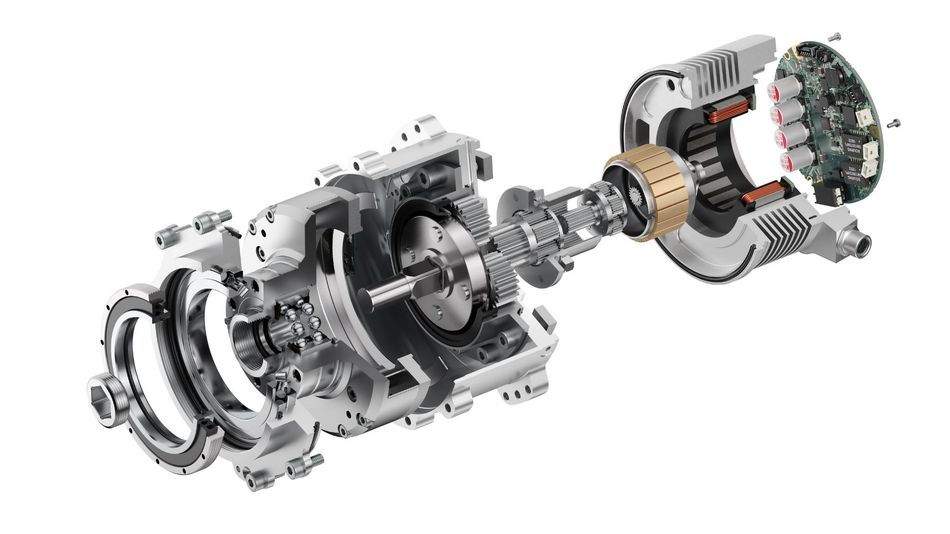
Once those requirements are defined, how should robotics teams think about the trade-offs between velocity, precision, energy efficiency, thermal limits, packaging constraints, and overall system performance?
According to Mauerer, those trade-offs must be considered as part of the complete robot architecture rather than solved independently.
“Teams first need to understand the trade-offs themselves,” he says, “and then select actuators that align with the intended design philosophy.”
Simulation has become an increasingly valuable tool in that process.
“Our simulation models help customers make these decisions in a data-driven way,” Mauerer explains. “One of our core ideas is: ‘Simulate a lot, build once.’”
By improving early-stage modeling and reducing the sim-to-real gap, robotics teams can minimize redesign cycles while extracting significantly more performance from final hardware.
What tends to go wrong when motion-system decisions are made too late in the design process, or when they are treated as a component choice rather than a system-level design decision?
Mauerer’s response is immediate.
“Everything,” he says.
Because actuators influence nearly every aspect of robot behavior, including packaging, thermal management, structural dynamics, power distribution, and controllability, late-stage changes often require extensive redesigns.
“It’s absolutely critical to consider actuators from the beginning,” he explains. “Once hardware is locked in, changing these decisions becomes extremely difficult.”
How important is it to evaluate the full drive system motor, gearhead, encoder, controller, and software behavior together, and how has Maxon’s system-level work shaped the way you think about that integration?
Mauerer sees robotics steadily moving away from isolated subsystem components and toward tightly integrated actuator platforms.
“This greatly simplifies system-level discussions and supply-chain complexity,” he says. “It also allows robotics companies to move faster with development and deployment.”
One of maxon’s goals, he explains, is to abstract much of the underlying motion-system complexity away from customers.
“That allows robotics developers to focus more directly on their actual value proposition instead of dealing with every low-level motion detail,” Mauerer says.
Reliability and Real-World Constraints
Many robots today are expected to operate for long hours, in tight spaces, and under demanding duty cycles. What design considerations matter most when reliability and continuous operation are essential?
Mauerer believes actuator robustness is one of the defining factors behind reliable robotics deployment.
He points specifically to:
Overload Tolerance
Thermal Resilience
Ingress Protection
“If one actuator fails, the entire robot often goes down,” he explains.
That challenge becomes especially significant given the scale of modern robotic systems.
“Many robots today contain between 12 and 30 high-torque actuators operating continuously under mechanical and environmental stress.”
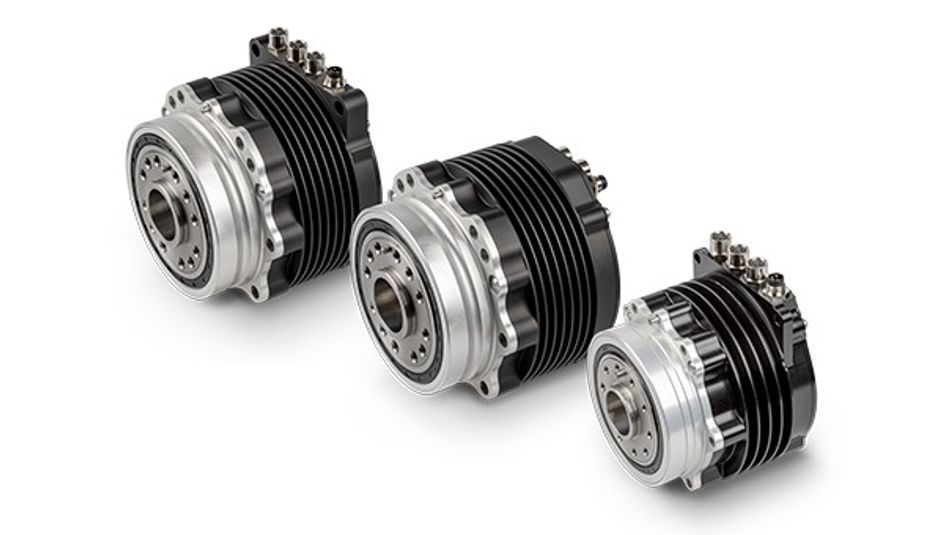
How do environmental realities shock, vibration, contamination, temperature, or limited installation space, change the way you think about actuator and joint design?
According to Mauerer, those environmental realities must be considered during the earliest stages of actuator development.
“These factors need to be engineered into the actuator itself,” he says.
At maxon, many drive systems undergo testing for shock, vibration, ingress protection, and temperature performance during development.
“That allows customers to avoid having to solve many of those challenges independently,” Mauerer explains.
For engineers building robots that interact closely with people, equipment, or sensitive processes, how do precision and controllability influence overall system safety and usability?
Interestingly, Mauerer believes overall safety architecture matters far more than precision alone.
“The broader system-level safety architecture is significantly more important than the precision or controllability of the drive itself,” he explains.
What matters most at the actuator level is whether drives can support functional safety concepts such as safe motion.
“That requires very careful hardware and software decisions,” he says.
How valuable are simulation and early system modelling today in reducing integration risk before hardware is finalized?
Mauerer sees simulation as one of the industry’s most important development accelerators.
“Teams should iterate much less on hardware and much more in simulation,” he says.
Again, he returns to the same guiding principle:
“Simulate often, build once.”
Accurate actuator models, he explains, are especially important for reducing the gap between simulation and real-world robotic performance.
“That’s how teams extract the final 20 percent of performance from a robot.”
Cross-Industry Lessons and What Comes Next
When you look across different robotics sectors, what lessons has maxon been able to carry from one application area to another, and where do requirements become fundamentally different?
maxon supports robotics applications ranging from humanoids and AGVs to surgical robots and space systems.
“Every application has unique requirements,” Mauerer says. “What makes maxon special is the ability to engineer and manufacture systems that can support such diverse robotics needs.”
That broad exposure allows the company to transfer lessons between industries while adapting actuator technologies to highly specialized environments.
Logistics and mobile robotics demand high uptime, compactness, and precise positioning. What does that application area reveal about broader robotics design priorities?
Mauerer sees logistics and mobile robotics as reinforcing many of the same reliability priorities discussed earlier.
High uptime, robust actuator design, thermal resilience, and compact integration all become increasingly important when robots must operate continuously in demanding environments.
As robotics deployments scale, those requirements are becoming common across many application categories not just logistics.
Looking ahead, what do you think will matter most for robotics teams over the next few years as systems move from impressive prototypes to dependable, scalable deployments?
Mauerer believes long-term robotics success will depend heavily on disciplined execution rather than technology hype alone.
“Teams need to build strong supply chains, make smart make-versus-buy decisions, and focus on the actual value generated by the robot,” he says.
He also emphasizes the importance of selecting dependable engineering partners that can scale from prototyping into high-volume production.
“maxon aims to be that type of global actuation partner,” Mauerer explains, “supporting robotics companies from early development through scalable manufacturing.”
As robotics systems continue moving into less structured and more dynamic environments, Mauerer believes the industry’s next phase will be defined not by demonstrations, but by dependable real-world performance.