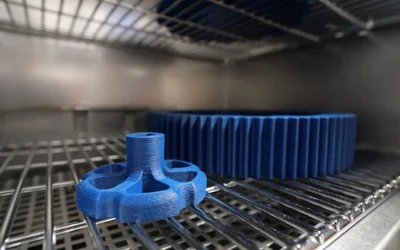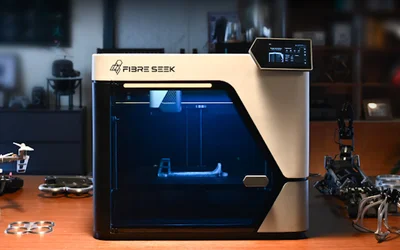


With its ability to produce ultra-robust, temperature-resistant final parts, PEEK 3D printing is becoming the manufacturing process of choice for more and more engineers.
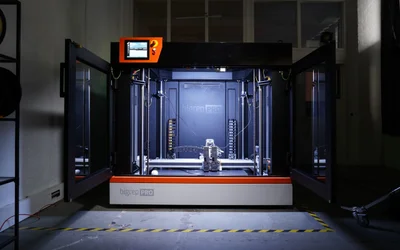
Gantry systems are industrial robots with a mechanical framework that uses a movable trolley over a linear bridge. They have become an indispensable part of various industries due to their unmatched precision, speed, and flexibility.
Over the last few decades, reverse engineering has become an essential part of product design and production processes used by manufacturers all over the globe. From aerospace to automotive to everyday consumer goods, industrial engineers and product designers rely on reverse engineering when replicating a legacy part without documentation or drawings, analyzing and deconstructing a competitive product, or modifying and improving an existing one.
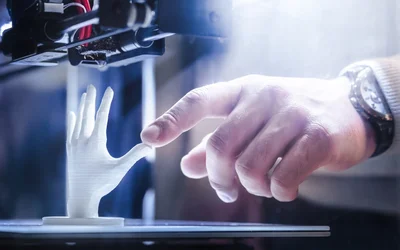
What is 3D printing? This article goes over the basics of 3D printing, otherwise known as additive manufacturing, covering its engineering principles and applications.
A bone-like composite developed at EPFL, in collaboration with researchers from ETH Zurich, Empa and the University of Fribourg, uses naturally occurring enzymes to accelerate mineralization through an energy-efficient, room-temperature process.
The 3D printer filament market is flooded with choices, but what are the best PETG filaments available to engineers today? Here we look at some of the top brands.
A thorough tutorial for digital design engineers, hardware engineers, and electronics students on how to calibrate a 3D printer effectively. It covers theory and practical implementations.
Harness the potential of additive manufacturing by learning how to use a 3D printer. This guide provides the basics for digital design engineers, hardware engineers, and electronics students.
With its ability to produce ultra-robust, temperature-resistant final parts, PEEK 3D printing is becoming the manufacturing process of choice for more and more engineers.
Gantry systems are industrial robots with a mechanical framework that uses a movable trolley over a linear bridge. They have become an indispensable part of various industries due to their unmatched precision, speed, and flexibility.
Over the last few decades, reverse engineering has become an essential part of product design and production processes used by manufacturers all over the globe. From aerospace to automotive to everyday consumer goods, industrial engineers and product designers rely on reverse engineering when replicating a legacy part without documentation or drawings, analyzing and deconstructing a competitive product, or modifying and improving an existing one.
In the episode, we discuss how smart helmets can prevent head trauma by providing feedback in real time to athletes and coaches. These helmets utilize advanced technology, such as sensors and smart features, to enhance safety during activities like sports.
Global online manufacturing platform Hubs has just published its 3D Printing Trend Report 2023, sharing an overview of the current state of the 3D printing industry as well as highlighting the trends that are shaping its future. Here is a summary of the report and a brief look at its key takeaways. For all the insights, download the full report below.
With a relatively low melting point (between 150°C and 180°C), PLA is one of the easiest thermoplastics to 3D print. Here’s how PLA melting point factors into choosing the optimal print settings, such as nozzle temperature and print bed temperature.
With its rubber-like material properties, TPU is a versatile 3D printing material that can be used for numerous applications. Here's what you need to know about 3D printing TPU, from filament storage, to printer settings, and more.
The world is aging; according to the World Health Organization (WHO), between 2015 and 2050, the proportion of the population over 60 will double from 12 percent to 22 percent.
ABS is a widely used 3D printing filament with good impact resistance and flexural strength. It also exhibits moderate heat resistance, making it a go-to material for mid-temperature 3D printing applications.
In this episode, we're exploring a groundbreaking innovation from ETH Zurich that could revolutionize how we power wearable devices. It's time to say goodbye to conventional batteries and hello to a sustainable, continuous, and convenient power source.
In this article, we look at how three of the most commonly used filaments—PLA, ABS, and PETG—compare in terms of printability, properties, and availability.