
Featured
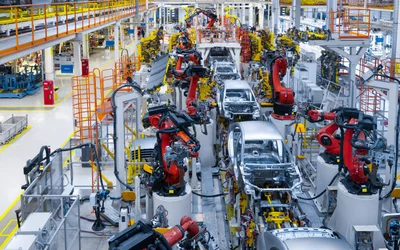
End-to-end manufacturers are companies that lead products through the entire manufacturing process, from design to customer delivery.
End-to-end manufacturers are companies that lead products through the entire manufacturing process, from design to customer delivery.
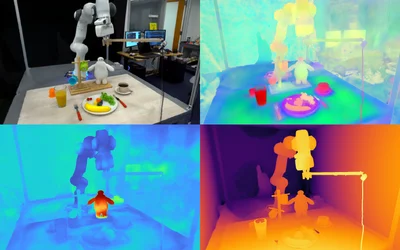
By blending 2D images with foundation models to build 3D feature fields, a new MIT method helps robots understand and manipulate nearby objects with open-ended language prompts.
BigRep’s large-format 3D printers and 3D printing filaments are suited to high-performance engineering applications. To meet the diverse range of needs of these applications, BigRep’s filament range spans several materials with vastly different uses.
What is 3D printing? This article goes over the basics of 3D printing, otherwise known as additive manufacturing, covering its engineering principles and applications.
14 minutes read.
17 minutes read.
11 minutes read.
18 minutes read.
13 minutes read.
10 minutes read.


Entertainment
The Next Byte Podcast is hosted by two young engineers - Daniel and Farbod - who select the most interesting tech/engineering cont...
165 Posts
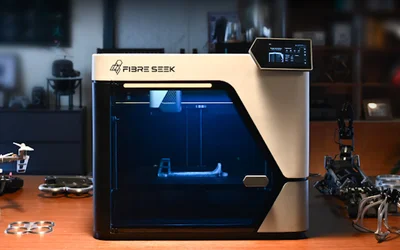
Following a successful crowdfunding campaign, the FibreSeeker 3 from FibreSeek is bringing continuous carbon fiber printing to a new audience.
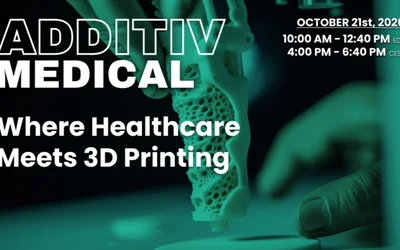
ADDITIV Medical 2026 will bring together more than 500 medical professionals
Choosing between 3D printing and injection molding is one of the key decisions in product development—especially in case of prototyping.
Explore how the right finishes and coatings can improve aerospace parts by boosting durability, extending service life, enhancing environmental resistance, and delivering the performance and appearance required for demanding applications.
The data problem
From leading experts at the CDFAM Computational Design Symposium
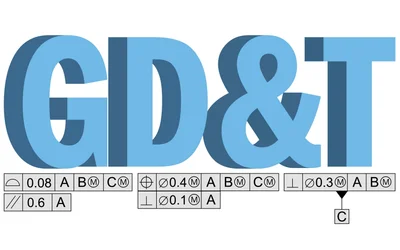
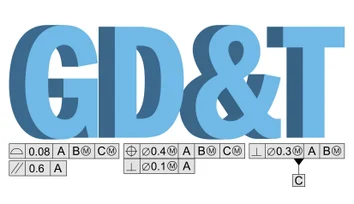
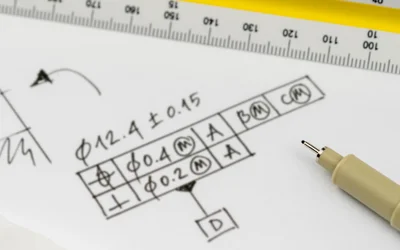
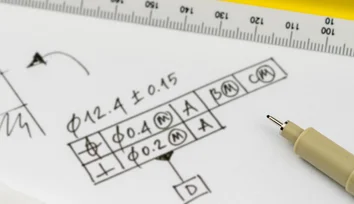
GD&T is the symbolic language engineers use to state exactly how much a part can vary and still work. This guide covers the basics.
This guide covers the true position formula, how to read the feature control frame, and how MMC and LMC generate bonus tolerance.
End-to-end manufacturers are companies that lead products through the entire manufacturing process, from design to customer delivery.

6 minutes read
By blending 2D images with foundation models to build 3D feature fields, a new MIT method helps robots understand and manipulate nearby objects with open-ended language prompts.
BigRep’s large-format 3D printers and 3D printing filaments are suited to high-performance engineering applications. To meet the diverse range of needs of these applications, BigRep’s filament range spans several materials with vastly different uses.
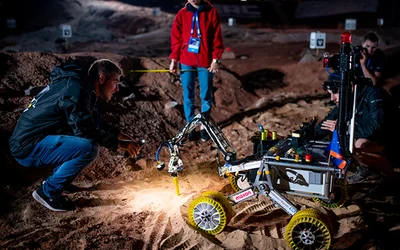
Students from the University of Applied Sciences Northwestern Switzerland (FHNW) build a functional Mars rover using SLS 3D printed parts and take 6th place at the European Mars Rover Challenge (ERC) in Poland.

3 minutes read
Fine-pitch dense die assembly process with only a single adhesive application without pressure, without underfill, without fine patterning, without complex alignment vs solder ball-to-solder pad, etc? Learn here how magnetically aligned Anisotropic Conductive Epoxy (ACE) enable this

7 minutes read
Electroforming provides a pathway to overcoming fabrication challenges, empowering R&D engineers to reach past the limits of conventional manufacturing processes. To fully leverage Electroforming technology and engineering creativity, Veco provides a co-engineering service to empower the engineers.
Is the Vacuum Casting process about to become obsolete? This is not an abrupt question. Vacuum casting is a widely used and cost-effective manufacturing solution for prototyping and low-volume production.

4 minutes read
In this episode, we discuss a novel approach from ETH Zurich to remove a design bottleneck from solar reactors that enables power generation output that is 2X the current state of the art!

14 minutes read
#4 UltiMaker Manufacturing Insights Series. 3D printing is enabling rapid prototyping and more efficient manufacturing across the transport sector.
Introducing the first article in a new series, making clear the impact of additive manufacturing on the manufacturing industry, transport, packaging, and STEAM.
Born in the ‘80s, the CAN bus helps in carrying reliable electronic communication within your vehicles. This article delves into the basic principles, architecture, protocols, applications, and limitations of the CAN bus.
This article provides a detailed understanding of stripline vs microstrip, their structure, working principle, advantages and disadvantages, comparative analysis, and choosing the right one for your application.
Five years ago – a long time in technological terms – “The Evolution of Advanced Automation” was discussed in a presentation at the Industry & Economic Outlook Conference in the United States, held by the National Fire Protection Association.
Learn how metal additive creates complex, durable, lightweight metal parts with this design tip.

9 minutes read
BigRep has a diverse material portfolio, comprising filaments optimized for its large-format 3D printers. The filaments are engineered to meet a variety of needs, whether you’re looking for a low-cost prototyping material like PLA, or an engineering-grade thermoplastic that can withstand more rugged use like HI-TEMP CF. In this article, we’re taking a closer look at one of BigRep’s most popular materials, Pro HT.