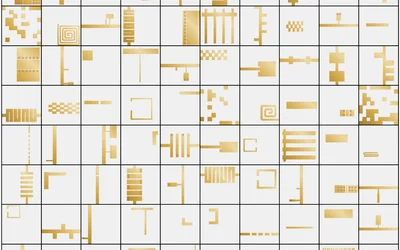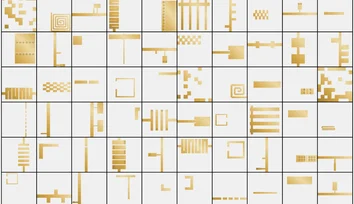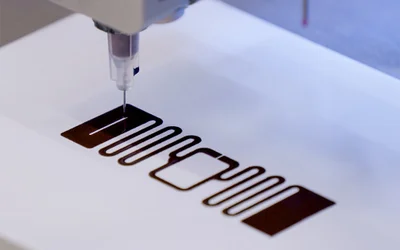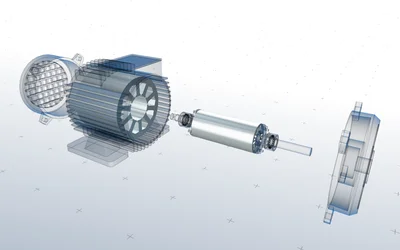
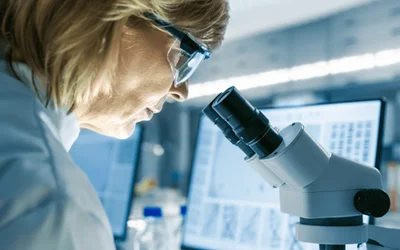
This blog overviews the Electroforming technology, compares its technical advantages to alternative manufacturing methods, and introduces typical applications in the semiconductor industry.
This leader in industrial equipment repair and manufacturing used Arduino’s industrial technology to develop a scalable solution – with positive impact on operational efficiency for its clients.
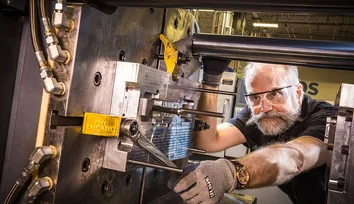
This article explores the different types of molds (design cavity, class) used in plastic injection molding, discussing their ideal applications, strengths, weaknesses and lifespan, and design tips for creating effective molds based on one's manufacturing needs.
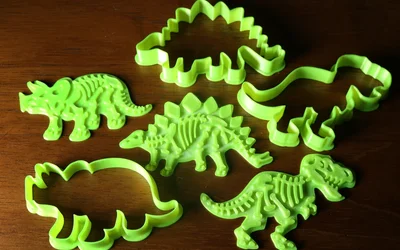
What is 3D printing? This article goes over the basics of 3D printing, otherwise known as additive manufacturing, covering its engineering principles and applications.
"MechStyle" allows users to personalize 3D models, while ensuring they're physically viable after fabrication, producing unique personal items and assistive technology.
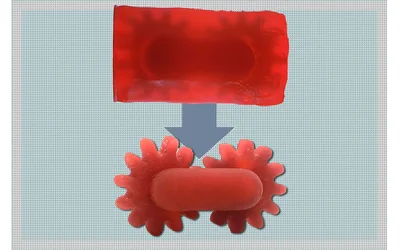
A new method could enable users to design portable medical devices, like a splint, that can be rapidly converted from flat panels to a 3D object without any tools.
A deep dive into the physics, properties, and practical applications of 3D printing filaments, from everyday polylactic acid to performance composites.
This article explores transistor circuit design for digital design engineers, hardware engineers, and electronics engineering students. Find out the theoretical foundations with practical guidance, enabling you to confidently build and analyze analog and digital transistor circuits.
With SCANOLOGY's KSCAN-X 3D scanner, wind turbine manufacturers can redesign blade core materials faster and more accurately than ever—cutting revision time from days to just 30 minutes.
Smarter technology, stronger performance.
This article examines the anodizing process, an electrochemical surface treatment that makes metals like aluminium and titanium more durable and corrosion resistant.
This blog overviews the Electroforming technology, compares its technical advantages to alternative manufacturing methods, and introduces typical applications in the semiconductor industry.
This leader in industrial equipment repair and manufacturing used Arduino’s industrial technology to develop a scalable solution – with positive impact on operational efficiency for its clients.
This article explores the different types of molds (design cavity, class) used in plastic injection molding, discussing their ideal applications, strengths, weaknesses and lifespan, and design tips for creating effective molds based on one's manufacturing needs.
The use of the Go!SCAN SPARK and VXmodel leads to significant improvements in the internal processes when carrying out projects at the Swiss company Sutter AG.
Metal 3D printing offers significant design opportunities with its high geometrical freedom, but it requires careful design for additive manufacturing (DfAM) to address equipment and material constraints, a process supported by DfAM and 3D printing simulation tools in most major CAD software.
Wevolver was at the center of action during the Hexagon LIVE in Eindhoven, reporting live on cutting-edge tech and smarter manufacturing solutions, interviewing experts and exploring innovation in digital workflows, sustainability, and precision engineering. Watch the livestream on demand here!
From entry-level FDM machines to industrial-grade metal printers, this guide demystifies the many types of 3D printers available to businesses and consumers.
Among the numerous factors influencing mold design and production quality, Melt Flow Rate (MFR) stands out as a key characteristic that mold makers must understand and optimize.
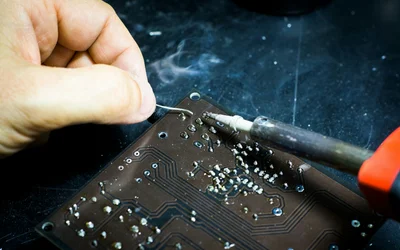
Struggling with safety compliance and quality control in manufacturing? Discover how Matroid’s no-code computer vision platform is transforming the industry with real-time defect detection, PPE monitoring, and predictive maintenance.
Digital transformation in the manufacturing industry is advancing fast to meet the constant demand for new products and processes. The development and adoption of immersive technology have introduced us to a new arena – the metaverse – with all its exciting possibilities.
As we approach the second half of the 2020s, many businesses wonder what manufacturing will look like in 2030. They see challenges ahead that include the effects of climate change, ongoing supply chain disruptions and the fluctuating relationship between humans and machines.
This blog looks into the Electroforming technology, its technical advantages, why it is the optimal choice for the electronics industry, and its potential to transform the future of the electronics industry.