
Featuredcase study
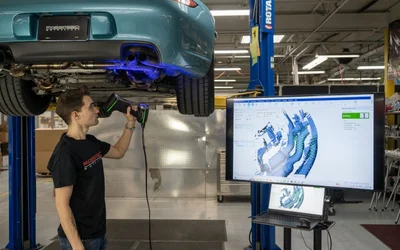
Fabspeed Motorsport revolutionized its Porsche modification process using SCANTECH's KSCAN-Magic scanner—cutting scan time, eliminating sprays, and enabling fast, precise custom parts for high-performance vehicles.
Fabspeed Motorsport revolutionized its Porsche modification process using SCANTECH's KSCAN-Magic scanner—cutting scan time, eliminating sprays, and enabling fast, precise custom parts for high-performance vehicles.
A Review of Presentations from CDFAM Computational Design Symposium Series, Past and Future
Aerospace 3D printing has emerged as a transformative technology in the aviation and space industries, revolutionizing component design, prototyping, and manufacturing.
What is 3D printing? This article goes over the basics of 3D printing, otherwise known as additive manufacturing, covering its engineering principles and applications.
14 minutes read.
17 minutes read.
11 minutes read.
18 minutes read.
13 minutes read.
10 minutes read.


Entertainment
The Next Byte Podcast is hosted by two young engineers - Daniel and Farbod - who select the most interesting tech/engineering cont...
165 Posts
Lean manufacturing focuses on creating more value with less waste. Pioneered by Toyota in the 1950s, this approach helps businesses streamline processes, improve efficiency, and eliminate activities that don't add value to the final product.
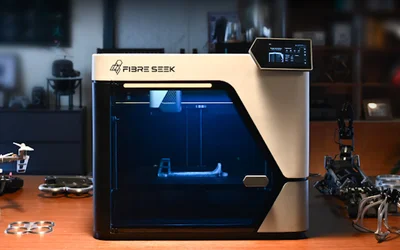
Following a successful crowdfunding campaign, the FibreSeeker 3 from FibreSeek is bringing continuous carbon fiber printing to a new audience.
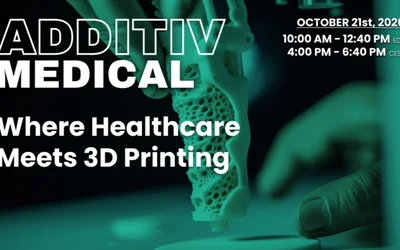
ADDITIV Medical 2026 will bring together more than 500 medical professionals
Choosing between 3D printing and injection molding is one of the key decisions in product development—especially in case of prototyping.
The data problem
From leading experts at the CDFAM Computational Design Symposium
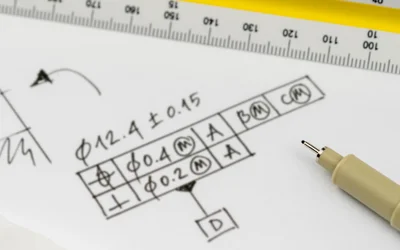
GD&T is the symbolic language engineers use to state exactly how much a part can vary and still work. This guide covers the basics.
This guide covers the true position formula, how to read the feature control frame, and how MMC and LMC generate bonus tolerance.
Fabspeed Motorsport revolutionized its Porsche modification process using SCANTECH's KSCAN-Magic scanner—cutting scan time, eliminating sprays, and enabling fast, precise custom parts for high-performance vehicles.

3 minutes read
A Review of Presentations from CDFAM Computational Design Symposium Series, Past and Future

8 minutes read
Aerospace 3D printing has emerged as a transformative technology in the aviation and space industries, revolutionizing component design, prototyping, and manufacturing.

10 minutes read
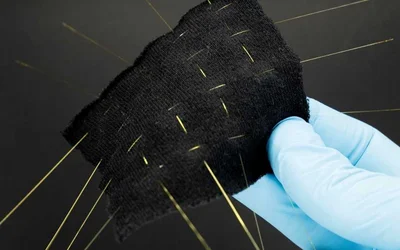
New smart textiles developed by researchers at ETH Zurich use acoustic waves and glass fibres to help make precise measurements. They are light, breathable and inexpensive, and offer great potential for medicine, sports and everyday life.

3 minutes read
From the experts at CDFAM Computational Design Symposium
3 minutes read
Accelerate production, reduce downtime, and gain a competitive edge by integrating on-demand digital manufacturing into your operations.
Manufacturing semiconductors is made simpler and more cost-effective with the use of cutting-edge microdispensing technologies that can print on a range of substrates.
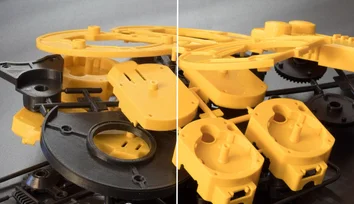
Electrical motors are vital components in various industrial and household appliances. They transform one form of energy (electrical) into another (mechanical) to perform essential tasks.
On-site printing of lightweight PSU fillers slashes carbon impact and supply chain complexity—Finnair now sources spare parts locally in Dubai, Singapore, and beyond.

2 minutes read
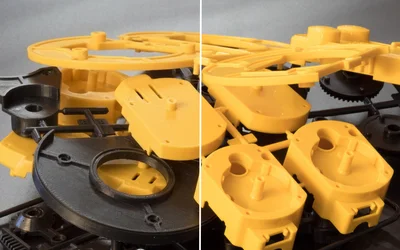
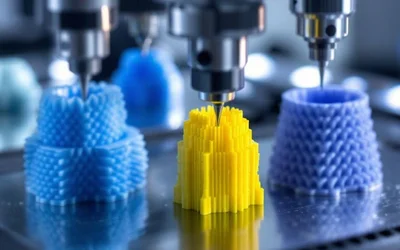
Understanding how to leverage infill effectively is crucial for maximizing the potential of 3D printing technology.
15 minutes read
Tariff headlines may cool for 90 days, but the policy pendulum is unlikely to stop swinging.
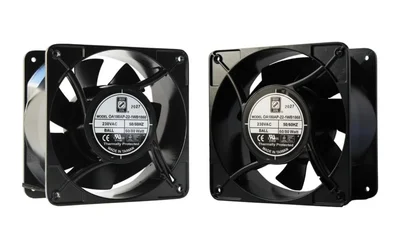
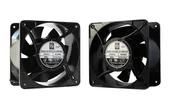
Wevolver spoke with Orion Fans President, John Knight, to learn about the cooling challenges companies face, how their technologies address system reliability, and where innovation is heading in thermal management.
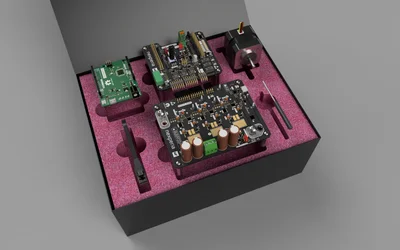
Nexperia NEVB-MTR1-KIT1 is a motor driver evaluation kit that can be set up in under two minutes, supports USB-C Power Delivery, allows microcontroller and component swapping, and offers open-source firmware for fast customization and real-world motor control development.
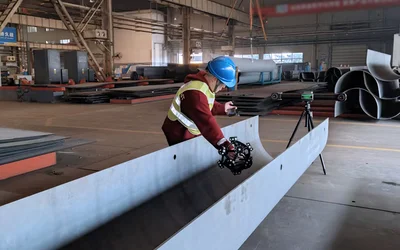
TrackScan Sharp-S optical 3D scanning system improves crane component inspection. Its wireless design, user-friendly operations and high-precision 3D data streamline quality control, ensuring consistent, high-precision results while improving efficiency in crane manufacturing and inspection.
4 minutes read
It’s no secret that we live in a world of climate change and environmental stresses. Not only nature itself but society is challenging us to press for sustainable development while at the same time maintaining our economic edge.