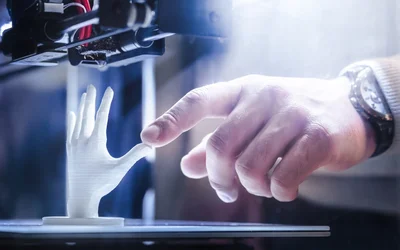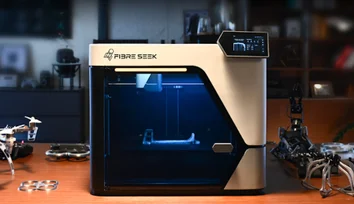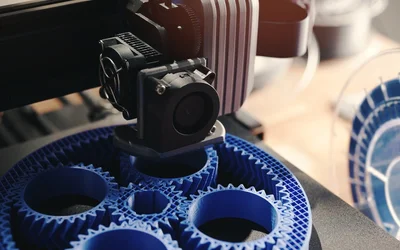

What is 3D printing? This article goes over the basics of 3D printing, otherwise known as additive manufacturing, covering its engineering principles and applications.

What is 3D printer filament made of? This guide examines polymers, additives, and composites, offering practical tips for digital design and hardware engineers.
Learn everything you need about the full adder circuit. From binary addition theory to low-power hardware implementations and modern ASIC/FPGA design flows, this technical article equips digital design engineers, hardware engineers with practical insights and current research trends.
Explore how a transistor works from first principles through practical circuit design. This in depth guide explains BJT and FET operation, switching and amplification modes, design calculations, modern market trends, and FAQs, ideal for digital design engineers, hardware engineers, and students.
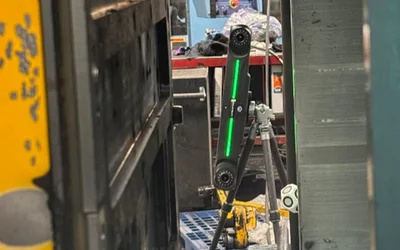
Advanced 3D scanning delivers comprehensive, high-accuracy inspection for massive grinding roller shells. It replaces manual measurement with fast, traceable digital analysis, enabling smarter maintenance and reduced operational costs.
The primary role of pressure sensors is to make sure the pressure in a pneumatic or hydraulic system is always maintained at the correct level, or at least kept within an optimum range.
Cables are a vital component of your control panel, as they convey precise operating instructions to the various applications in your automated system. They provide the conduit for constant communication between control devices and sensors.
Industrial pneumatic systems rely on two important parameters when specifying pipes and hoses: pressure and flow. Both of these are directly related to pipe diameter, and a number of complex equations have been worked out for calculating the relationship between them.
Valves are crucial to many industrial applications. They control, direct and regulate the flow of various substances through a network of passages by opening, closing or partially blocking these pathways. You’ll find valves in most industrial sectors, handling different types of gases and fluids.

Factory automation is rapidly transforming industries worldwide, marking a new era of efficiency, precision, and innovation. As we advance deeper into Industry 4.0, the integration of advanced automation technologies has become a cornerstone of modern manufacturing.
This article serves as an exploration of the Standard for Exchange of Product Model Data (STEP) file format, examining its implementation in modern CAD systems.
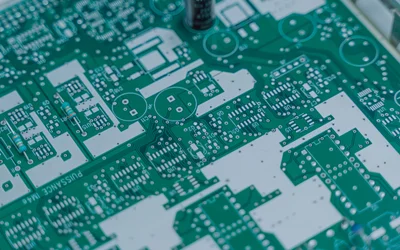
Surface Mount Technology (SMT) revolutionized electronics manufacturing by enabling smaller, faster, and more efficient circuit designs. This guide delves into the core principles of SMT, explores its cutting-edge advancements, and addresses the challenges in implementing this technology.
Building on the success of conventional wearables, smart rings have been enthusiastically embraced by early adopters with a finger on the pulse of cutting-edge yet fashionable health and fitness wireless products.

Understanding and improving scan time is vital for your PLC so that you can be sure it’s operating efficiently and effectively. Scan time in this context refers to the time it takes your PLC to assess and process all incoming and outgoing data.
Control panels have become a key feature in automation over the last few decades and are of great benefit to the industry. They make your facility easier to run, achieve better performance and are more cost-effective.
Valve standards fall into three main categories depending on whether they are established by the International Organisation for Standardisation (ISO), the American Petroleum Institute (API) or the American National Standards Institute (ANSI).
Although many of us are still getting to grips with Industry 4.0 – or the Fourth Industrial Revolution – a new term is already appearing. Industry 5.0 isn’t introducing any radical new form of technology, as happened in previous industrial revolutions.