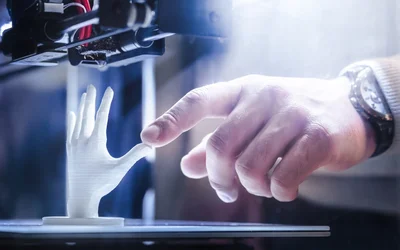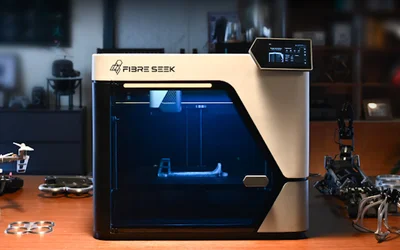

What is 3D printing? This article goes over the basics of 3D printing, otherwise known as additive manufacturing, covering its engineering principles and applications.
What is 3D printer filament made of? This guide examines polymers, additives, and composites, offering practical tips for digital design and hardware engineers.
Learn everything you need about the full adder circuit. From binary addition theory to low-power hardware implementations and modern ASIC/FPGA design flows, this technical article equips digital design engineers, hardware engineers with practical insights and current research trends.
Explore how a transistor works from first principles through practical circuit design. This in depth guide explains BJT and FET operation, switching and amplification modes, design calculations, modern market trends, and FAQs, ideal for digital design engineers, hardware engineers, and students.
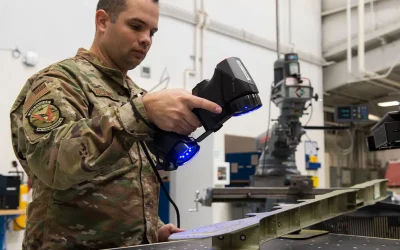
Advanced 3D scanning delivers comprehensive, high-accuracy inspection for massive grinding roller shells. It replaces manual measurement with fast, traceable digital analysis, enabling smarter maintenance and reduced operational costs.
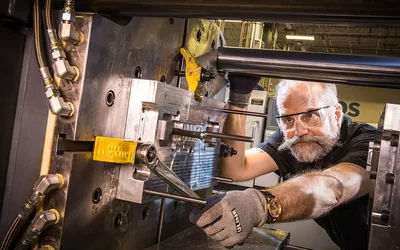
Ejector pins are utterly vital to the process of creating injection moulded parts. If all goes well they barely leave a mark, but sometimes this is not the case. In this video we talk about how design and position can minimise this, considering shape and specific qualities of the part.
A high-tech company in the field of infrared detection technology research, appointed us for the production of 200 sets of optical probe components. Due to their complex structures and undercut details, injection molding or CNC machining were not feasible.
When 3D printing, there may be times that you want to speed up your printing experience. Maybe you need to save time, increase productivity – or just don’t want to wait any longer than necessary for a print to finish.
The current advancement in multi-material additive manufacturing technologies has provided unique opportunities to create 3D printed structures with not only complex geometries at several length scales, but arbitrary deposition of multiple materials (i.e., soft or hard) in 3D space.
The best designs must consider all available opportunities to reduce costs at the outset. We give some common sense guidelines that can make a difference in your bottom line.
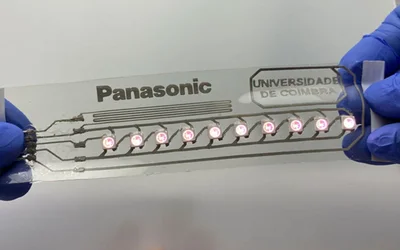
Article #7 of Improving Lives with Digital Healthcare Series: Real-time monitoring of multiple physiological health parameters can be an effective way of preventing and early diagnosis of several diseases.
Are you aware of a component does not create added value, while is significant and indispensable for products? That is fasteners. For a product, a fastener only fixes the parts, and has barely no effect on the utilization.

Article #1 of Improving Lives with Digital Healthcare Series: Developing wearable devices for consumer and medical applications can come with different sets of challenges.