
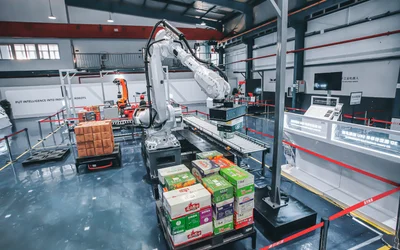
This Report shows how tools like artificial intelligence, digital twins, and on-demand manufacturing are no longer emerging concepts, but are already delivering measurable impact across the product lifecycle.
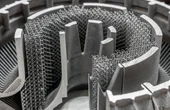
Engineers at Caltech have developed a method for 3-D printing pure and multicomponent metals, at a resolution that is, in some cases, an order of magnitude smaller than previously possible. The process, which uses water-based chemistry and 3-D printing, was described in a paper published in Nature on October 20.
The manufacturing industry (largely) welcomed artificial intelligence with open arms. Less of the dull, dirty, and dangerous? Say no more. Planning for mechanical assemblies still requires more than scratching out some sketches, of course — it’s a complex conundrum that means dealing with arbitrary 3D shapes and highly constrained motion required for real-world assemblies.
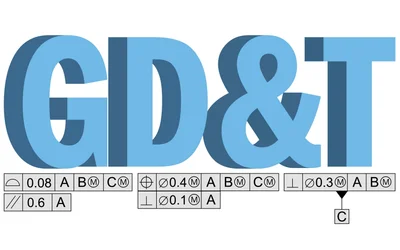
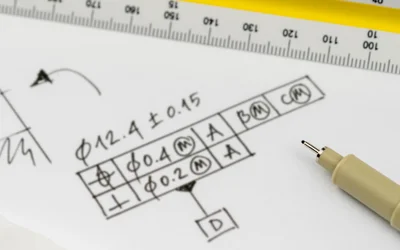
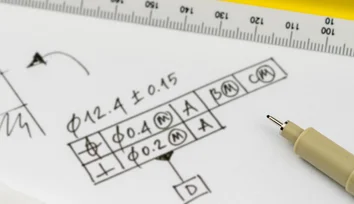
This blog post aims to guide you through the basic concepts and definitions of geometric dimensioning and tolerancing (GD&T); more precisely, this includes what GD&T is, how it works, and why it is important to implement GD&T processes. Furthermore, it emphasizes that all of the geometric characteristics and tolerances written on a technical drawing are there for a specific purpose of functionality.

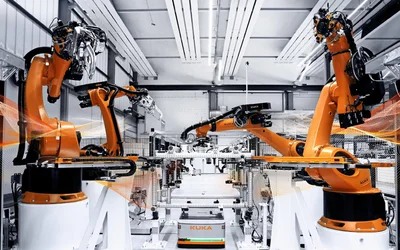
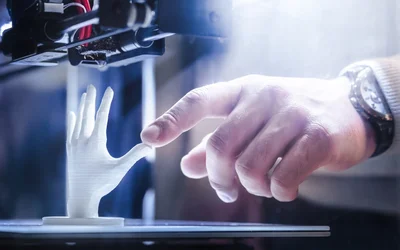
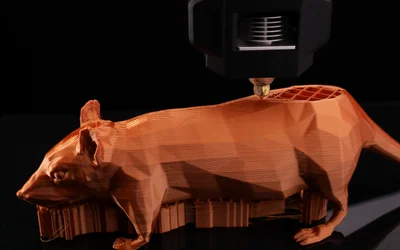
What is 3D printing? This article goes over the basics of 3D printing, otherwise known as additive manufacturing, covering its engineering principles and applications.
EPFL researchers have developed a way to use holograms to guide laser light for ultra-efficient, fast, and precise volumetric 3D printing. The innovation enables cell-compatible, high-resolution 3D printing at scales suitable for biomedical applications.
Princeton researchers have combined brain cells and advanced electronics into a 3D device that can be programmed to recognize patterns using computational techniques.
Engineers at Caltech have developed a method for 3-D printing pure and multicomponent metals, at a resolution that is, in some cases, an order of magnitude smaller than previously possible. The process, which uses water-based chemistry and 3-D printing, was described in a paper published in Nature on October 20.
The manufacturing industry (largely) welcomed artificial intelligence with open arms. Less of the dull, dirty, and dangerous? Say no more. Planning for mechanical assemblies still requires more than scratching out some sketches, of course — it’s a complex conundrum that means dealing with arbitrary 3D shapes and highly constrained motion required for real-world assemblies.
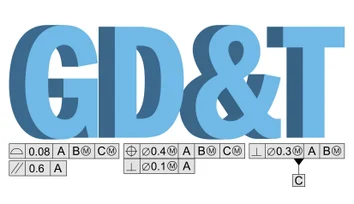
This blog post aims to guide you through the basic concepts and definitions of geometric dimensioning and tolerancing (GD&T); more precisely, this includes what GD&T is, how it works, and why it is important to implement GD&T processes. Furthermore, it emphasizes that all of the geometric characteristics and tolerances written on a technical drawing are there for a specific purpose of functionality.
A company well-known for superior analytical instruments and laboratory equipment opted for RPWORLD to produce 100 units assembly parts of a Spectrometer per order, the total demand is 400 sets per year.
The Chair of Metal Structures at the Technical University of Munich has been contributing to the development of steel and light metal structures within the construction industry for many decades. There is a long-standing tradition in the areas of bridge design, stability, construction, composite structures, fatigue and glass works.
Manufacturing platform, Hubs, has published its Supply Chain Resilience Report 2023, featuring insights from 2022 and addressing recent supply chain disruptions, including the ongoing war in Ukraine, escalating tensions between China and Taiwan, and more. Download the full report below.
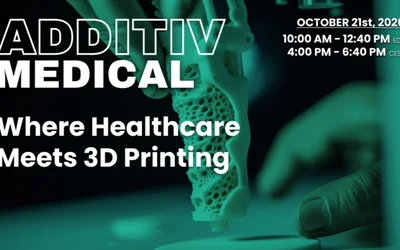
Alongside aerospace, automotive, and defense, health care has long been—and will continue to be—one of the key revenue opportunities for 3D printing (also known as additive manufacturing) technology.
Replique has partnered with Alstom for the implementation of the mobility giant’s first-ever serial part production. Created with the BCN3D Metal Pack, the visible stainless steel part was found to be the most cost-effective and high-quality method.
Costumes in the annual Trinidad and Tobago Carnival often inspire awe because of their extravagance, flamboyancy, and — for some dancing sculptures — their size.
You want some medical device prototypes or low-volume production parts to verify the design structure, materials or even your whole medical device idea? Or your medical device development is stalled because the structure of low-volume parts is too complex to be CNC machined or injection molded?
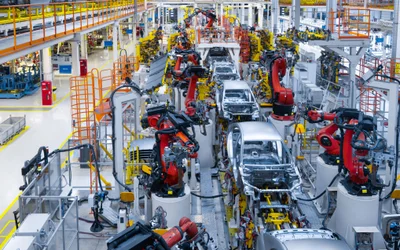
A single automobile has about 30,000 parts, counting every part down to the smallest screws. Therefore, the process of developing an automobile would be a voluminous task, which could even take thousands of people a couple of years.