

Protect sensitive electronics by understanding the current limiting resistor, learning how to calculate appropriate values, and applying them in LEDs, transistors, microcontroller inputs and other circuits.
This guide explains how potentiometer pins interact with mechanical rotation, resistive tracks, and load conditions across various circuit configurations. It provides clarity for both low-power electronic designs and high-precision embedded systems.

This technical article explains the theory behind potentiometer schematics. It shows how to implement mechanical and digital potentiometers in practical circuits, tailored for engineers, and students.
Engineering teams can achieve AI-ready design data with five-level maturity model by Keysight. The unified, traceable data accelerates design cycles, boosts IP reuse, and reduces costly re-spins.
Focused laser-like light that covers a wide range of frequencies is highly desirable for many scientific studies and for many applications, for instance quality control of manufacturing semiconductor electronic chips.
Scientists at ITMO have come up with a new way to protect microelectronics devices from counterfeit. The new technology is based on gold and silicon nanoparticles with unique optical properties that make it possible to create unclonable functions with a record information density.
An international team of scientists was first to demonstrate that halide perovskites can serve as a base for nonlinear on-chip optical components. As an example, they can be used to build ultrafast optical chips and transistors, and, potentially, other integrated optical systems.
This article outlines what Swissloop Tunneling is, how Groundhog Alpha is structured, what potential applications it has, which milestones have been achieved, and what is planned for the future.
For the second consecutive year, we have compiled a list of Campus companies that Eindhoven, the Netherlands and the world will hear more about in 2022. This year, we’re focusing on companies created in High Tech Campus’s startup ecosystem, or that landed on the Campus during 2021.
Multifunctional shape-morphing material with reversible
and rapid polymorphic reconfigurability implemented into a soft robotic morphing drone that autonomously transforms from ground to air vehicle and an underwater morphing machine.
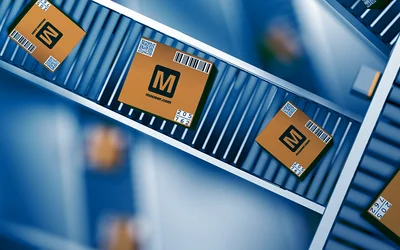
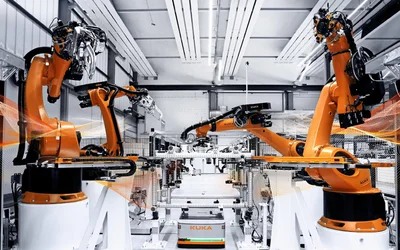
The Industrial IoT (IIoT) is the foundation of Industry 4.0. By sending sensor data to the cloud and using it to feed machine learning algorithms, manufacturers can detect process problems immediately, rather than at later stages when rework and field failures are much more expensive.
An oligomeric [8]annulene-based material has been shown to be suitable for creating single-molecule components including logic elements, switches, and gates — and could be one of the ways Moore's Law is kept marching in the semiconductor industry.
High-fidelity touch has the potential to significantly expand the scope of what we expect from computing devices, making new remote sensory experiences possible.
Article #6 of Connectivity and Sensing in Harsh Environments series: Heat shrink accessories offer a convenient way to protect elements of electrical power systems in harsh environments.
Article #5 of Connectivity and Sensing in Harsh Environments Series: Protecting sensors without affecting their performance is a challenge when designing sensors for harsh and corrosive environments.
Article #4 of Connectivity and Sensing in Harsh Environments Series: Cars, Construction Equipment, Trucks, Buses, Airplanes, Trains, and other vehicles require connectors that withstand vibrations, shocks, humidity, dust, and other unfavorable conditions to perform reliably.
Article #3 of Connectivity and Sensing in Harsh Environments Series: Rugged switchgear connectors and terminations enable the handling of electrical energy safely and efficiently in the harsh environments of marine applications.
Article #2 of Connectivity and Sensing in Harsh Environments Series: As the bandwidth consumed by vehicular electronics increases, manufacturers need to adopt the latest communication standards, and make various design considerations to ensure signal integrity in harsh environments.
Article #1 of Connectivity and Sensing in Harsh Environments Series: Electrical components that enable the transfer of control and power are improving to fulfill the requirements of cutting-edge industrial applications.
Designed around a novel DNA aptamer, this flexible sensor array can pick up your cortisol — and therefore stress — levels by sampling your sweat, and transmit readings to a nearby smartphone or other device for long-term tracking.
Introducing the Connectivity and Sensing in Harsh Environments Series: Advancements in aerospace, defense, construction, power systems, automobiles, nuclear reactors, and various other fields have made it necessary for systems engineers to ensure reliable performance in the harshest environments.