Featured
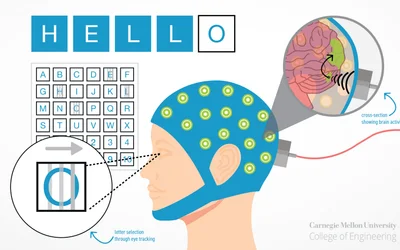
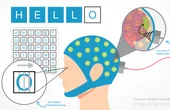
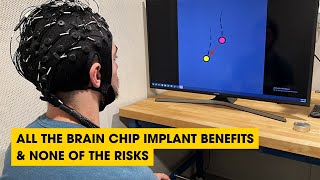
To strengthen the case for noninvasive BCIs, Carnegie Mellon researchers have demonstrated that through precision neuromodulation using focused ultrasound, the performance of a BCI could be improved for communication.

Learn why teams still lose half their development time to test and fix, and what changes when you get real visibility into the target.
To strengthen the case for noninvasive BCIs, Carnegie Mellon researchers have demonstrated that through precision neuromodulation using focused ultrasound, the performance of a BCI could be improved for communication.
Explore the fundamentals of Gray Code, its practical uses in digital systems, and the latest advancements driving innovation in technology and data encoding.
Georgia Tech researchers found that chatbots are less accurate in Spanish, Chinese, and Hindi compared to English when asked health-related questions.
A single point of failure is any part whose failure stops the whole system. Learn how engineers find SPOFs with FMEA and fault trees, quantify them with reliability math, and remove them with N+1, 2N, failover, quorum, and voting designs, and why common cause failures can still defeat redundancy.
24 minutes read.
20 minutes read.
21 minutes read.
16 minutes read.
23 minutes read.
19 minutes read.


Higher Education
Work together. Create smart machines. Serve society. University of Michigan’s Robotics Institute aims to create a collaborative c...
40 Posts

Test and Measurement equipment
Keysight Technologies, Inc. (NYSE: KEYS) is a leading technology company th...
11 Posts
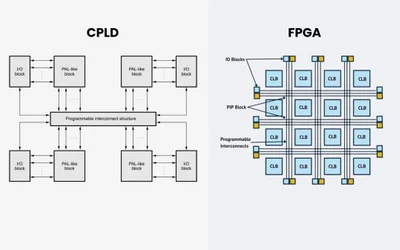
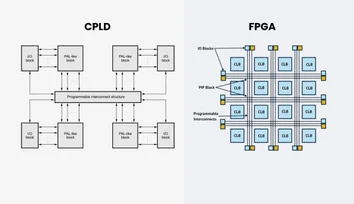
This article presents a comprehensive technical analysis of CPLD vs FPGA, focusing on their architectural distinctions, performance metrics, design flows, and implementation methodologies.
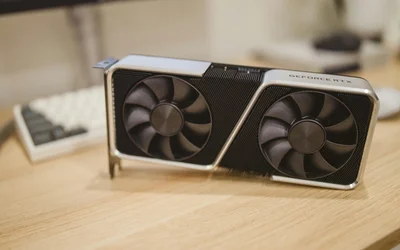
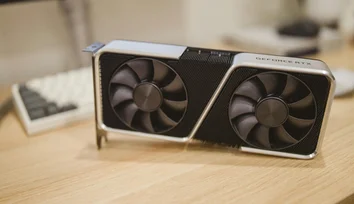
CUDA Cores and Tensor Cores are specialized units within NVIDIA GPUs; the former are designed for a wide range of general GPU tasks, while the latter are specifically optimized to accelerate AI and deep learning through efficient matrix operations.
Discover the critical role of in-circuit testing in modern engineering, exploring its foundational principles, technological advancements, and real-world applications.
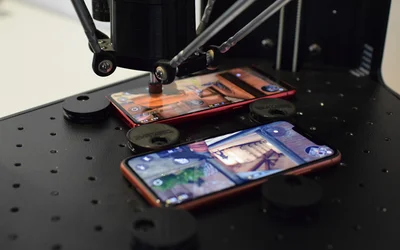
Measured in milliseconds, the response time to a tap on a smartphone’s screen might not be a “show stopping” issue, but a delay between an action and its reaction in the mobile gaming industry can make an important difference.
Researchers have developed a new kind of nanoelectronic device that could dramatically cut the energy consumed by artificial intelligence (AI) hardware by mimicking the human brain.
To help generative AI models create durable, real-world accessories and decor, the PhysiOpt system runs physics simulations and makes subtle tweaks to its 3D blueprints.
AI-occupational therapy team leverages novel vision-language models to detect cognitive errors
To strengthen the case for noninvasive BCIs, Carnegie Mellon researchers have demonstrated that through precision neuromodulation using focused ultrasound, the performance of a BCI could be improved for communication.

3 minutes read
Explore the fundamentals of Gray Code, its practical uses in digital systems, and the latest advancements driving innovation in technology and data encoding.
Georgia Tech researchers found that chatbots are less accurate in Spanish, Chinese, and Hindi compared to English when asked health-related questions.

3 minutes read
TENN, developed by BrainChip, is an efficient AI technology designed for edge and event-based processing, reducing energy and computational demands for applications in various sectors.

4 minutes read
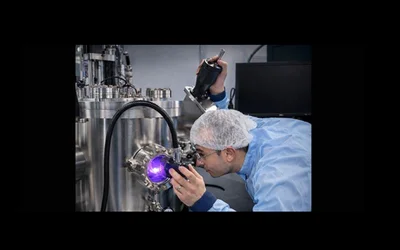
A new quantum-system-on-chip enables the efficient control of a large array of qubits, moving toward practical quantum computing.
Bound states in the continuum (BICs) are at the basis of ultra-sensitive sensors, compact optical devices, and optical computers. In this article, Zarina Kondratenko, a senior researcher at ITMO’s Faculty of Physics, unravels the conundrum and shares ongoing projects in the field by ITMO researchers

4 minutes read
Pose detection technology leverages advanced machine learning algorithms to interpret human movements in real-time, enabling seamless, intuitive device control through simple gestures.
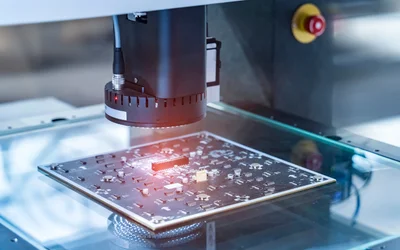
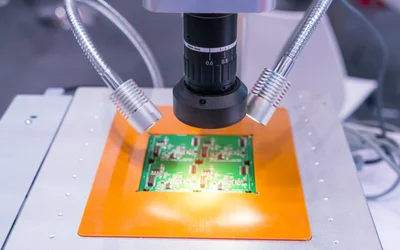
This article delves into the significance of PCB inspection, exploring the latest advancements, challenges, and various inspection techniques employed to safeguard the integrity and functionality of PCBs.
In this episode, we discuss how a team from Carnegie Mellon University spearheading non-invasive brain computer interface solutions has had a significant breakthrough in improving their accuracy.

19 minutes read
Technological advances have emerged from Industry 4.0, but quantum computing will take the fourth industrial revolution to a whole new level. Although it’s still in its infancy, researchers and business leaders are already exploring the potential role of quantum computing in manufacturing.
NVIDIA TAO and Edge Impulse integrate to streamline the development and deployment of edge AI models, empowering developers to quickly build and optimize AI applications for diverse hardware environments.
Researchers at KIT have developed a model for emotion analysis that can determine affective states with similar accuracy to a human

3 minutes read
The advance offers a way to characterize a fundamental resource needed for quantum computing.
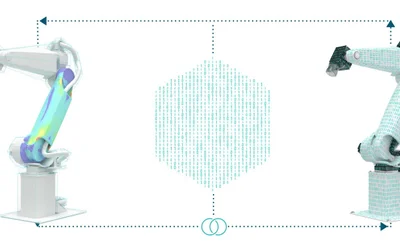
“TRICK” is a simple, compelling acronym that serves you on your digital twin journey. It’s a framework to help separate true digital twin technology from fancy-looking interactive CAD models, which are not digital twins but rather mere digital shadows.

8 minutes read
Physicists from ITMO University have created an AI-based solution to make quantum states remain stable for longer for the processing, reliable recording, and storage of information. This study, described in a recent article in Applied Physics Letters, may help pave the way to quantum computers.
2 minutes read