Featured
RISC-V: introducing new paradigms to the world of hardware design with software-focused hardware.
Learn why teams still lose half their development time to test and fix, and what changes when you get real visibility into the target.
RISC-V: introducing new paradigms to the world of hardware design with software-focused hardware.
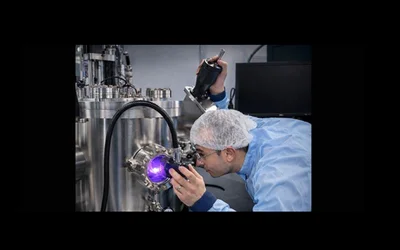
It’s a step toward smart coatings that change color—or other properties—on the fly.
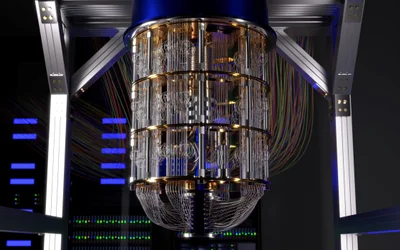
Article #4 of Engineering the Quantum Future Series: Interconnected quantum processors link multiple quantum units to enhance system-wide performance, enabling breakthroughs in computing speed and efficiency across diverse scientific fields.
A single point of failure is any part whose failure stops the whole system. Learn how engineers find SPOFs with FMEA and fault trees, quantify them with reliability math, and remove them with N+1, 2N, failover, quorum, and voting designs, and why common cause failures can still defeat redundancy.
24 minutes read.
20 minutes read.
21 minutes read.
16 minutes read.
23 minutes read.
19 minutes read.


Higher Education
Work together. Create smart machines. Serve society. University of Michigan’s Robotics Institute aims to create a collaborative c...
40 Posts

Test and Measurement equipment
Keysight Technologies, Inc. (NYSE: KEYS) is a leading technology company th...
11 Posts
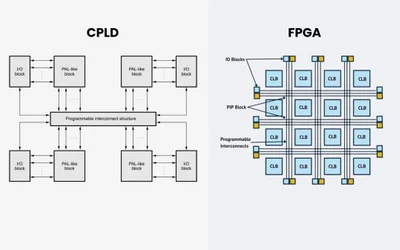
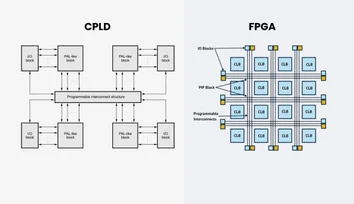
This article presents a comprehensive technical analysis of CPLD vs FPGA, focusing on their architectural distinctions, performance metrics, design flows, and implementation methodologies.
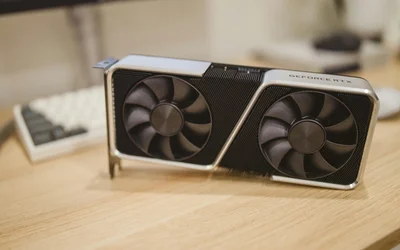
CUDA Cores and Tensor Cores are specialized units within NVIDIA GPUs; the former are designed for a wide range of general GPU tasks, while the latter are specifically optimized to accelerate AI and deep learning through efficient matrix operations.
Discover the critical role of in-circuit testing in modern engineering, exploring its foundational principles, technological advancements, and real-world applications.
Measured in milliseconds, the response time to a tap on a smartphone’s screen might not be a “show stopping” issue, but a delay between an action and its reaction in the mobile gaming industry can make an important difference.
Researchers have developed a new kind of nanoelectronic device that could dramatically cut the energy consumed by artificial intelligence (AI) hardware by mimicking the human brain.
To help generative AI models create durable, real-world accessories and decor, the PhysiOpt system runs physics simulations and makes subtle tweaks to its 3D blueprints.
AI-occupational therapy team leverages novel vision-language models to detect cognitive errors
RISC-V: introducing new paradigms to the world of hardware design with software-focused hardware.
It’s a step toward smart coatings that change color—or other properties—on the fly.

4 minutes read
Article #4 of Engineering the Quantum Future Series: Interconnected quantum processors link multiple quantum units to enhance system-wide performance, enabling breakthroughs in computing speed and efficiency across diverse scientific fields.
An AI team coordinator aligns agents’ beliefs about how to achieve a task, intervening when necessary to potentially help with tasks in search and rescue, hospitals, and video games.
Article #3 of Engineering the Quantum Future Series: Quantum computing advances energy optimization by enabling real-time grid management, precise simulation, optimization of energy systems, and facilitating the integration of renewable sources.
IT Researchers Further Develop Intelligent Speech Recognition and Translation System: Automatic Text Segmentation, Summarization, and Intelligent Query Possible

2 minutes read
CMOS and CCD sensors both convert light into electronic signals, with CMOS using pixel-level transistors for faster, energy-efficient processing, while CCD transfers charge across the chip for superior image quality but with slower speed and higher power consumption.
Article #2 of Engineering the Quantum Future Series: Recent breakthroughs in quantum computing made substantial strides, driving closer to practical applications that could revolutionize industries by solving complex computational problems more efficiently.
McKelvey’s Chien-Ju Ho working with Art & Sciences’ Wouter Kool, DCDS PhD student Lauren Treiman to understand how human behavior changes in training AI

3 minutes read
Moving Your ML Proof of Concept to Production Part 1: From Business Goals to ML Metrics
Article #1 of Engineering the Quantum Future Series: Quantum computing extends beyond classical binary limits by utilizing qubits, which can exist in multiple states simultaneously, enabling exponentially faster and more complex computations.
EPFL researchers have published a programmable framework that overcomes a key computational bottleneck of optics-based artificial intelligence systems.

3 minutes read
Researchers have developed a platform for the interactive evaluation of AI-powered chatbots such as ChatGPT.

4 minutes read
With the growing threat of cyberattacks, it is essential that developers keep security considerations in mind throughout the design process. By following some practical tips and recommendations, developers can guard against a wide range of attack scenarios.
DLR and Rolls-Royce Deutschland are developing more climate-compatible aircraft engines.

4 minutes read