Featured
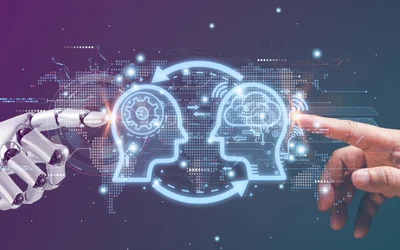
New research uses AI to improve training of sensorimotor skills in human subjects, with potential applications ranging from performing surgery to perfecting tennis serves.

Learn why teams still lose half their development time to test and fix, and what changes when you get real visibility into the target.
New research uses AI to improve training of sensorimotor skills in human subjects, with potential applications ranging from performing surgery to perfecting tennis serves.
A computational model of the basic functional unit of the placenta enables researchers to simulate placenta blood flow, realistically.
By automatically generating code that leverages two types of data redundancy, the system saves bandwidth, memory, and computation.
A single point of failure is any part whose failure stops the whole system. Learn how engineers find SPOFs with FMEA and fault trees, quantify them with reliability math, and remove them with N+1, 2N, failover, quorum, and voting designs, and why common cause failures can still defeat redundancy.
24 minutes read.
20 minutes read.
21 minutes read.
16 minutes read.
23 minutes read.
19 minutes read.


Higher Education
Work together. Create smart machines. Serve society. University of Michigan’s Robotics Institute aims to create a collaborative c...
40 Posts

Test and Measurement equipment
Keysight Technologies, Inc. (NYSE: KEYS) is a leading technology company th...
11 Posts
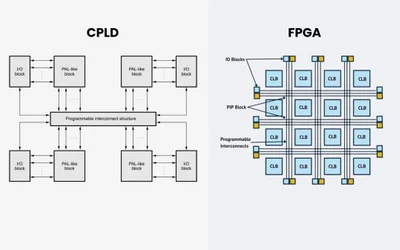
This article presents a comprehensive technical analysis of CPLD vs FPGA, focusing on their architectural distinctions, performance metrics, design flows, and implementation methodologies.
CUDA Cores and Tensor Cores are specialized units within NVIDIA GPUs; the former are designed for a wide range of general GPU tasks, while the latter are specifically optimized to accelerate AI and deep learning through efficient matrix operations.
Discover the critical role of in-circuit testing in modern engineering, exploring its foundational principles, technological advancements, and real-world applications.
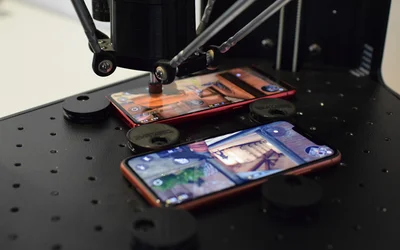
Measured in milliseconds, the response time to a tap on a smartphone’s screen might not be a “show stopping” issue, but a delay between an action and its reaction in the mobile gaming industry can make an important difference.
Researchers have developed a new kind of nanoelectronic device that could dramatically cut the energy consumed by artificial intelligence (AI) hardware by mimicking the human brain.
To help generative AI models create durable, real-world accessories and decor, the PhysiOpt system runs physics simulations and makes subtle tweaks to its 3D blueprints.
AI-occupational therapy team leverages novel vision-language models to detect cognitive errors
New research uses AI to improve training of sensorimotor skills in human subjects, with potential applications ranging from performing surgery to perfecting tennis serves.

2 minutes read
A computational model of the basic functional unit of the placenta enables researchers to simulate placenta blood flow, realistically.

By automatically generating code that leverages two types of data redundancy, the system saves bandwidth, memory, and computation.
This article explains, how is a microprocessor different from an integrated circuit, exploring their key differences, architectures, technological advancements, and potential applications.
Researchers at the Technical University of Munich (TUM) have developed a simulation tool to create detailed models of everything from traffic junctions to entire cities, in order to answer various mobility questions.

3 minutes read
A comprehensive technical analysis comparing High Bandwidth Memory 2 (HBM2) and GDDR6 memory architectures, examining architectural differences, performance metrics, and system integration considerations. Essential reading for system architects working with high-performance computing systems.
NPUs are integrated units that excel in real-time AI tasks on edge devices like smartphones and IoT systems with low power consumption. TPUs are standalone processors designed for large-scale AI workloads in data centers, delivering exceptional performance in deep learning tasks.
Researchers have developed a drastically smaller and more energy efficient method of creating coveted photon pairs that influence each other from any distance. The technology could transform computing, telecommunications, and sensing.

3 minutes read
This article is a detailed analysis of In-Memory Compute technology, covering its architecture, use cases, recent advancements, and practical implementation strategies to enhance computational efficiency.
Agriculture must feed 10 billion people by 2050 while cutting emissions and waste. Integrated photonics offers a solution with advanced sensors for efficient, high-yield farming.
Specialized microchips that manage signals at the cutting edge of wireless technology are astounding works of miniaturization and engineering. They’re also difficult and expensive to design.

4 minutes read
Using this model, researchers may be able to identify antibody drugs that can target a variety of infectious diseases.
A Short Guide to Key PIC Industry Design Guidelines for Optimizing Performance and Scalability
As part of our spotlight on the contest’s jury members, we had the privilege of speaking with Jörn Epping, Epiphany's co-founder and an integrated photonics expert.
A new technique identifies and removes the training examples that contribute most to a machine-learning model’s failures.