Featured
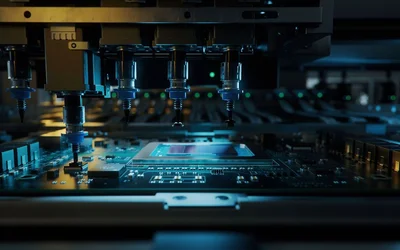
Twan Korthorst, CEO of New Origin, highlights their transformative potential in a conversation with Wevolver about the Global Photonics Engineering Contest, hosted in collaboration with PhotonDelta.
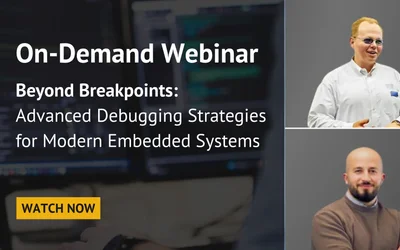
Learn why teams still lose half their development time to test and fix, and what changes when you get real visibility into the target.
Twan Korthorst, CEO of New Origin, highlights their transformative potential in a conversation with Wevolver about the Global Photonics Engineering Contest, hosted in collaboration with PhotonDelta.
Revolutionizing Testing, Modeling, and Optimization in Complex Engineering Environments
Explore pathways to a career in Photonic Integrated Circuits (PICs) for both students and engineers looking to reskill.
A single point of failure is any part whose failure stops the whole system. Learn how engineers find SPOFs with FMEA and fault trees, quantify them with reliability math, and remove them with N+1, 2N, failover, quorum, and voting designs, and why common cause failures can still defeat redundancy.
24 minutes read.
20 minutes read.
21 minutes read.
16 minutes read.
23 minutes read.
19 minutes read.
Higher Education
Work together. Create smart machines. Serve society. University of Michigan’s Robotics Institute aims to create a collaborative c...
40 Posts

Test and Measurement equipment
Keysight Technologies, Inc. (NYSE: KEYS) is a leading technology company th...
11 Posts
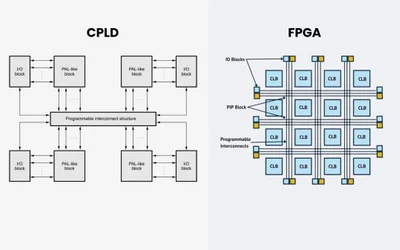
This article presents a comprehensive technical analysis of CPLD vs FPGA, focusing on their architectural distinctions, performance metrics, design flows, and implementation methodologies.
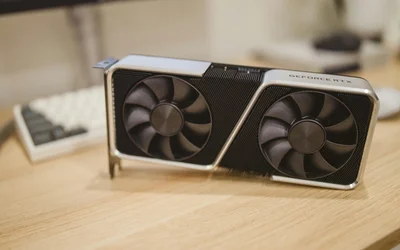
CUDA Cores and Tensor Cores are specialized units within NVIDIA GPUs; the former are designed for a wide range of general GPU tasks, while the latter are specifically optimized to accelerate AI and deep learning through efficient matrix operations.
Discover the critical role of in-circuit testing in modern engineering, exploring its foundational principles, technological advancements, and real-world applications.
Measured in milliseconds, the response time to a tap on a smartphone’s screen might not be a “show stopping” issue, but a delay between an action and its reaction in the mobile gaming industry can make an important difference.
Researchers have developed a new kind of nanoelectronic device that could dramatically cut the energy consumed by artificial intelligence (AI) hardware by mimicking the human brain.
To help generative AI models create durable, real-world accessories and decor, the PhysiOpt system runs physics simulations and makes subtle tweaks to its 3D blueprints.
AI-occupational therapy team leverages novel vision-language models to detect cognitive errors
Twan Korthorst, CEO of New Origin, highlights their transformative potential in a conversation with Wevolver about the Global Photonics Engineering Contest, hosted in collaboration with PhotonDelta.
Revolutionizing Testing, Modeling, and Optimization in Complex Engineering Environments

3 minutes read
Explore pathways to a career in Photonic Integrated Circuits (PICs) for both students and engineers looking to reskill.
The “PRoC3S” method helps an LLM create a viable action plan by testing each step in a simulation. This strategy could eventually aid in-home robots to complete more ambiguous chore requests.
Mold Flow Analysis is a simulation technique that predicts the flow of molten material within a mold cavity during injection molding.

3 minutes read
There has been a growing interest in research and commercial applications for PICs for various markets, including medical technology (MedTech), as they offer compact optical solutions at a low cost when mass-produced.
This new device uses light to perform the key operations of a deep neural network on a chip, opening the door to high-speed processors that can learn in real-time.
Fine-tuning large language models adapts pre-trained models to specific tasks or domains using tailored datasets, while Retrieval-Augmented Generation (RAG) combines retrieval systems with generative models to dynamically incorporate external, up-to-date knowledge into outputs.
Liu and team receive NSF EFRI grant for biocomputing research

The first project is developing light-based chips to bridge the gap between photonics and electronics. The second project plans to make blood cells using blood stem cells. The two projects are the first ERC Synergy grants for TU/e.

3 minutes read
In this episode, we explore a groundbreaking neurotechnology that boosts memory without the need for invasive surgery potentially helping people all over the world struggling with spatial memory.

15 minutes read
Thin film deposition applies material layers at the atomic/molecular level, vital for advancing electronics, energy, and aerospace. Key methods like CVD, PVD, and ALD enhance material properties, driving innovations in semiconductors, solar cells, and precision tech.
Edge AI Technology Report: Generative AI Edition Chapter 1. Generative AI's demand for real-time insights is driving a shift from cloud to edge computing, enabling faster, local processing on devices and reducing cloud latency and bandwidth constraints.
An overview of Flip chip technology, its inception, manufacturing process, advancements and performance optimization techniques.
EPFL researchers have combined virtual reality, non-invasive brain stimulation and advanced brain imaging techniques to improve spatial navigation in healthy participants. The study is a first step in addressing dementia in an aging population without medication or surgery.