This article explains, how is a microprocessor different from an integrated circuit, exploring their key differences, architectures, technological advancements, and potential applications.
NPUs are integrated units that excel in real-time AI tasks on edge devices like smartphones and IoT systems with low power consumption. TPUs are standalone processors designed for large-scale AI workloads in data centers, delivering exceptional performance in deep learning tasks.
A comprehensive technical analysis comparing High Bandwidth Memory 2 (HBM2) and GDDR6 memory architectures, examining architectural differences, performance metrics, and system integration considerations. Essential reading for system architects working with high-performance computing systems.
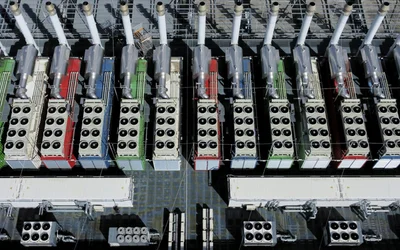
Designing efficient data center cooling systems requires a deep understanding of thermodynamics, energy metrics, airflow management, and emerging liquid cooling technologies. This article explains these concepts and provides practical guidance on implementing sustainable cooling solutions
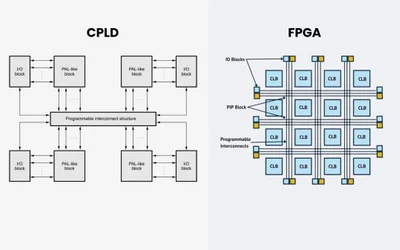
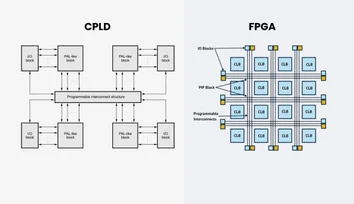
This article presents a comprehensive technical analysis of CPLD vs FPGA, focusing on their architectural distinctions, performance metrics, design flows, and implementation methodologies.
CUDA Cores and Tensor Cores are specialized units within NVIDIA GPUs; the former are designed for a wide range of general GPU tasks, while the latter are specifically optimized to accelerate AI and deep learning through efficient matrix operations.
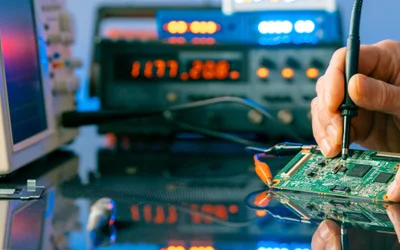
Discover the critical role of in-circuit testing in modern engineering, exploring its foundational principles, technological advancements, and real-world applications.
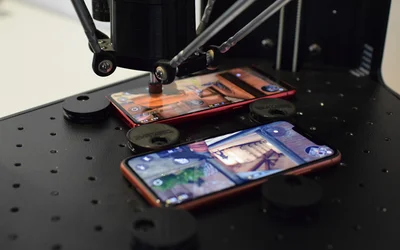
Measured in milliseconds, the response time to a tap on a smartphone’s screen might not be a “show stopping” issue, but a delay between an action and its reaction in the mobile gaming industry can make an important difference.
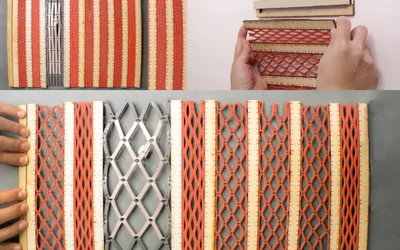
To help generative AI models create durable, real-world accessories and decor, the PhysiOpt system runs physics simulations and makes subtle tweaks to its 3D blueprints.
Fabricated as a single chip, the new implant is orders of magnitude faster and smaller than today's state-of-the-art brain-computer interfaces, offering an opportunity for more efficacious treatment of a number of neurological conditions.
In this episode, we explore MIT's new system that turns spoken ideas into physical assemblies by linking speech-to-text, text-to-CAD, CAD-to-assembly, and robotic fabrication - pointing to a future where making hardware could be as easy as prompting an AI with your voice.
This article explains, how is a microprocessor different from an integrated circuit, exploring their key differences, architectures, technological advancements, and potential applications.
NPUs are integrated units that excel in real-time AI tasks on edge devices like smartphones and IoT systems with low power consumption. TPUs are standalone processors designed for large-scale AI workloads in data centers, delivering exceptional performance in deep learning tasks.
A comprehensive technical analysis comparing High Bandwidth Memory 2 (HBM2) and GDDR6 memory architectures, examining architectural differences, performance metrics, and system integration considerations. Essential reading for system architects working with high-performance computing systems.
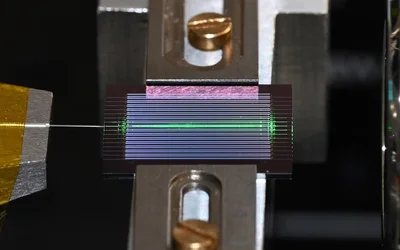
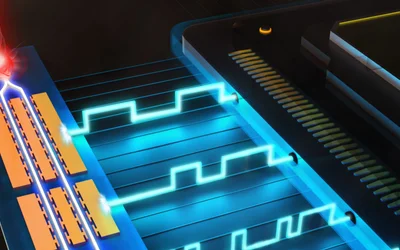
Researchers have developed a drastically smaller and more energy efficient method of creating coveted photon pairs that influence each other from any distance. The technology could transform computing, telecommunications, and sensing.
This article is a detailed analysis of In-Memory Compute technology, covering its architecture, use cases, recent advancements, and practical implementation strategies to enhance computational efficiency.
For this article we interviewed Niwa and Omura, who are responsible for the design, development, and operation of the system, as well as Toda, who requested its development and is also a user.
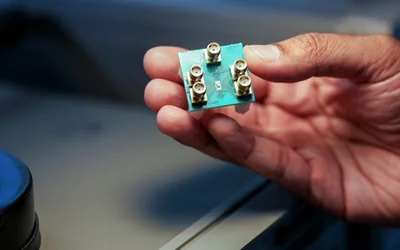
Specialized microchips that manage signals at the cutting edge of wireless technology are astounding works of miniaturization and engineering. They’re also difficult and expensive to design.
Agriculture must feed 10 billion people by 2050 while cutting emissions and waste. Integrated photonics offers a solution with advanced sensors for efficient, high-yield farming.
As part of our spotlight on the contest’s jury members, we had the privilege of speaking with Jörn Epping, Epiphany's co-founder and an integrated photonics expert.
Twan Korthorst, CEO of New Origin, highlights their transformative potential in a conversation with Wevolver about the Global Photonics Engineering Contest, hosted in collaboration with PhotonDelta.
The “PRoC3S” method helps an LLM create a viable action plan by testing each step in a simulation. This strategy could eventually aid in-home robots to complete more ambiguous chore requests.