Featured
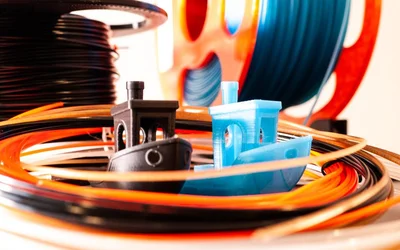
PETG vs PLA is a question asked by many newcomers to FFF 3D printing, with both materials offering important benefits. Choosing between them often comes down to the requirements of the project.
This Report shows how tools like artificial intelligence, digital twins, and on-demand manufacturing are no longer emerging concepts, but are already delivering measurable impact across the product lifecycle.
PETG vs PLA is a question asked by many newcomers to FFF 3D printing, with both materials offering important benefits. Choosing between them often comes down to the requirements of the project.
Concrete printing can drastically reduce raw material consumption and greatly increase construction speed in the future.
In 3D printing, a material’s flexibility refers to how much it will bend when load or force is applied – as well as its ability to return to its original shape after bending. Flexibility is often defined as the flexural modulus (MPa).
An engineer’s guide to understanding the state of the art in metal 3D Printing
15 minutes read.
22 minutes read.
11 minutes read.
18 minutes read.
12 minutes read.
16 minutes read.


Entertainment
The Next Byte Podcast is hosted by two young engineers - Daniel and Farbod - who select the most interesting tech/engineering cont...
165 Posts
ADDITIV Medical 2026 will bring together more than 500 medical professionals
Choosing between 3D printing and injection molding is one of the key decisions in product development—especially in case of prototyping.
The choice between 3D printing and CNC machining is the most common decision regarding manufacturing methods that must be made before placing the first order for prototypes. The correct answer depends on tolerance requirements, material specifications, component geometry, and schedule.
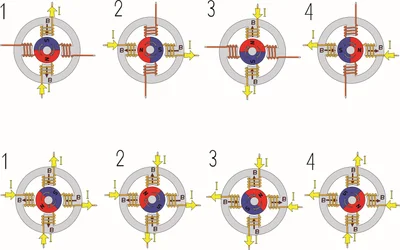
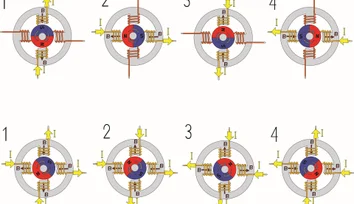
How microstepping works in stepper motors, the incremental torque cost of each resolution, and why finer microsteps do not improve positioning accuracy.
Discover how iAM Marketplace simplifies industrial additive manufacturing by unifying materials, validation services, and multi-brand technologies into one open ecosystem for efficient AM sourcing.
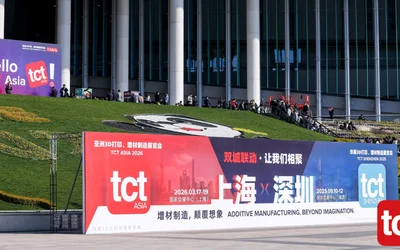
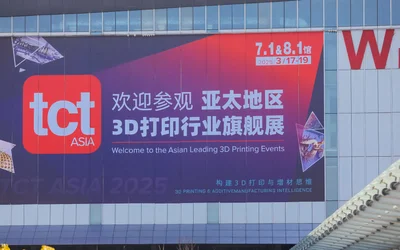
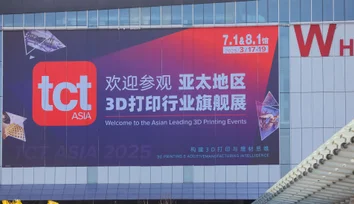
This article discusses what attendees can expect from TCT Asia 2026, including its conference format, focus areas, and the experts contributing to industry-specific discussions.
This article discusses the exhibitors, products, and industrial trends defining additive manufacturing across the Asia-Pacific region at TCT Asia 2026.
This article discusses how the Asia-Pacific region is advancing additive manufacturing and the role of TCT Asia as the leading 3D printing and additive manufacturing event in the Asia-Pacific.
PETG vs PLA is a question asked by many newcomers to FFF 3D printing, with both materials offering important benefits. Choosing between them often comes down to the requirements of the project.
Concrete printing can drastically reduce raw material consumption and greatly increase construction speed in the future.
In 3D printing, a material’s flexibility refers to how much it will bend when load or force is applied – as well as its ability to return to its original shape after bending. Flexibility is often defined as the flexural modulus (MPa).

4 minutes read
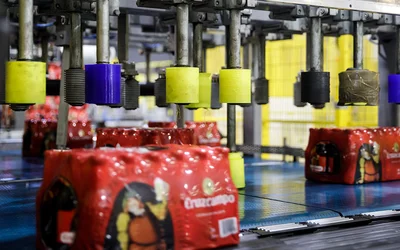
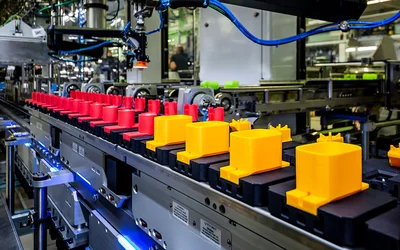
Working more efficiently and effectively is a goal of essentially every organization, regardless of sector or industry. Using 3D printing, many companies around the world can do just that in warehouses, assembly lines, and factories, enabling them to achieve results otherwise impossible.
3 minutes read
NavVis specializes in developing next-generation technology that enables accurate mapping of indoor spaces. And given that the wearable NavVis VLX system's accuracy had to compete with terrestrial solutions, the scanner’s sensor positioning would be the designers' top priority.
5 minutes read
The 3D printing market is expected to reach $13 billion by 2022¹. Progress is being driven by making the technology accessible to anyone, anywhere. But with that can come challenges for an organization adopting 3D printing.
4 minutes read
He was a runner-up in our Make It Real 3D Printing Challenge. His idea was to create a very low-cost brain-controlled prosthetic arm.
This major software release introduces real-time visualization with GPU acceleration; a technology breakthrough that will fundamentally change how nTop users interact with the software.

7 minutes read
Watch this special Ultimaker event and learn about the future of the 3D printing ecosystem. New CEO, Jürgen von Hollen, kicks everything off with exciting news and inspiration on how to use 3D printing to transform your competitive advantage with the Ultimaker platform.
ABS and PLA remain some of the go-to materials for hobbyists and other 3D printer users. Here we compare the two popular filaments in detail.
For this 7th edition, more than 1900 3D printing users answered our survey, providing interesting insights and information about the role of additive manufacturing in their business.

3 minutes read
Introducing an array of new features to bring nTopology into the 2nd Dimension.
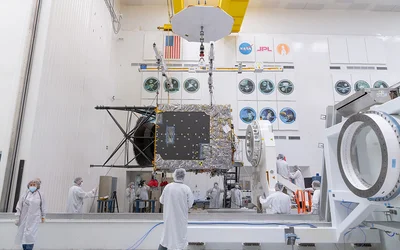
In this episode, we talk about NASA’s spacecraft to explore the Psyche 16 asteroid, a TAMU professor’s plan to improve your HVAC system using organic polymers, and Heineken’s initiative to use 3D printers to level up their factories.

Ultra-realistic 3m-tall dinosaur, 3D printed on the Massivit 1800 large format 3D printer by METROPOLE is wow-ing French train commuters at the Gare d’Austerlitz railway station.
UV curable gel reduces production time while creating large-format prints

5 minutes read