Featured
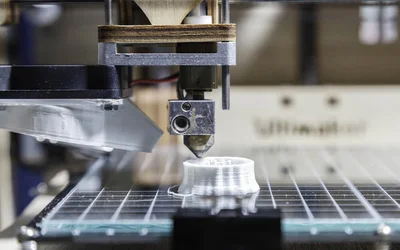
Z banding is a common problem that makers face when 3D printing. Read on to understand what Z banding is, what causes it, and how to fix it.
This Report shows how tools like artificial intelligence, digital twins, and on-demand manufacturing are no longer emerging concepts, but are already delivering measurable impact across the product lifecycle.
Z banding is a common problem that makers face when 3D printing. Read on to understand what Z banding is, what causes it, and how to fix it.
Typical industries that use 3D printing are automotive and medical, but you probably don't expect to hear fashion and jewellery. However, these industries are increasingly turning to 3D printing due to its ability to produce fine details, iterate designs quickly and display quality finishes.
Whether you use a glass plate, PEI sheet, or something else, cleaning your build surface is essential to getting good prints. But how do you do it quickly and effectively, and without damaging the bed?
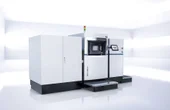
An engineer’s guide to understanding the state of the art in metal 3D Printing
15 minutes read.
22 minutes read.
11 minutes read.
18 minutes read.
12 minutes read.
16 minutes read.


Entertainment
The Next Byte Podcast is hosted by two young engineers - Daniel and Farbod - who select the most interesting tech/engineering cont...
165 Posts
ADDITIV Medical 2026 will bring together more than 500 medical professionals
Choosing between 3D printing and injection molding is one of the key decisions in product development—especially in case of prototyping.
Explore how the right finishes and coatings can improve aerospace parts by boosting durability, extending service life, enhancing environmental resistance, and delivering the performance and appearance required for demanding applications.
The choice between 3D printing and CNC machining is the most common decision regarding manufacturing methods that must be made before placing the first order for prototypes. The correct answer depends on tolerance requirements, material specifications, component geometry, and schedule.
Discover how iAM Marketplace simplifies industrial additive manufacturing by unifying materials, validation services, and multi-brand technologies into one open ecosystem for efficient AM sourcing.
This article discusses what attendees can expect from TCT Asia 2026, including its conference format, focus areas, and the experts contributing to industry-specific discussions.
This article discusses the exhibitors, products, and industrial trends defining additive manufacturing across the Asia-Pacific region at TCT Asia 2026.
This article discusses how the Asia-Pacific region is advancing additive manufacturing and the role of TCT Asia as the leading 3D printing and additive manufacturing event in the Asia-Pacific.
Z banding is a common problem that makers face when 3D printing. Read on to understand what Z banding is, what causes it, and how to fix it.
Typical industries that use 3D printing are automotive and medical, but you probably don't expect to hear fashion and jewellery. However, these industries are increasingly turning to 3D printing due to its ability to produce fine details, iterate designs quickly and display quality finishes.

3 minutes read
Whether you use a glass plate, PEI sheet, or something else, cleaning your build surface is essential to getting good prints. But how do you do it quickly and effectively, and without damaging the bed?
For the second consecutive year, we have compiled a list of Campus companies that Eindhoven, the Netherlands and the world will hear more about in 2022. This year, we’re focusing on companies created in High Tech Campus’s startup ecosystem, or that landed on the Campus during 2021.

8 minutes read
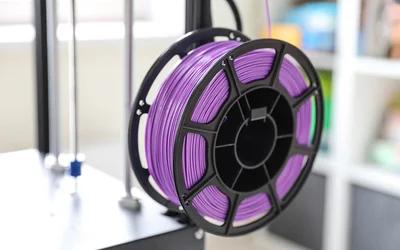
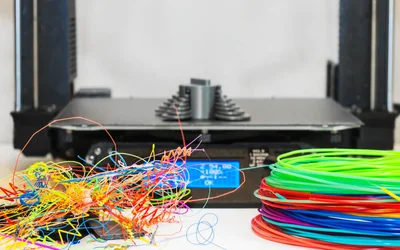
Wet 3D printer filament can lead to ruined prints. Fortunately, proper storage and drying techniques can help prevent and solve the problem. Here’s what to know.
FDM 3D printers are reliable and cost-effective, but the appearance of layer lines can ruin a good print. Fortunately, it is possible to smooth PLA parts using a variety of methods.
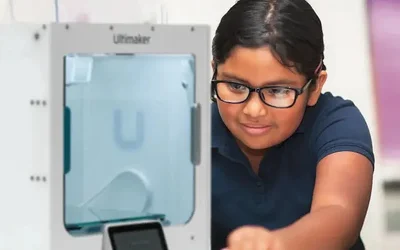
3D printers might seem like a magic box that can do anything, but the truth is that they’re a tool just like any other. To get the most out of them, you need to know how to use them properly. Today we’ll talk about 5 ways that you can get more out of a 3D printer for classroom use.

6 minutes read
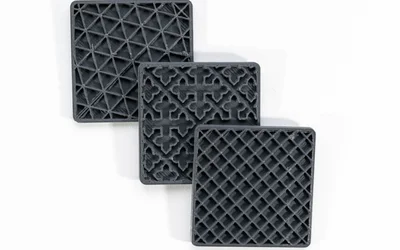
3D printer slicing software Cura lets users choose from a range of infill patterns. But what are the differences between patterns like Grid, Cubic, and Zig-zag, and how do you choose between them?
Here’s what you need to know about recycling PLA 3D printer filament and cutting back on 3D printing plastic waste.
Electroforming and 3D Printing are both additive manufacturing processes. Whereas Electroforming builds up precision metal parts atom by atom, 3D Printing works by applying materials in droplets through a small diameter nozzle and “print” layer by layer to build up the product.
When it comes to desktop 3D printing, buyers have two main options: resin printers that use photopolymerization technology, or filament printers that extrude molten thermoplastic. Both have their strengths and weaknesses.
In this episode, we talk about how embedding information about products can change consumer insight regarding their purchases and the best way to make high quality, affordable, and flexible OLED screens

You want to use 3D printing, but don’t know how 3D printers work? Or maybe you are already using 3D printing but don’t really understand the way these impressive 3D machines work. That is why, today, we chose to focus on these amazing 3D printing systems.

7 minutes read
Though aluminum 3D printing has traditionally been a challenge, big advances have been made in recent years. Here's everything you need to know about aluminum additive manufacturing, from applications and technologies, to what alloys are available.
The emergence of 3D printing has reshaped many industries, from manufacturing and construction to automotive and aerospace. What was previously seen as a novelty or niche solution by some has become a maturing technology, shifting from “rapid prototyping” to “additive manufacturing.”
7 minutes read