Featured
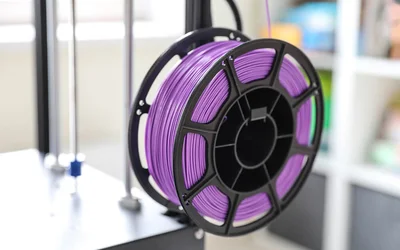
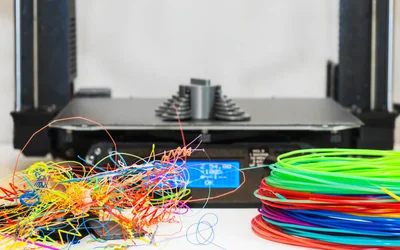
Wet 3D printer filament can lead to ruined prints. Fortunately, proper storage and drying techniques can help prevent and solve the problem. Here’s what to know.
This Report shows how tools like artificial intelligence, digital twins, and on-demand manufacturing are no longer emerging concepts, but are already delivering measurable impact across the product lifecycle.
Wet 3D printer filament can lead to ruined prints. Fortunately, proper storage and drying techniques can help prevent and solve the problem. Here’s what to know.
FDM 3D printers are reliable and cost-effective, but the appearance of layer lines can ruin a good print. Fortunately, it is possible to smooth PLA parts using a variety of methods.
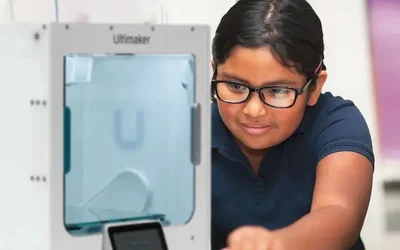
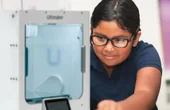
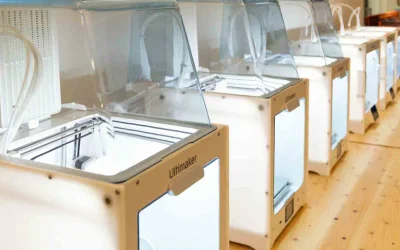
3D printers might seem like a magic box that can do anything, but the truth is that they’re a tool just like any other. To get the most out of them, you need to know how to use them properly. Today we’ll talk about 5 ways that you can get more out of a 3D printer for classroom use.
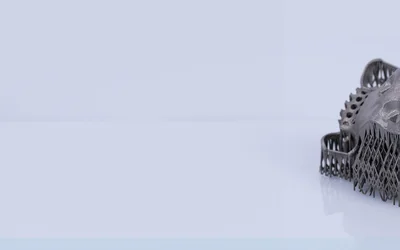
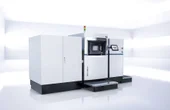
An engineer’s guide to understanding the state of the art in metal 3D Printing
11 minutes read.
15 minutes read.
22 minutes read.
11 minutes read.
18 minutes read.
12 minutes read.


Entertainment
The Next Byte Podcast is hosted by two young engineers - Daniel and Farbod - who select the most interesting tech/engineering cont...
165 Posts
Need a material that bends but doesn't break? Discover how ductility shapes design and performance
From Functional Prototypes to Complex, Low-Volume Parts.
Nylon parts are used widely, but when standard nylon is not tough enough, glass filled nylon is a good candidate. This polyamide engineering plastic offers higher strength, stiffness and heat resistance by adding powdered glass to nylon resin or compounding nylon with glass fibres.
MJF 3D printing is a polymer powder-bed fusion process engineered for high throughput and mechanical consistency. Unlike legacy methods, it delivers functional, end-use parts with near-isotropic properties, making it a highly viable alternative to injection molding for low-to-mid volume production.
Discover how iAM Marketplace simplifies industrial additive manufacturing by unifying materials, validation services, and multi-brand technologies into one open ecosystem for efficient AM sourcing.
This article discusses what attendees can expect from TCT Asia 2026, including its conference format, focus areas, and the experts contributing to industry-specific discussions.
This article discusses the exhibitors, products, and industrial trends defining additive manufacturing across the Asia-Pacific region at TCT Asia 2026.
This article discusses how the Asia-Pacific region is advancing additive manufacturing and the role of TCT Asia as the leading 3D printing and additive manufacturing event in the Asia-Pacific.
Wet 3D printer filament can lead to ruined prints. Fortunately, proper storage and drying techniques can help prevent and solve the problem. Here’s what to know.
FDM 3D printers are reliable and cost-effective, but the appearance of layer lines can ruin a good print. Fortunately, it is possible to smooth PLA parts using a variety of methods.
3D printers might seem like a magic box that can do anything, but the truth is that they’re a tool just like any other. To get the most out of them, you need to know how to use them properly. Today we’ll talk about 5 ways that you can get more out of a 3D printer for classroom use.

6 minutes read
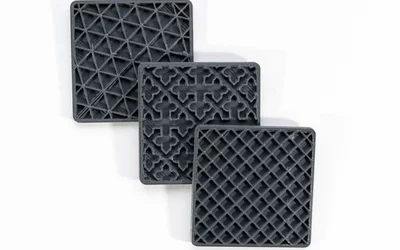
3D printer slicing software Cura lets users choose from a range of infill patterns. But what are the differences between patterns like Grid, Cubic, and Zig-zag, and how do you choose between them?
Here’s what you need to know about recycling PLA 3D printer filament and cutting back on 3D printing plastic waste.
Electroforming and 3D Printing are both additive manufacturing processes. Whereas Electroforming builds up precision metal parts atom by atom, 3D Printing works by applying materials in droplets through a small diameter nozzle and “print” layer by layer to build up the product.
When it comes to desktop 3D printing, buyers have two main options: resin printers that use photopolymerization technology, or filament printers that extrude molten thermoplastic. Both have their strengths and weaknesses.
In this episode, we talk about how embedding information about products can change consumer insight regarding their purchases and the best way to make high quality, affordable, and flexible OLED screens

You want to use 3D printing, but don’t know how 3D printers work? Or maybe you are already using 3D printing but don’t really understand the way these impressive 3D machines work. That is why, today, we chose to focus on these amazing 3D printing systems.

7 minutes read
Though aluminum 3D printing has traditionally been a challenge, big advances have been made in recent years. Here's everything you need to know about aluminum additive manufacturing, from applications and technologies, to what alloys are available.
The emergence of 3D printing has reshaped many industries, from manufacturing and construction to automotive and aerospace. What was previously seen as a novelty or niche solution by some has become a maturing technology, shifting from “rapid prototyping” to “additive manufacturing.”
7 minutes read
Protolab's supported General Drones with the creation of numerous high-density and low-porosity parts that made up the Auxdron LFG; a purpose-built drone which responds to emergencies at sea.

4 minutes read
In this episode, we talk about how a new handheld 3D printer can revolutionize wound treatment in space and the duct tape inspired gel aiming to eliminate complications caused by gastrointestinal surgery.
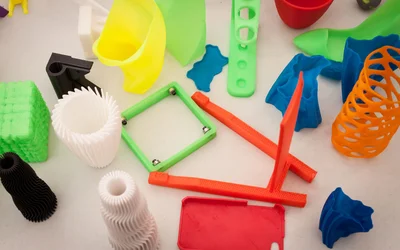
3D printing offers unparalleled freedom when it comes to the appearance of the objects you print. It’s possible to change the color, texture, size, and shape of your print, just by changing what material you use.
8 minutes read
Since ordering supplies from Earth won’t be practical, the astronauts will have to fabricate their own components for equipment and other products through additive manufacturing, better known as 3D printing.

3 minutes read