Featured

The average engineer spends just 41% of their time on productive, innovative work⏱️
This Report shows how tools like artificial intelligence, digital twins, and on-demand manufacturing are no longer emerging concepts, but are already delivering measurable impact across the product lifecycle.
The average engineer spends just 41% of their time on productive, innovative work⏱️
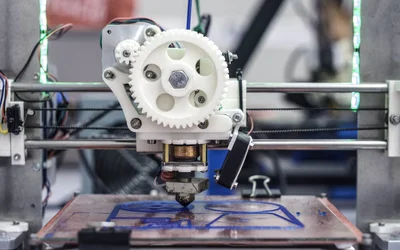
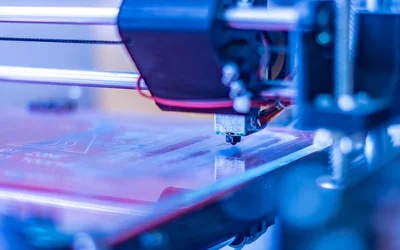
With 3D printing technology, whether for prototypes, individual parts or small series, seemingly impossible geometries can be produced quickly, precisely and cost-effectively. Speed and free design possibilities are the key features of this technology.
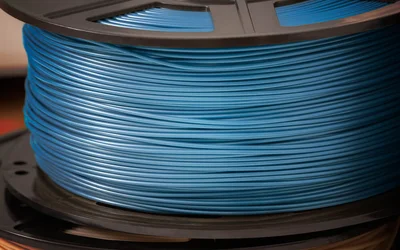
PLA is an affordable and reliable workhorse filament for FDM 3D printing. But some material developers claim to have made PLA filament better by mixing it with additives, creating an enhanced variant of the material called PLA+.
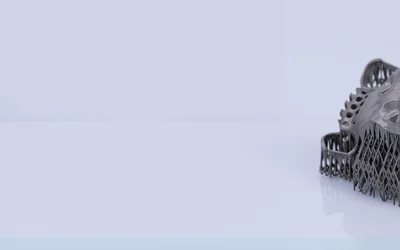
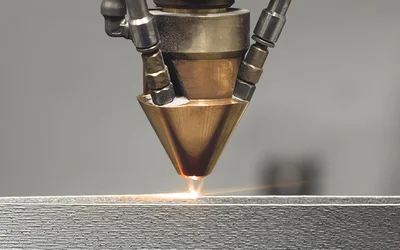
An engineer’s guide to understanding the state of the art in metal 3D Printing
15 minutes read.
22 minutes read.
11 minutes read.
18 minutes read.
12 minutes read.
16 minutes read.


Entertainment
The Next Byte Podcast is hosted by two young engineers - Daniel and Farbod - who select the most interesting tech/engineering cont...
165 Posts
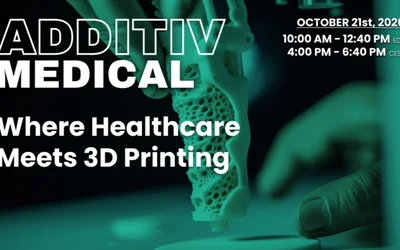
ADDITIV Medical 2026 will bring together more than 500 medical professionals
Choosing between 3D printing and injection molding is one of the key decisions in product development—especially in case of prototyping.
Explore how the right finishes and coatings can improve aerospace parts by boosting durability, extending service life, enhancing environmental resistance, and delivering the performance and appearance required for demanding applications.
The choice between 3D printing and CNC machining is the most common decision regarding manufacturing methods that must be made before placing the first order for prototypes. The correct answer depends on tolerance requirements, material specifications, component geometry, and schedule.
Discover how iAM Marketplace simplifies industrial additive manufacturing by unifying materials, validation services, and multi-brand technologies into one open ecosystem for efficient AM sourcing.
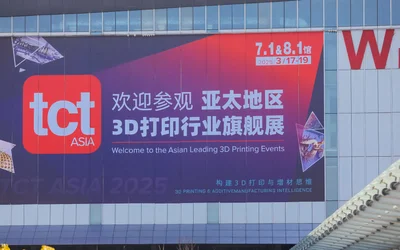
This article discusses what attendees can expect from TCT Asia 2026, including its conference format, focus areas, and the experts contributing to industry-specific discussions.
This article discusses the exhibitors, products, and industrial trends defining additive manufacturing across the Asia-Pacific region at TCT Asia 2026.
This article discusses how the Asia-Pacific region is advancing additive manufacturing and the role of TCT Asia as the leading 3D printing and additive manufacturing event in the Asia-Pacific.
The average engineer spends just 41% of their time on productive, innovative work⏱️

4 minutes read
With 3D printing technology, whether for prototypes, individual parts or small series, seemingly impossible geometries can be produced quickly, precisely and cost-effectively. Speed and free design possibilities are the key features of this technology.

4 minutes read
PLA is an affordable and reliable workhorse filament for FDM 3D printing. But some material developers claim to have made PLA filament better by mixing it with additives, creating an enhanced variant of the material called PLA+.
ABS and PETG are, along with PLA, some of the most affordable and widely used 3D printing filaments for extrusion-style printing. This article discusses the key differences between the two thermoplastic materials.
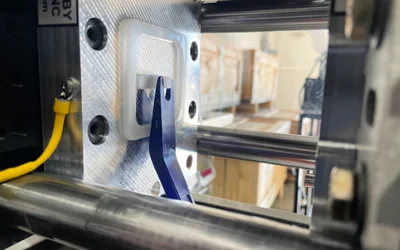
Upon securing the machine in its designated location, you may proceed with the utilization of the APSX-PIM injection molding machine.
The rapid evolution of 3D printing technology has made it faster, more automated and capable of greater production volumes. Developments have reached a point where the technology offers manufacturers significant production value. It means manufacturing costs can be significantly reduced in all aspects of manufacturing, all the way from R&D to actual production.
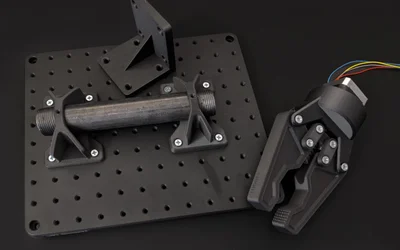
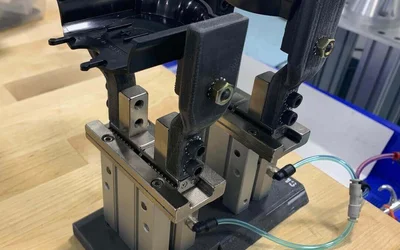
Jigs and fixtures are essential tools on any assembly floor, test lab, or machine shop. In this article, we will go over what they are and how you can supercharge your jigs and fixtures by 3D printing them using carbon fiber composites.

3 minutes read
Injection molding company Metro Plastics used 3D printing solutions from UltiMaker to solve long lead time issues on their shop floor.
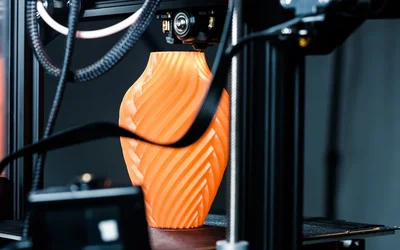
Here’s everything you need to know about the vase mode Cura offers, including the slicer function’s capabilities and applications, how to optimize print settings for increased strength, and more.
Deepen your 3D printing knowledge by exploring the BigRep Academy. Explore foundational and advanced techniques through courses such as Design for Additive Manufacturing and 3D Printing Troubleshooting.
Composites are a category of materials that encompass a large number of different properties and use cases. And even within carbon fiber composites, you can get vastly different results depending on the specific material you choose. In this article, we will take a look at the different UltiMaker carbon fiber composites available and help you decide which one is best for your needs. First, let’s look at which characteristics all the UltiMaker carbon fiber materials share.
4 minutes read
By bringing computing power closer to the data source and reducing latency, edge computing enables real-time monitoring and analysis of critical data, which is already revolutionizing various applications, including smart cities and buildings maintenance applications.
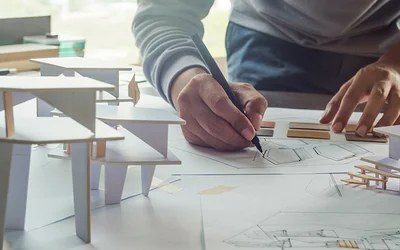
The architecture industry is undergoing a game-changing transformation thanks to 3D printing. Architects are embracing this technology to revolutionise how they design, construct, and experience buildings.

4 minutes read
Creality Ender 3 printers and Cura are a perfect match. But you might have to tweak a few Ender 3 Pro Cura settings to get the right results on your 3D printer.
It’s hard to believe that 3D printing has only been around since the 1980s. This technique, also called additive manufacturing, has proved so immensely useful that it’s evolving very quickly. The process was originally devised to make prototypes for one-off or small-batch parts. Materials were added progressively to build up a solid object, based on 3D digital models. It was much more cost-efficient than cutting source materials down, as no waste was apparently produced.