Featured
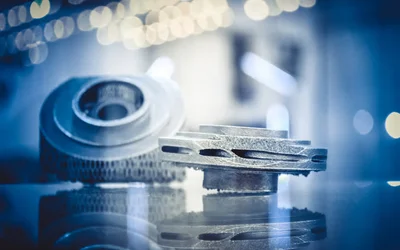
In metal additive manufacturing, titanium powders have some of the most high-value applications, from aerospace manufacturing to patient-specific medical implants.
This Report shows how tools like artificial intelligence, digital twins, and on-demand manufacturing are no longer emerging concepts, but are already delivering measurable impact across the product lifecycle.
In metal additive manufacturing, titanium powders have some of the most high-value applications, from aerospace manufacturing to patient-specific medical implants.
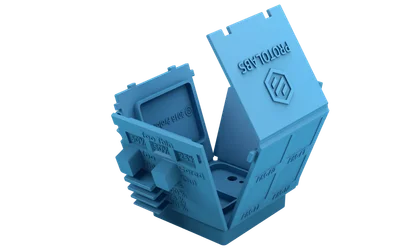
Build strength into your part design by incorporating strategic support features and selecting the right thermoplastics.
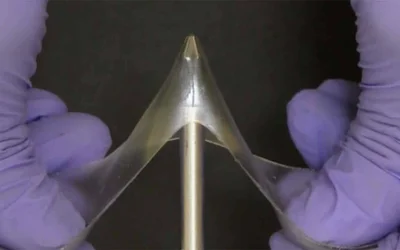
Researchers have created a new class of materials called “glassy gels” that are very hard and difficult to break despite containing more than 50% liquid. Coupled with the fact that glassy gels are simple to produce, the material holds promise for a variety of applications.
An engineer’s guide to understanding the state of the art in metal 3D Printing
15 minutes read.
22 minutes read.
11 minutes read.
18 minutes read.
12 minutes read.
16 minutes read.


Entertainment
The Next Byte Podcast is hosted by two young engineers - Daniel and Farbod - who select the most interesting tech/engineering cont...
165 Posts
ADDITIV Medical 2026 will bring together more than 500 medical professionals
Choosing between 3D printing and injection molding is one of the key decisions in product development—especially in case of prototyping.
The choice between 3D printing and CNC machining is the most common decision regarding manufacturing methods that must be made before placing the first order for prototypes. The correct answer depends on tolerance requirements, material specifications, component geometry, and schedule.
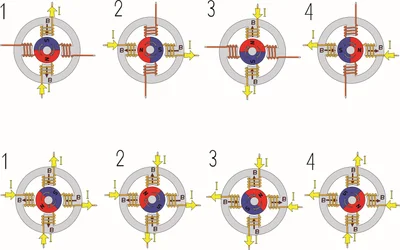
How microstepping works in stepper motors, the incremental torque cost of each resolution, and why finer microsteps do not improve positioning accuracy.
Discover how iAM Marketplace simplifies industrial additive manufacturing by unifying materials, validation services, and multi-brand technologies into one open ecosystem for efficient AM sourcing.
This article discusses what attendees can expect from TCT Asia 2026, including its conference format, focus areas, and the experts contributing to industry-specific discussions.
This article discusses the exhibitors, products, and industrial trends defining additive manufacturing across the Asia-Pacific region at TCT Asia 2026.
This article discusses how the Asia-Pacific region is advancing additive manufacturing and the role of TCT Asia as the leading 3D printing and additive manufacturing event in the Asia-Pacific.
In metal additive manufacturing, titanium powders have some of the most high-value applications, from aerospace manufacturing to patient-specific medical implants.
Build strength into your part design by incorporating strategic support features and selecting the right thermoplastics.

4 minutes read
Researchers have created a new class of materials called “glassy gels” that are very hard and difficult to break despite containing more than 50% liquid. Coupled with the fact that glassy gels are simple to produce, the material holds promise for a variety of applications.

3 minutes read
High-performance thermoplastic composites can be used to replace metals. While PEEK is the benchmark for engineering performance, reinforced PPS is a genuine low-cost alternative.
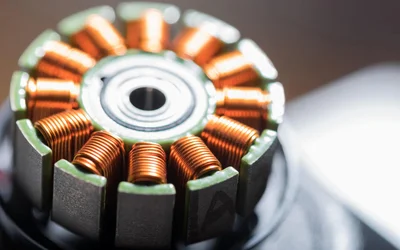
A $2.6M project will fine tune an advanced manufacturing approach that opens doors to more power-dense and sustainable magnetic materials.

3 minutes read
The integration of 3D printing technology is revolutionizing the way wheelchairs are designed and produced. This innovative approach is not only making production more efficient and cost-effective but also allowing for new levels of personalization.

2 minutes read
In this episode, we discuss how MIT researchers are leveraging a state of the art 3D printer to create much more efficient field electron emitters which could unlock huge potential for ion propulsion in space travel!

15 minutes read
Audi Sport truly excels in constantly finding more efficiency. By starting 3D printing for their tools they’ve reduced tool production cost over 80% while delivering these tools to the workers in a day instead of several weeks.

5 minutes read
In this article we discuss the many of the 3D printing problems you may encounter when working with FDM, as well as their common causes and helpful fixes.
Construction project Milestone continues with four new and improved 3D-printed owner-occupied homes that now also go up in the air.

3 minutes read
With a complex assembly of optical and mechanical components, resin 3D printers can produce a range of defects and errors. Here we attempt to categorize and solve resin print failure types.
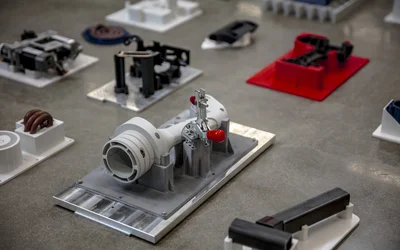
In this video we look at the various additive manufacturing technologies – outlining how they work, focussing on how to approach 3D printing with production in mind.
4 minutes read
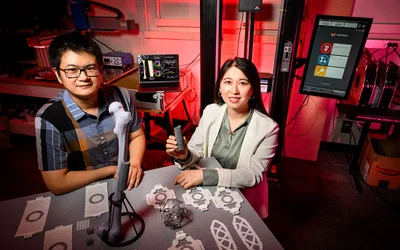
A new study that integrates machine learning, optimization, 3D printing and stress experiments allowed engineers to gain insight into these natural wonders by developing a material that replicates the functionalities of human bone for orthopedic femur restoration.

2 minutes read
Fixture design in CAD software is time-consuming – even for experienced engineers. fixturemate is an intuitive web-based software that allows anyone to design fixtures fast, whether you're familiar with CAD or not.
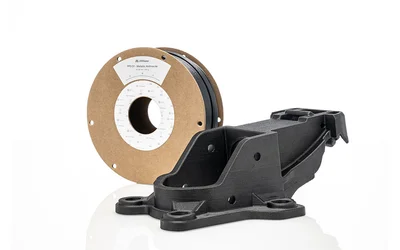
With the launch of the UltiMaker Factor 4 came a new 3D printing material: UltiMaker PPS CF.
6 minutes read