Different Filament Types: A Technical Guide for Engineers
A deep dive into the physics, properties, and practical applications of 3D printing filaments, from everyday polylactic acid to performance composites.

22 Dec, 2025. 12 minutes read
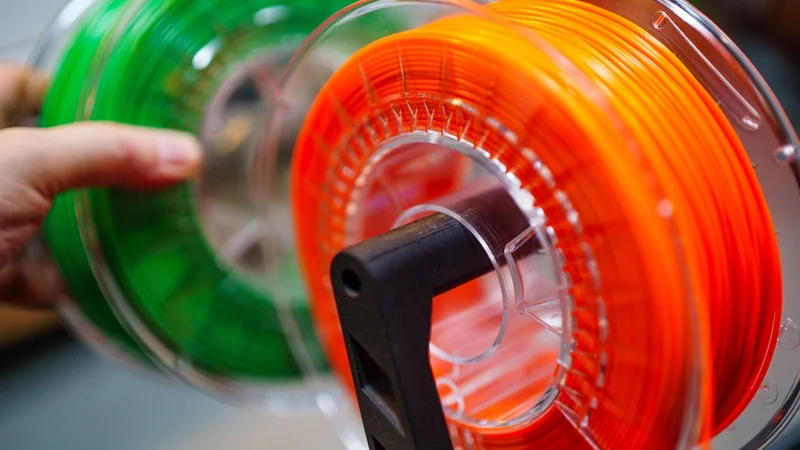
3D printing is an important tool for digital design engineers, hardware developers, and electronics students. By feeding a spool of thermoplastic through a heated nozzle, FDM/FFF printers produce bespoke enclosures, connectors and mechanical parts on the desktop.
This article provides an engineer-focused guide to the main different filament types used in FFF printing. It starts with the material science fundamentals that differentiate commodity thermoplastics from engineering polymers, then examines the real-world behaviour of common filaments such as PLA, ABS, PETG, nylons, and flexible elastomers. Specialty and composite filaments are addressed separately, with attention to their mechanical trade-offs and printing constraints.
Throughout, the emphasis is on practical selection of different filament types: matching material properties to functional requirements, print environments, and failure modes. Whether you are producing an electronics enclosure, an assembly jig, or a load-bearing mechanism, informed filament choice is key to dependable hardware.
Polymer Fundamentals and Filament Classification
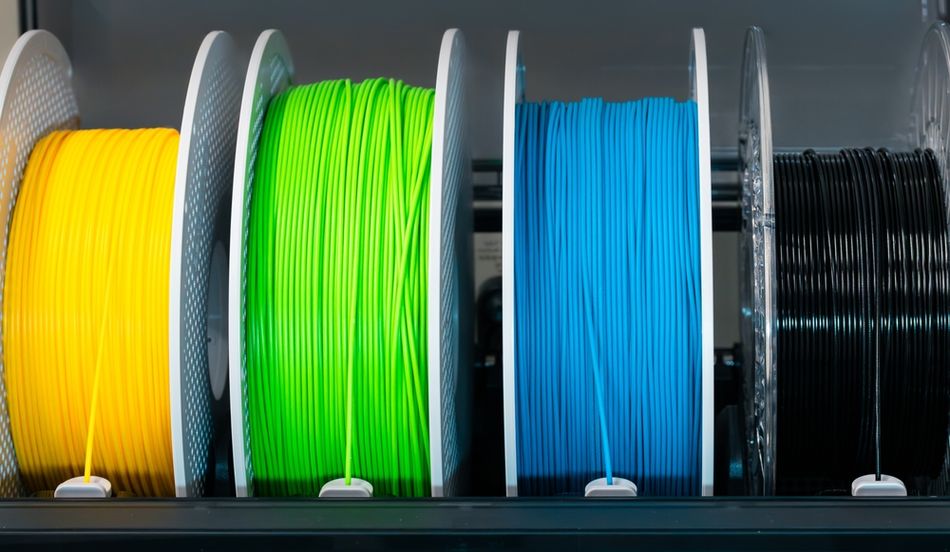
FDM printing relies almost entirely on thermoplastic polymers. These materials soften when heated and solidify again on cooling, a reversible behavior that allows filament to be melted, extruded, and reheated without permanent chemical change. Thermoset plastics behave very differently: once cured, their polymer networks are locked in place and cannot be remelted. This makes thermosets unsuitable for filament-based extrusion, even though they are common in composites, coatings, and electronics.
At the molecular level, thermoplastics consist of long chains built from repeating units. Chain length, branching, and intermolecular bonding determine whether a material is stiff or flexible, brittle or tough, and how it responds to heat.[1] These structural differences explain why two filaments can print at similar temperatures yet behave very differently once in service.
Recommended reading: What is 3D Printer Filament Made Of? Polymers, Additives, Composites, and Beyond
A Performance-Based View of Filament Materials
FDM filaments are often grouped informally by performance rather than by chemistry alone. This layered view helps designers narrow material choices before dialing in print parameters.
Commodity polymers prioritize cost and ease of processing. Materials such as polyethylene, polypropylene, and polystyrene derivatives are forgiving to print and useful for visual models, fixtures, and early-stage prototypes. Their limitations become apparent in functional parts, where low heat resistance and modest mechanical strength can lead to deformation or creep.
Engineering polymers occupy the middle ground. ABS, nylons, and polycarbonate offer improved strength, impact resistance, and thermal stability compared with commodity plastics. These materials are widely used for housings, brackets, gears, and tooling, but they demand more control during printing. Heated beds, enclosed build chambers, and moisture management are often required to achieve consistent results.
High-performance polymers sit at the top end of the spectrum. Materials such as PEEK and PPS retain strength at elevated temperatures and resist aggressive chemicals.[2] Their properties make them suitable for aerospace, medical, and industrial applications, but they require printers capable of sustained high nozzle and chamber temperatures. Material cost and process complexity place them outside the scope of most desktop workflows.
Key Factors in Filament Selection
Selecting a filament for an engineering application is less about popularity and more about matching material behavior to real operating conditions.
Mechanical performance determines how a printed part carries load and absorbs energy. Polycarbonate typically offers tensile strength around 70 MPa, while nylon grades span roughly 50 to 80 MPa depending on formulation. Flexible materials such as TPU exhibit much lower stiffness but can stretch several hundred percent before failure, making them useful for seals, strain reliefs, and vibration damping.
Thermal behavior is governed primarily by glass transition temperature. Below this point, polymers remain stiff; above it, they soften and lose dimensional stability. PLA begins to soften near 60 °C, ABS near 105 °C, and high-performance polymers such as PEEK remain stable well beyond 140 °C, with continuous-use limits far higher. For parts exposed to heat, Tg often matters more than headline strength numbers.
Printability reflects how forgiving a material is during extrusion and cooling. PLA tolerates a wide range of settings and adheres easily to build surfaces. PETG prints reliably but tends to string. ABS, nylon, and polycarbonate demand higher temperatures and tighter thermal control to avoid warping and layer separation. Many engineering filaments are hygroscopic and must be dried before printing to prevent bubbles, weak layers, and surface defects.
Environmental and safety considerations can also influence material choice. Some filaments are derived from renewable feedstocks or are recyclable under industrial systems.[3] Others release noticeable fumes during printing or require controlled disposal.[4] In educational, corporate, or laboratory settings, these factors may be as important as mechanical performance.
Overview of Common Filament Types
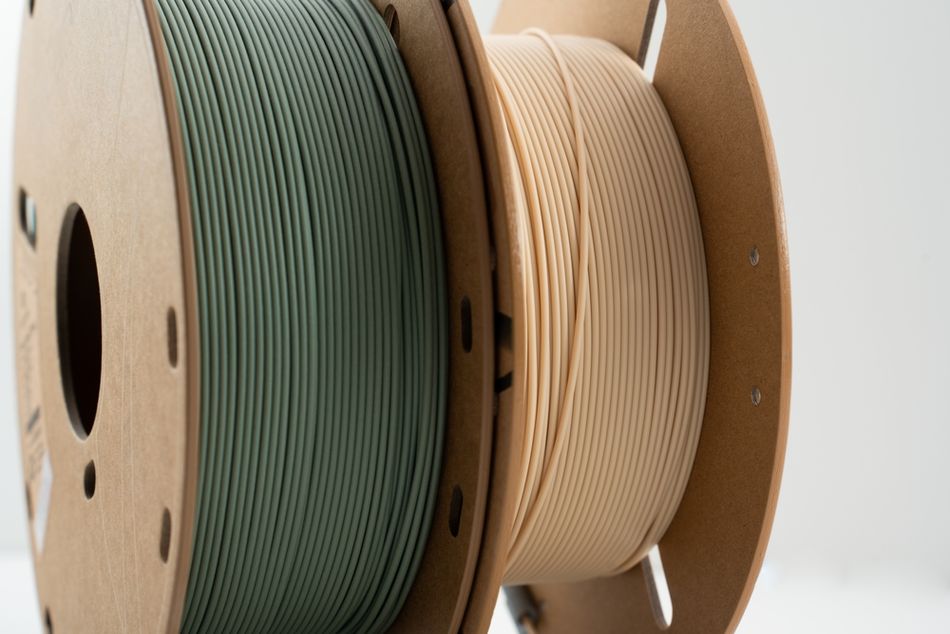
This section surveys widely used FDM filaments in ascending order of performance, cost, and processing difficulty. Emphasis is placed on material behavior in printing and service, rather than exhaustive datasheets.
Filament | Relative Strength | Relative Cost | Typical Extruder Temp (°C) | Main Benefit |
PLA | Low–Medium | Low | 190–220 | Easiest to print; good dimensional accuracy |
HIPS | Medium | Low | 230–245 | Soluble support for ABS; lightweight |
PETG | Medium | Low–Medium | 230–250 | Tough and moisture resistant |
ABS | Medium | Low–Medium | 220–250 | Tough with good heat resistance |
ASA | Medium | Medium | 240–260 | UV and weather resistance |
PP | Medium | Medium | 220–250 | Fatigue resistance; living hinges |
TPU / TPE | Low–Medium | Medium | 210–230 | Flexibility and impact absorption |
Nylon (PA) | Medium–High | Medium | 240–270 | Tough, wear resistant |
Polycarbonate (PC) | High | High | 260–310 | High strength and impact resistance |
PPSU | Very High | Very High | 360–390 | Extreme heat and chemical resistance |
PEKK | Very High | Very High | 340–380 | High performance with better printability than PEEK |
PEEK | Very High | Very High | 360–400 | Maximum thermal and mechanical performance |
Polylactic Acid (PLA)
PLA sits at the low end of the performance spectrum but remains ubiquitous due to its reliability and ease of use. It prints at low temperatures, exhibits minimal warping, and generally does not require an enclosure.
Mechanically, PLA is stiff but brittle, with poor impact resistance and a low glass transition temperature near 60 °C. These limitations confine it to low-stress, low-temperature applications.
Typical uses: visual prototypes, fixtures, jigs, educational models, and electronics housings kept away from heat sources.
High Impact Polystyrene (HIPS)
HIPS is mechanically similar to ABS but slightly lighter and less stiff. It is most commonly used as a dissolvable support material, particularly for ABS prints, as it dissolves in d-limonene.
As a standalone filament, HIPS requires thermal control to avoid warping and emits fumes during printing.
Typical uses: soluble supports for ABS, lightweight prototypes, and noncritical enclosures.
Polyethylene Terephthalate Glycol-Modified (PETG)
PETG occupies a practical middle ground between PLA and ABS. It offers improved toughness, chemical resistance, and moisture stability while remaining relatively easy to print without an enclosure.
PETG is less stiff than PLA and can soften under sustained heat, but it tolerates handling and outdoor exposure better.
Typical uses: protective enclosures, outdoor components, chemically exposed parts, and mechanically loaded brackets.
Acrylonitrile Butadiene Styrene (ABS)
ABS is a workhorse engineering plastic with good impact resistance and moderate heat tolerance. It requires higher temperatures, a heated bed, and preferably an enclosure to control shrinkage and warping.
ABS emits fumes during printing and benefits from ventilation. Its glass transition temperature around 105 °C allows use in warmer environments than PLA or PETG.
Typical uses: functional housings, mechanical parts, robotics components, and instrument enclosures.
Acrylonitrile Styrene Acrylate (ASA)
ASA is closely related to ABS but engineered for outdoor durability. Mechanical properties are similar, while UV and weather resistance are significantly improved.
Printing requirements mirror ABS, including enclosure use and fume management.
Typical uses: outdoor enclosures, automotive trim, sensor housings, signage, and weather-exposed hardware.
Polypropylene (PP)
Polypropylene is lightweight, chemically resistant, and highly fatigue-tolerant. It is challenging to print due to shrinkage and poor bed adhesion, often requiring specialized build surfaces.
PP is flexible rather than stiff and excels in applications involving repeated bending.
Typical uses: living hinges, snap-fit parts, chemical containers, and lightweight mechanical components.
Nylon (Polyamide)
Nylons offer excellent toughness, wear resistance, and fatigue life. Common grades include PA6 and PA12. Printing requires elevated temperatures, enclosure use, and strict moisture control.
Nylon’s hygroscopic nature makes filament drying essential for dimensional accuracy and strength.
Typical uses: gears, hinges, cable carriers, snap-fits, and mechanical components under cyclic loading.
Thermoplastic Polyurethane (TPU) and TPE
TPU and TPE are flexible elastomers used where elasticity and impact absorption are required. Printing is slower and more sensitive, with direct-drive extruders strongly preferred.
These materials offer high elongation but low heat resistance and reduced dimensional precision.
Typical uses: gaskets, seals, vibration isolators, strain reliefs, and flexible robotic components.
Polycarbonate (PC)
Polycarbonate delivers high impact strength and elevated heat resistance but demands precise thermal control. High nozzle temperatures, strong bed adhesion, drying, and an enclosure are typically required.
PC combines stiffness and toughness better than most desktop materials but has a narrow processing window.
Typical uses: ruggedized electronics enclosures, protective covers, heat-resistant fixtures, and transparent components.
Polyphenylsulfone (PPSU)
PPSU is a high-performance engineering thermoplastic with excellent thermal stability, chemical resistance, and toughness. Printing requires very high temperatures and a heated chamber.
PPSU maintains mechanical integrity under repeated thermal cycling and harsh chemical exposure.
Typical uses: aerospace tooling, medical fixtures, high-temperature housings, and chemically aggressive environments.
Polyether Ether Ketone (PEEK)
PEEK sits near the top of the FDM performance hierarchy. It retains strength at extreme temperatures, resists aggressive chemicals, and offers exceptional mechanical stability.
Printing PEEK requires specialized high-temperature printers with heated chambers and precise process control. Material cost and processing difficulty are significant.
Typical uses: aerospace components, oil and gas hardware, medical implants, and high-load, high-temperature structural parts.
Polyether Ketone Ketone (PEKK)
PEKK is closely related to PEEK but offers a wider processing window and slower crystallization, making it slightly more forgiving to print while retaining similar performance.
PEKK delivers excellent strength, heat resistance, and chemical stability, with growing adoption in aerospace and advanced industrial applications.
Typical uses: aerospace brackets, structural components, high-temperature tooling, and demanding industrial environments.
Specialty Filaments and Composites
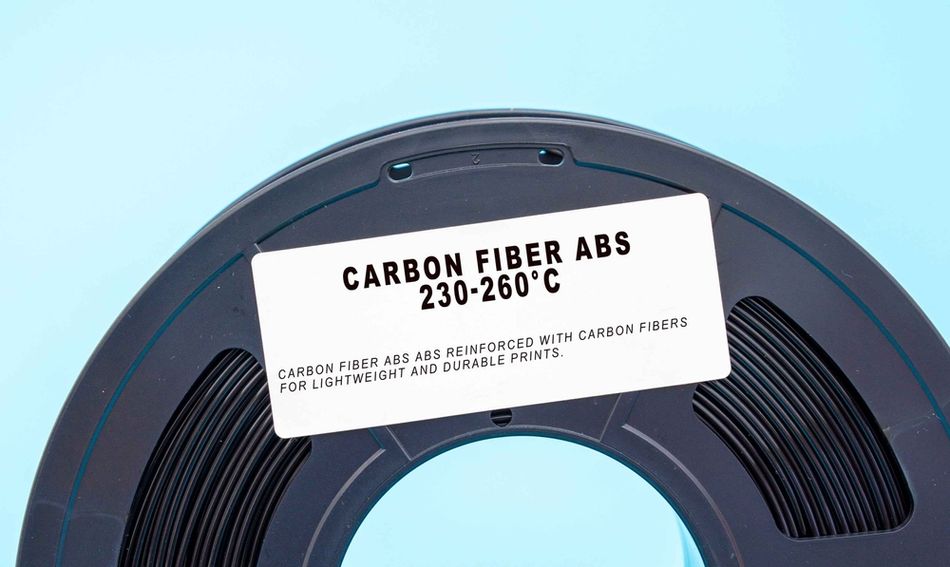
Beyond unfilled thermoplastics, a large class of FDM filaments derive their properties from additives dispersed within a polymer matrix. These specialty materials trade isotropic strength and print forgiveness for targeted gains in stiffness, appearance, conductivity, thermal behavior, or functionality. In most cases, the base polymer still governs melt temperature and layer adhesion, while the filler modifies mechanical response, surface finish, and dimensional stability.
Understanding these trade-offs is essential. Composite filaments often behave less like homogeneous plastics and more like short-fiber or particulate composites, with important implications for strength, brittleness, anisotropy, and hardware wear.
Fiber-Reinforced Filaments
Fiber-reinforced filaments are among the most widely adopted composites in FDM. They typically consist of chopped fibers blended into PLA, PETG, nylon, or higher-temperature polymers. Carbon fiber is the most common reinforcement, though glass fiber is also widely used.
Carbon-fiber–filled filaments significantly increase stiffness, reduce thermal expansion, and improve dimensional stability, particularly in large or flat parts. These benefits come at the expense of toughness. Compared with unfilled polymers, fiber-filled filaments are more brittle and exhibit reduced interlayer adhesion. Because fibers tend to align partially with extrusion flow, mechanical properties become anisotropic, favoring in-plane stiffness over Z-axis strength.
Glass-fiber–filled filaments provide similar dimensional stability with lower stiffness gains and reduced cost. They are less abrasive than carbon fiber but still accelerate nozzle wear and benefit from hardened nozzles.
Typical uses: stiff brackets, tooling fixtures, dimensionally stable enclosures, drone frames, and structural components where rigidity is more important than impact resistance.
Mineral-, Ceramic-, and Glass-Filled Filaments
Mineral-filled and ceramic-filled filaments rely on fine inorganic particles rather than fibers. These fillers increase stiffness, reduce warping, and improve surface flatness without introducing strong directional effects.
Ceramic-filled filaments are sometimes used as precursors for fired ceramic parts, where the polymer binder is removed during kiln processing. In standard FDM use, however, they behave as stiff, brittle plastics with excellent dimensional control and low creep.
Glass-filled filaments using particulate glass fall into this category as well. They improve rigidity and thermal stability but significantly reduce elongation at break.
Typical uses: dimensionally stable housings, flat panels, tooling masters, and parts requiring predictable geometry under load.
Wood-Filled Filaments
Wood-filled filaments combine PLA with finely ground wood particles, typically comprising 20 to 40 percent of the material by weight. The resulting prints exhibit a matte, organic surface texture that resembles wood grain and can be sanded, stained, or machined.
Mechanically, these filaments are weaker and more brittle than standard PLA and unsuitable for structural applications. The particulate filler increases nozzle wear and often benefits from larger nozzle diameters to reduce clogging.
Typical uses: decorative objects, architectural models, cosmetic enclosures, and display components where appearance matters more than mechanical strength.
Metal-Filled Filaments
Metal-filled filaments mix thermoplastics, usually PLA or nylon, with dense metal powders such as bronze, copper, stainless steel, or iron. These materials produce prints with substantial weight and a metallic surface finish that can be polished, brushed, or chemically patinated.
In conventional FDM printing, metal-filled filaments are not structural metals. Mechanical properties remain governed by the polymer binder. Some specialized workflows use similar filaments for debinding and sintering, where the polymer is removed and the metal particles fuse, but this requires controlled furnaces and careful shrinkage compensation.
These filaments are highly abrasive, making hardened steel or carbide nozzles essential.
Typical uses: decorative metal-like parts, weighted components, visual prototypes, and experimental EMI-shielding applications.
Conductive and ESD-Safe Filaments
Conductive filaments use additives such as carbon black or graphene dispersed within PLA, PETG, or TPU. These materials allow electrical conduction, but with resistivity far higher than copper or aluminum.
As a result, they are unsuitable for power delivery but effective for low-current sensing, capacitive touch interfaces, antistatic components, and EMI mitigation. Electrical performance depends strongly on print orientation, infill density, and layer continuity.
Closely related are ESD-safe filaments, which dissipate static charge without being fully conductive. These are commonly used for electronics fixtures and protective housings.
Typical uses: touch sensors, grounding paths, antistatic trays, test fixtures, and experimental embedded electronics.
Magnetic and Functional Additive Filaments
Some specialty filaments incorporate iron powders or ferrite particles, producing weakly magnetic prints. These materials respond to magnetic fields but do not replace true magnetic alloys in performance-critical applications.
Other functional composites include thermally conductive plastics, flame-retardant blends, and radiation-shielding materials. While their absolute performance is modest compared with metals or ceramics, they enable functional integration directly within printed parts.
Typical uses: sensor housings, experimental actuators, thermal management prototypes, and compliance-driven components.
Soluble and Support-Specific Materials
Beyond PVA, additional support materials exist for engineering polymers and high-temperature filaments. Some dissolve in specific solvents, while others are designed to break away cleanly under controlled conditions.
These materials enable complex internal geometries, enclosed cavities, undercuts, and conformal channels that would be impractical or impossible with single-material FDM.
Typical uses: internal ducts, cooling channels, lattice structures, and mechanically enclosed features.
Bound Metal Filament
Bound metal filament is a specialize material that combines fine metal powders with a polymer binder, allowing metal parts to be printed on filament-based machines and then converted into dense metal components through post-processing. After printing, the “green” part undergoes debinding to remove the polymer, followed by high-temperature sintering that fuses the metal particles. The final part shrinks predictably and achieves mechanical properties closer to metal injection molding (MIM) than conventional plastic printing.
Commercial systems for bound metal printing are offered by companies such as Markforged (Metal X platform), Desktop Metal (Studio System), and BASF Forward AM (Ultrafuse metal filaments, including 316L and 17-4 PH stainless steel). These systems integrate material, debinding, and sintering workflows to ensure dimensional control and repeatability.
Bound metal filament is especially attractive to engineering teams that need in-house metal capability without the safety, cost, or infrastructure demands of powder bed fusion systems.
Typical uses: tooling inserts, jigs and fixtures, brackets, end-use metal components in low to medium volumes, and functional prototypes requiring true metal strength.
Recommended reading: Metal 3D Printing: A Comprehensive Guide for Engineers and Students
Conclusion
3D printing allows engineers to move quickly from concept to hardware, but filament selection plays a decisive role in the strength, durability, and long-term behavior of printed objects. Different 3D printer filament types reflect real differences in polymer chemistry, not just print settings.
Evaluating impact resistance, abrasion resistance, thermal limits, and printability at the hotend helps when designing functional 3D printed parts. For early-stage work, PLA filament and PETG offer predictable results and low setup risk. As requirements increase, materials such as ABS, nylon filament, and polypropylene provide greater toughness, heat tolerance, and fatigue resistance, making them better suited for demanding printed objects and mechanical assemblies.
Frequently Asked Questions (FAQ)
How do PLA and ABS differ as 3D printing materials?
PLA and ABS behave very differently in both printing and service. PLA is a bio-derived polymer made from renewable sources such as corn starch. It prints at relatively low temperatures, adheres easily to the build surface, and usually requires only a modest bed temperature. Its drawbacks are low heat tolerance and limited impact resistance. ABS, by contrast, is a petroleum-based printing material with better toughness and higher temperature stability. It requires a hotter hotend, a heated bed, and ventilation, as fumes are produced during printing. ABS parts can also be post-processed with acetone for surface smoothing.
Which filament is easiest for beginners to start with?
PLA is generally the most beginner-friendly option. It prints reliably across a wide range of machines, resists warping, and is available in many blends and colors. When slightly more toughness or moisture resistance is needed, PETG is often the next step, offering better durability while remaining relatively easy to print.
What materials produce the strongest 3D printed parts?
Among widely available filaments, nylon and polycarbonate deliver the best balance of strength, toughness, and heat resistance. Nylon excels in abrasion resistance and fatigue performance, while polycarbonate offers high impact resistance and stiffness. At the industrial end of the spectrum, high-temperature polymers such as PEEK exceed these materials but require specialized printers and controlled environments. Carbon fiber filament increases stiffness further but usually reduces toughness and layer adhesion.
How can warping be reduced when printing ABS or nylon?
Warping occurs when printed layers cool and shrink unevenly. To minimize it, use a properly set bed temperature, print inside an enclosed build chamber, and maintain a stable ambient environment. Adhesion aids such as glue or textured build plates help anchor parts. Nylon should always be dried before printing, as absorbed moisture increases shrinkage and print instability.
Are environmentally friendly or dissolvable filaments available?
Yes. PLA is bio-based and industrially compostable, while polyvinyl alcohol (PVA) is a water-soluble filament commonly used for support structures. PVA dissolves cleanly in water, enabling complex internal geometries without mechanical removal. Wood-filled filaments blend PLA with recycled wood fibers for aesthetic applications. PETG is recyclable, though not biodegradable.
Which filaments are suitable for food-contact applications?
Certain filaments, including PETG and specific nylon grades, are considered food-safe under controlled conditions. Food safety depends not only on the filament but also on the printer setup, nozzle material, and post-processing. Porous layer lines can trap contaminants, so food-contact printed parts should be treated cautiously and used only when material certifications and handling practices are appropriate.
Can flexible filaments be used for functional components?
Flexible materials such as TPU and TPE are well suited for functional parts that require elasticity and durability. They are commonly used for gaskets, protective cases, vibration isolators, and living hinges. These filaments print best at slower speeds and typically require a direct-drive extruder to prevent feeding issues.
Are there filaments designed for outdoor or UV exposure?
Yes. Materials such as ASA and certain PETG formulations offer improved UV resistance compared with PLA and ABS. These filaments are better suited for outdoor enclosures, signage, and sensor housings where long-term exposure to sunlight would otherwise cause embrittlement or discoloration.
References
[1] Sharma S, Kumar R, Borkar H. 4.2 Chemical Structure of Polymers. Properties and Applications of Advanced Materials. 2026 Apr 6:73.
[2] Kurtz SM. Chemical and radiation stability of PEEK. InPEEK biomaterials handbook 2012 Jan 1 (pp. 75-79). William Andrew Publishing
[3] Pakkanen J, Manfredi D, Minetola P, Iuliano L. About the use of recycled or biodegradable filaments for sustainability of 3D printing: State of the art and research opportunities. InInternational conference on sustainable design and manufacturing 2017 Apr 26 (pp. 776-785). Cham: Springer International Publishing.
[4] Floyd EL, Wang J, Regens JL. Fume emissions from a low-cost 3-D printer with various filaments. Journal of occupational and environmental hygiene. 2017 Jul 3;14(7):523-33.