Featured

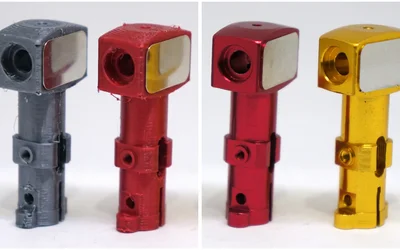
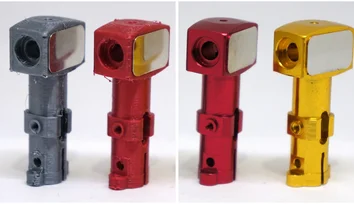
Smaller than a coin, this optical device could enable rapid prototyping on the go.
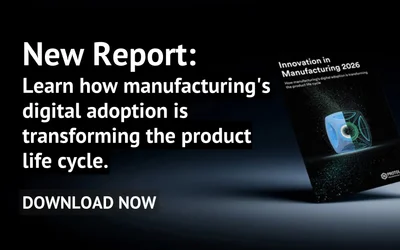
This Report shows how tools like artificial intelligence, digital twins, and on-demand manufacturing are no longer emerging concepts, but are already delivering measurable impact across the product lifecycle.
Smaller than a coin, this optical device could enable rapid prototyping on the go.
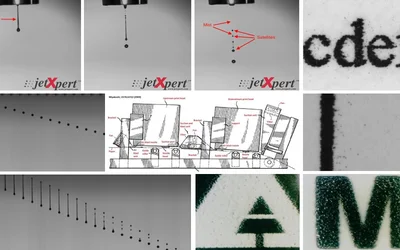
How to optimize the art of inkjet printing for functional and electronics printing? We will discover that there are multiple potential causes of satellites and explore some of the ways to minimize their formation and effect.
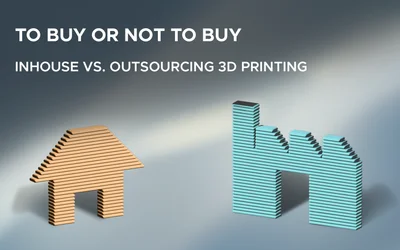
The 3D printing world is evolving rapidly, offering new business opportunities. But with this comes a crucial decision: invest in 3D printing equipment or outsource? Both options have merits and drawbacks, and the best choice depends on specific business factors. Learn how to decide smart.
An engineer’s guide to understanding the state of the art in metal 3D Printing
15 minutes read.
22 minutes read.
11 minutes read.
18 minutes read.
12 minutes read.
16 minutes read.


Entertainment
The Next Byte Podcast is hosted by two young engineers - Daniel and Farbod - who select the most interesting tech/engineering cont...
165 Posts
ADDITIV Medical 2026 will bring together more than 500 medical professionals
Choosing between 3D printing and injection molding is one of the key decisions in product development—especially in case of prototyping.
The choice between 3D printing and CNC machining is the most common decision regarding manufacturing methods that must be made before placing the first order for prototypes. The correct answer depends on tolerance requirements, material specifications, component geometry, and schedule.
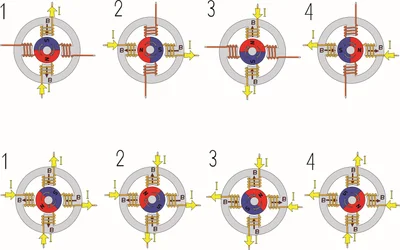
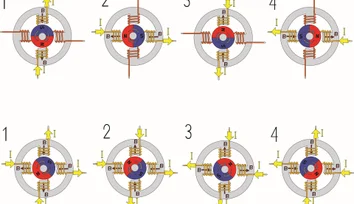
How microstepping works in stepper motors, the incremental torque cost of each resolution, and why finer microsteps do not improve positioning accuracy.
Discover how iAM Marketplace simplifies industrial additive manufacturing by unifying materials, validation services, and multi-brand technologies into one open ecosystem for efficient AM sourcing.
This article discusses what attendees can expect from TCT Asia 2026, including its conference format, focus areas, and the experts contributing to industry-specific discussions.
This article discusses the exhibitors, products, and industrial trends defining additive manufacturing across the Asia-Pacific region at TCT Asia 2026.
This article discusses how the Asia-Pacific region is advancing additive manufacturing and the role of TCT Asia as the leading 3D printing and additive manufacturing event in the Asia-Pacific.
Smaller than a coin, this optical device could enable rapid prototyping on the go.
How to optimize the art of inkjet printing for functional and electronics printing? We will discover that there are multiple potential causes of satellites and explore some of the ways to minimize their formation and effect.

7 minutes read
The 3D printing world is evolving rapidly, offering new business opportunities. But with this comes a crucial decision: invest in 3D printing equipment or outsource? Both options have merits and drawbacks, and the best choice depends on specific business factors. Learn how to decide smart.

4 minutes read
The Right-to-Repair movement is making waves, pushing for greater access to spare parts and repair options. However. many companies are uncertain about how to meet this growing demand. One promising solution lies in the potential of 3D printing.
3 minutes read
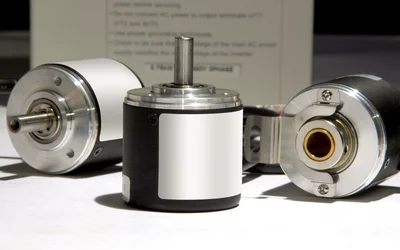
This article delves into the foundational concepts of encoders, their various types, recent advancements, seamless integration with modern systems, and how they are revolutionizing industries.
Resin-based 3D printing is often the preferred method for parts with intricate designs, as well as small or miniature parts or those with fine features. In this design tip, we explore the key benefits this process has.

5 minutes read
As we advance into the age of electric vehicles, new technologies continue to drive competition in the global automotive industry. As always, manufacturing companies are racing each other to produce quality vehicles and still make their profits.
3D printing has revolutionized small-scale production, but choosing the right material remains a significant challenge due to the vast array of options. Replique’s Material Hub addresses this issue, simplifying and optimizing the material selection process.
2 minutes read
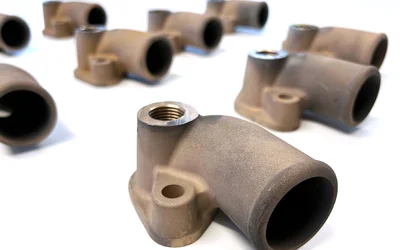
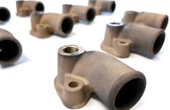
MAN Truck & Bus is embracing Replique’s production platform to manufacture spare parts on-demand. Starting with the production of bronze manifolds for the cooling water supply of a marine engine, MAN aims to undertake further projects in the future to reduce costs and further optimize their service.
3 minutes read
3D printing plays a crucial role in STEAM education by providing a tangible way for students to experience the interconnectedness of various disciplines and develop a wide range of skills.
In the dynamic landscape of automotive manufacturing, innovation has focused mostly on delivering greater efficiency, automation, sustainability, and flexibility. Large Format 3D printing is a cutting-edge technology that promises to reshape how vehicles are prototyped, manufactured and customized.

3D printing from pellets meets robotics to deliver tangible benefits on parts and applications across sectors. With no limits in scale, shape or material, Caracol's LFAM technology enhances efficiency through continuity, flexiblity, and sustainability to your production.
A concise guide to the different file formats available for 3D printing technologies, including STL, OBJ, AMF, 3MF, and what their role is in the AM process.
This article summaries all the factors to take into account when choosing between Injection Molding and 3D Printing, from design complexity to surface finish.

4 minutes read
Researchers at MIT used a Voltera NOVA to successfully print field electron emitters with a high-concentration carbon nanotube ink. The research has exciting implications for small satellites.