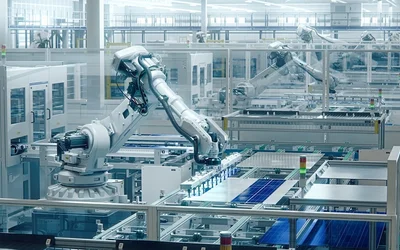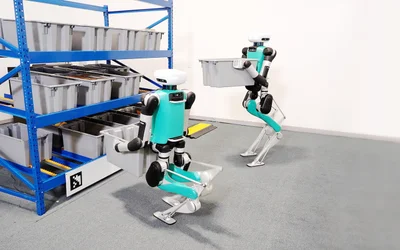
The world of industrial robots is big and keeps changing with every evolving technology. There are many different robots in the market, and deciding which one to use is crucial. The types of industrial robots vary depending on the intended function.
This comprehensive article dives deep into the world of robotics, exploring the history, types, engineering components, applications, and future trends of robots, offering readers an in-depth understanding of how these remarkable machines work and shape our lives.
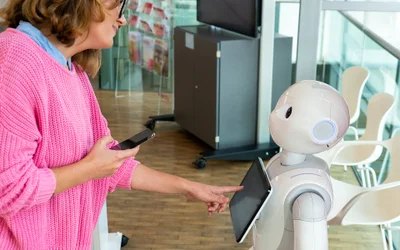
The hospitality industry can leverage the gender characteristics of service robots to influence customers' decisions, according to new research from a team in the Penn State School of Hospitality Management.

Service robots have evolved from simple automated machines to intelligent adaptive systems that can navigate unpredictable environments and interact with humans.
Engineers at Princeton and North Carolina State University have combined ancient paper folding and modern materials science to create a soft robot that bends and twists through mazes with ease.
A research team from ETH Zurich and the University of Zurich (UZH) has developed a novel approach to treating spinal cord injuries: controllable microrobots deliver stem cells directly to the site of an injury, where they promote nerve cell regeneration.
Cornell engineers have developed a robotic collective that behaves less like a machine and more like a material that flows, reshapes and adapts to its environment without centralized control.
From hospital wards to crop fields, from microscopic swarms to biohybrid machines powered by fungi, robotics research at Cornell spans an astonishing range of scale, application and ambition.
The world of industrial robots is big and keeps changing with every evolving technology. There are many different robots in the market, and deciding which one to use is crucial. The types of industrial robots vary depending on the intended function.
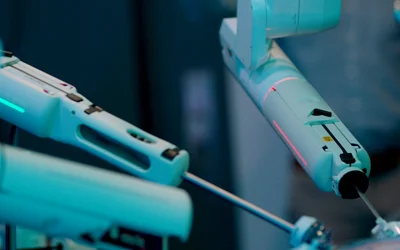
Thanks to a newly developed surgical robot, reconstructive surgery can be performed more safely and accurately in the future. This is also expected to lead to fewer complications and faster patient recovery.
Exploring strategic partnerships and showcasing cutting-edge robotic technologies, InDro Robotics and Cypher Robotics attend pivotal trade discussions to expand their global impact.
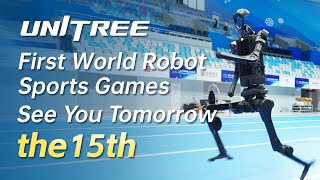
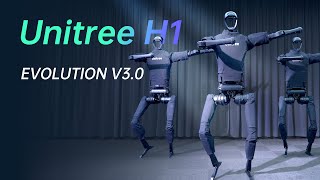
Continuously promote the implementation of industry applications to the ground Unitree B2 beyond the limit Maximum speed of 6m/s, sustained load of 40kg and sustained walking endurance of 5h. The comprehensive performance is two to three times that of existing quadruped robots worldwide!
In the current AI zeitgeist, sequence models have skyrocketed in popularity for their ability to analyze data and predict what to do next. For instance, you’ve likely used next-token prediction models like ChatGPT, which anticipate each word (token) in a sequence to form answers to users’ queries.
The widespread adoption of robotics is hindered by the complexity of system integration, lack of skilled labor, and diverse programming languages, but FuzzyRTOS addresses these challenges by providing a universal platform that simplifies robot programming.
Industrial process automation is changing manufacturing by using technology to reduce the need for human involvement. From robots assembling products to smart systems managing inventory, factories are being transformed. This article will explore the successful elements behind industrial automation.
The G1 robot can perform a standing long jump of up to 1.4 meters, possibly the longest jump ever achieved by a humanoid robot of its size in the world, standing only 1.32 meters tall.
In this episode, we explore how AI technology is revolutionizing the detection and monitoring of infrastructure defects and learn how these innovative solutions are enhancing safety, improving maintenance, and preventing failures in critical infrastructure systems