Featured
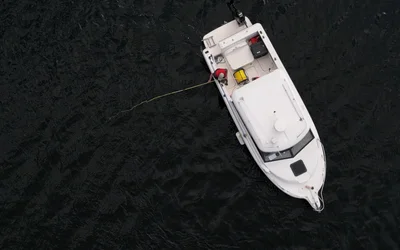
Discover the vital role of underwater positioning in marine science, and how remotely operated vehicles (ROVs) are leading the way in location tracking.
Discover the vital role of underwater positioning in marine science, and how remotely operated vehicles (ROVs) are leading the way in location tracking.
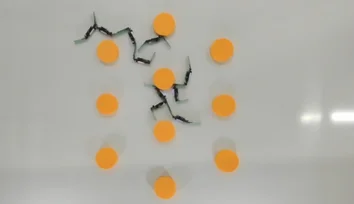
In this episode, we explore how a snake-inspired robot developed by students from ETH Zurich aims to better leverage the power of robotics in search and rescue missions!
With a new design, the bug-sized bot was able to fly 100 times longer than prior versions.
This comprehensive article dives deep into the world of robotics, exploring the history, types, engineering components, applications, and future trends of robots, offering readers an in-depth understanding of how these remarkable machines work and shape our lives.
16 minutes read.
21 minutes read.
16 minutes read.
23 minutes read.
19 minutes read.
27 minutes read.


University
At the Harvard John A. Paulson School of Engineering and Applied Sciences (...
42 Posts

Robotics & Automation
READY Robotics is a robotics software company that vastly simplifies robot ...
24 Posts

Automation Machinery Manufacturing
We are a company in flying robotics, specializing in Non-destructive inspec...
23 Posts
Everyone, guess how fast is it?
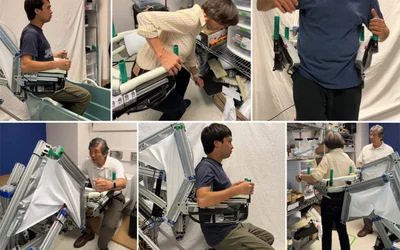
The new design could assist the elderly as they age in place at home.
The hospitality industry can leverage the gender characteristics of service robots to influence customers' decisions, according to new research from a team in the Penn State School of Hospitality Management.
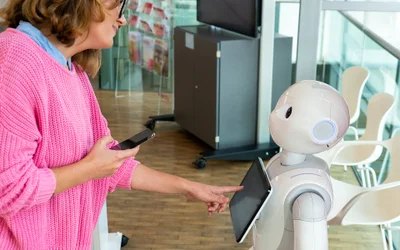
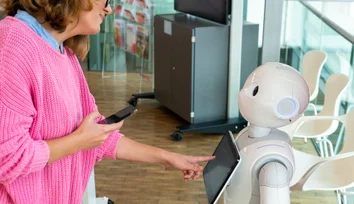
Service robots have evolved from simple automated machines to intelligent adaptive systems that can navigate unpredictable environments and interact with humans.
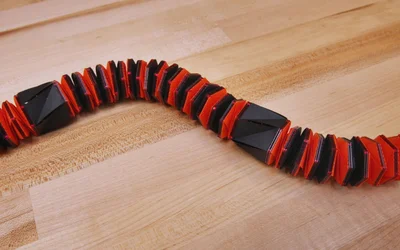
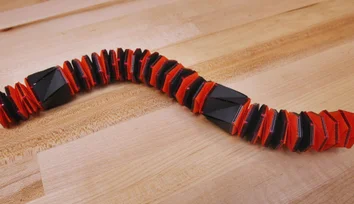
Engineers at Princeton and North Carolina State University have combined ancient paper folding and modern materials science to create a soft robot that bends and twists through mazes with ease.
A research team from ETH Zurich and the University of Zurich (UZH) has developed a novel approach to treating spinal cord injuries: controllable microrobots deliver stem cells directly to the site of an injury, where they promote nerve cell regeneration.
Cornell engineers have developed a robotic collective that behaves less like a machine and more like a material that flows, reshapes and adapts to its environment without centralized control.
From hospital wards to crop fields, from microscopic swarms to biohybrid machines powered by fungi, robotics research at Cornell spans an astonishing range of scale, application and ambition.
Discover the vital role of underwater positioning in marine science, and how remotely operated vehicles (ROVs) are leading the way in location tracking.

12 minutes read
In this episode, we explore how a snake-inspired robot developed by students from ETH Zurich aims to better leverage the power of robotics in search and rescue missions!

13 minutes read
With a new design, the bug-sized bot was able to fly 100 times longer than prior versions.
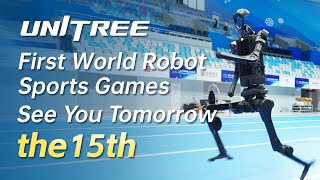
Unitree G1 Bionic: Agile Upgrade

InDro Launches New Online Store

4 minutes read
SiC v GaN v SJ MOSFETs v IGBTs? Each has its place.
Learn how agnostic systems like Awentia's No-Data Vision Foundation Model addresses key barriers to AI adoption such as data dependency, cost, and complexity across industries like agriculture, robotics and manufacturing.
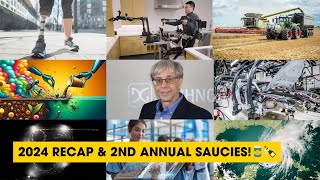
In this episode, we recap our favorite episodes from 2024!
25 minutes read
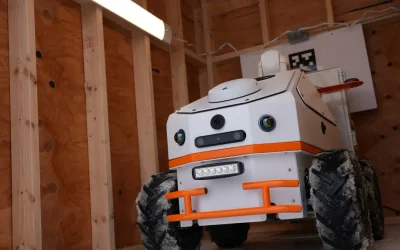
An outdoor enclosure that keeps Sentinel protected from harsh weather, while allowing for wireless recharging.
5 minutes read
At CES2025, Wevolver caught up with Petter Myhre, Product Marketing Director, Nordic Semiconductor, who shared with us exciting new updates on the newly launched nRF54L Series.
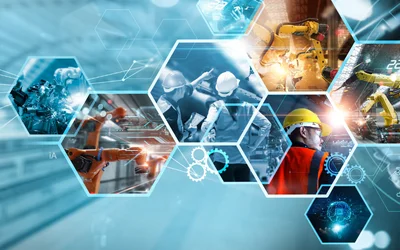
Digital transformation in the manufacturing industry is advancing fast to meet the constant demand for new products and processes. The development and adoption of immersive technology have introduced us to a new arena – the metaverse – with all its exciting possibilities.
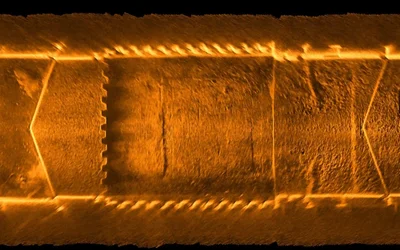
Explore 2D sonar mosaic mapping with Deep Trekker ROVs to create detailed underwater views for inspecting dams, canals, and tunnels in low-visibility waters.
11 minutes read
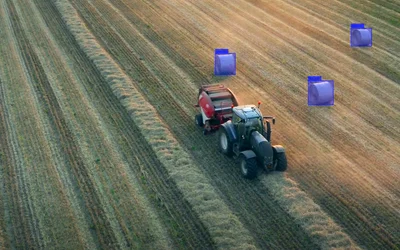
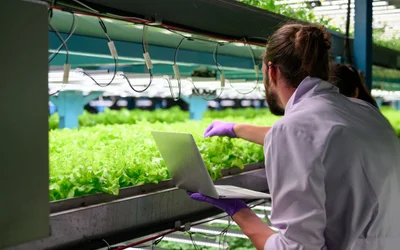
Agriculture must feed 10 billion people by 2050 while cutting emissions and waste. Integrated photonics offers a solution with advanced sensors for efficient, high-yield farming.
We’ve adapted motion capture data for Unitree H1, H1-2, and G1 humanoid robots, using numerical optimization methods to make their movement trajectories more natural.
As we approach the second half of the 2020s, many businesses wonder what manufacturing will look like in 2030. They see challenges ahead that include the effects of climate change, ongoing supply chain disruptions and the fluctuating relationship between humans and machines.