Featured
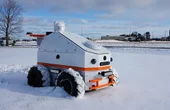
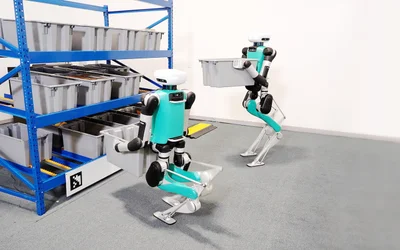
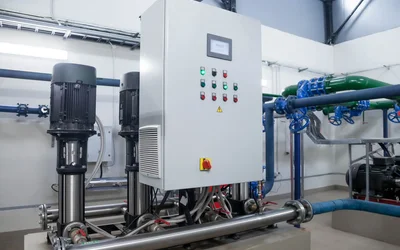
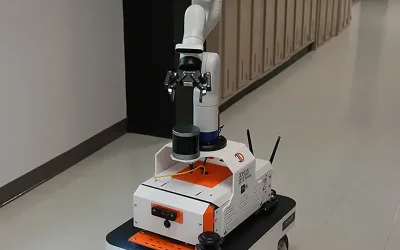
While a capable inspection robot can be costly, so is downtime.
While a capable inspection robot can be costly, so is downtime.
What’s particularly exciting is not just that Gen AI can write code – it’s that it’s beginning to understand context, reduce time spent on boilerplate, and support developers where they work best: in the flow of creation.
A Swiss Italian team has created RoboCake, an edible robotic wedding cake that illustrates the advances in robotic food research.
This comprehensive article dives deep into the world of robotics, exploring the history, types, engineering components, applications, and future trends of robots, offering readers an in-depth understanding of how these remarkable machines work and shape our lives.
16 minutes read.
21 minutes read.
16 minutes read.
23 minutes read.
19 minutes read.
27 minutes read.


University
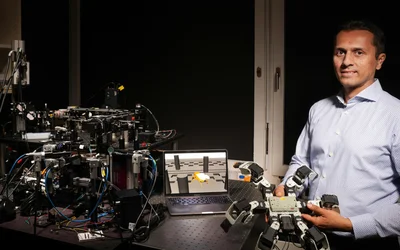
At the Harvard John A. Paulson School of Engineering and Applied Sciences (...
42 Posts

Robotics & Automation
READY Robotics is a robotics software company that vastly simplifies robot ...
24 Posts

Automation Machinery Manufacturing
We are a company in flying robotics, specializing in Non-destructive inspec...
23 Posts
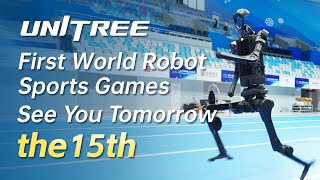
Everyone, guess how fast is it?
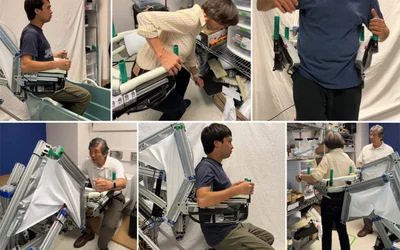
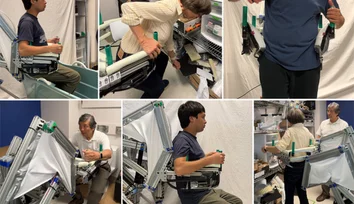
The new design could assist the elderly as they age in place at home.
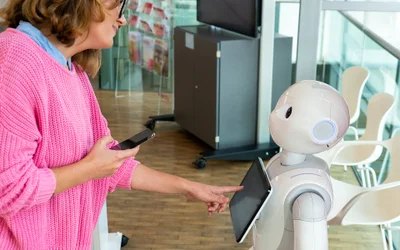
The hospitality industry can leverage the gender characteristics of service robots to influence customers' decisions, according to new research from a team in the Penn State School of Hospitality Management.
Service robots have evolved from simple automated machines to intelligent adaptive systems that can navigate unpredictable environments and interact with humans.
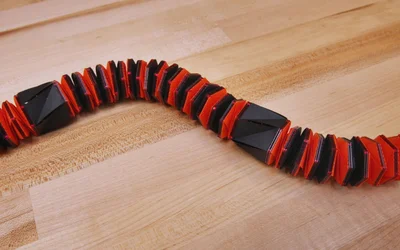
Engineers at Princeton and North Carolina State University have combined ancient paper folding and modern materials science to create a soft robot that bends and twists through mazes with ease.
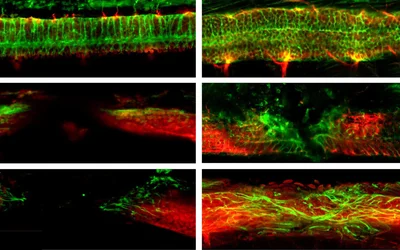
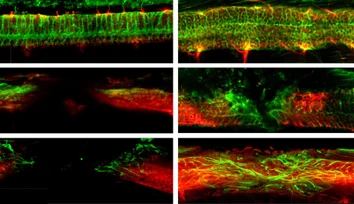
A research team from ETH Zurich and the University of Zurich (UZH) has developed a novel approach to treating spinal cord injuries: controllable microrobots deliver stem cells directly to the site of an injury, where they promote nerve cell regeneration.
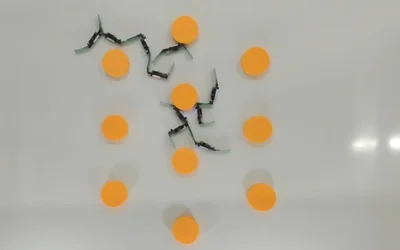
Cornell engineers have developed a robotic collective that behaves less like a machine and more like a material that flows, reshapes and adapts to its environment without centralized control.
From hospital wards to crop fields, from microscopic swarms to biohybrid machines powered by fungi, robotics research at Cornell spans an astonishing range of scale, application and ambition.
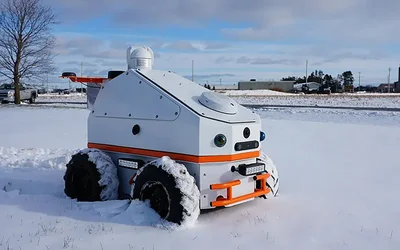
While a capable inspection robot can be costly, so is downtime.

6 minutes read
What’s particularly exciting is not just that Gen AI can write code – it’s that it’s beginning to understand context, reduce time spent on boilerplate, and support developers where they work best: in the flow of creation.

3 minutes read
A Swiss Italian team has created RoboCake, an edible robotic wedding cake that illustrates the advances in robotic food research.

3 minutes read
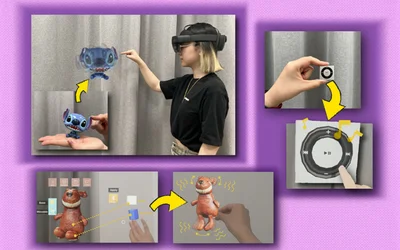
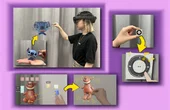
“InteRecon” enables users to capture items in a mobile app and reconstruct their interactive features in mixed reality. The tool could assist in education, medical environments, museums, and more.
With Xsens MTi-2 motion sensor
Read part 1 of 4 in our new articles series exploring TDK’s advanced robotics. This first part delves into how TDK ROS leverage multiprocessor technology to enhance precision, efficiency, and multitasking across service and industrial applications.
Let's step into a new era of Sci-Fi, join the fun together! Unitree will be livestreaming robot combat in about a month, stay tuned!
An in-depth guide on PID explained – covering the theory behind Proportional-Integral-Derivative control, how each PID component works, methods to tune PID controllers, and practical Python examples for implementation.
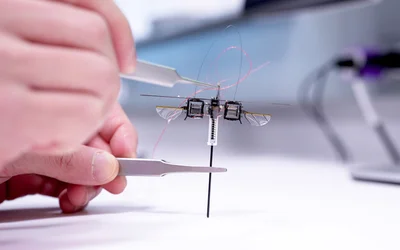
MIT engineers developed an insect-sized jumping robot that can traverse challenging terrains and carry heavy payloads.
In this episode, we dive into Cornell University's groundbreaking development of the world's smallest walking robots, measuring between 2 to 5 microns.

11 minutes read
Single hand with 20 degrees of freedom (16 active+4 passive). Enable smooth backdrivability (direct force control). Equipped with 94 highly sensitive touch points (optional).

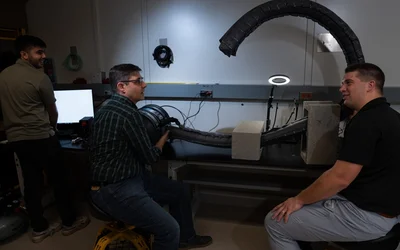
SPROUT, developed by Lincoln Laboratory and University of Notre Dame researchers, is a vine robot capable of navigating under collapsed structures.
Researchers at EPFL’s Neuroengineering Laboratory, led by Pavan Ramdya, aim to replicate the workings of the brain of the common fruit fly, Drosophila melanogaster. We spoke with Ramdya about the exciting prospects for robotics.
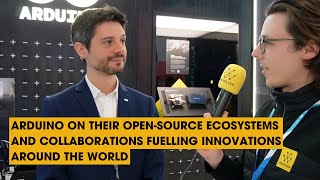
Arduino on Their Open-Source Ecosystems And Collaborations Fuelling Innovations Around The World
Robots and drones for the purpose of research and development.
4 minutes read