Featured
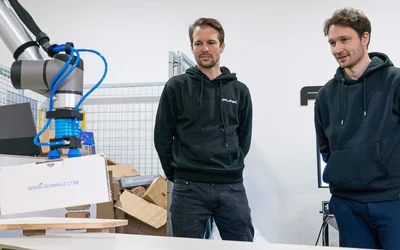
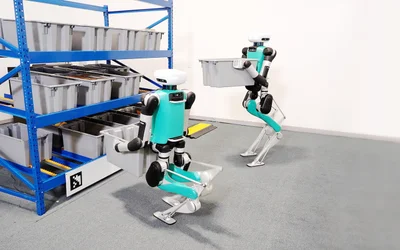
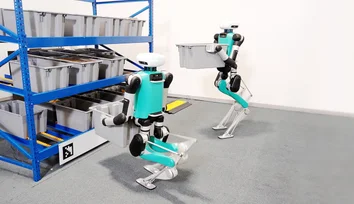
The ETH spin-off Flink Robotics wants to revolutionize the handling of packages. Its founders Moritz Geilinger and Simon Huber have developed software that allows robots to work together and quickly take on new tasks.
The ETH spin-off Flink Robotics wants to revolutionize the handling of packages. Its founders Moritz Geilinger and Simon Huber have developed software that allows robots to work together and quickly take on new tasks.
For this article we interviewed Niwa and Omura, who are responsible for the design, development, and operation of the system, as well as Toda, who requested its development and is also a user.
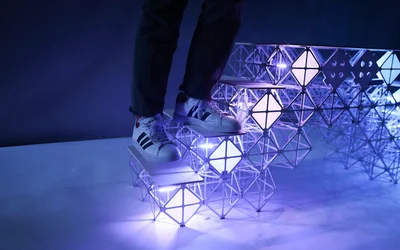
The system uses reconfigurable electromechanical building blocks to create structural electronics.
This comprehensive article dives deep into the world of robotics, exploring the history, types, engineering components, applications, and future trends of robots, offering readers an in-depth understanding of how these remarkable machines work and shape our lives.
16 minutes read.
21 minutes read.
16 minutes read.
23 minutes read.
19 minutes read.
27 minutes read.



University
At the Harvard John A. Paulson School of Engineering and Applied Sciences (...
42 Posts

Robotics & Automation
READY Robotics is a robotics software company that vastly simplifies robot ...
24 Posts

Automation Machinery Manufacturing
We are a company in flying robotics, specializing in Non-destructive inspec...
23 Posts
Everyone, guess how fast is it?
The new design could assist the elderly as they age in place at home.
The hospitality industry can leverage the gender characteristics of service robots to influence customers' decisions, according to new research from a team in the Penn State School of Hospitality Management.
Service robots have evolved from simple automated machines to intelligent adaptive systems that can navigate unpredictable environments and interact with humans.
Engineers at Princeton and North Carolina State University have combined ancient paper folding and modern materials science to create a soft robot that bends and twists through mazes with ease.
A research team from ETH Zurich and the University of Zurich (UZH) has developed a novel approach to treating spinal cord injuries: controllable microrobots deliver stem cells directly to the site of an injury, where they promote nerve cell regeneration.
Cornell engineers have developed a robotic collective that behaves less like a machine and more like a material that flows, reshapes and adapts to its environment without centralized control.
From hospital wards to crop fields, from microscopic swarms to biohybrid machines powered by fungi, robotics research at Cornell spans an astonishing range of scale, application and ambition.
The ETH spin-off Flink Robotics wants to revolutionize the handling of packages. Its founders Moritz Geilinger and Simon Huber have developed software that allows robots to work together and quickly take on new tasks.

5 minutes read
For this article we interviewed Niwa and Omura, who are responsible for the design, development, and operation of the system, as well as Toda, who requested its development and is also a user.

9 minutes read
The system uses reconfigurable electromechanical building blocks to create structural electronics.
Unveiling the Future of Embedded AI: Object Anomaly Detection and More at Embedded World 2025
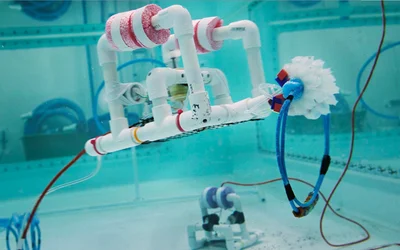
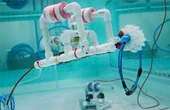
Launched by MIT Sea Grant, SeaPerch and SeaPerch II have had a big impact on young learners interested in ocean science and engineering.
This fresh, newly captured video from Unitree's testing grounds showcases the breakneck speed of humanoid intelligence advancement. Every day brings something thrilling!

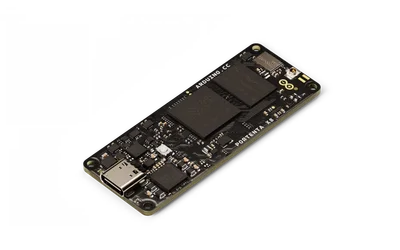
Deploying machine learning models at the edge is crucial for real-time data processing in industrial applications. This article explores how Docker simplifies Edge AI deployment on the Arduino Portenta X8, enabling scalable and secure AI implementations on embedded Linux systems.

3 minutes read
One year after Unitree H1 (1.8m) pioneered the first standing backflip by an electric humanoid robot (March 2024). Meet the Unitree G1 – now flawlessly conquering an even more challenging standing side flip. (Zero malfunctions/damage occurred during programming and filming.)
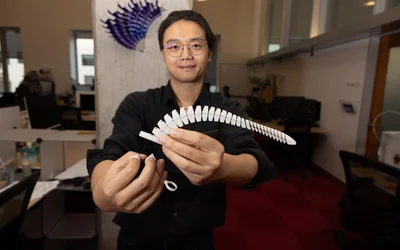
“Xstrings” method enables users to produce cable-driven objects, automatically assembling bionic robots, sculptures, and dynamic fashion designs.
Camera-equipped robotic systems serve as key expansion components within this industry because they improve efficiency and accuracy across multiple fields, including manufacturing, healthcare, logistics, and autonomous vehicle development.
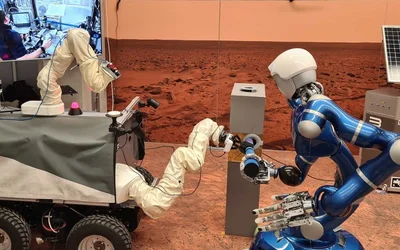
DLR's concept allows collaborative robots to yield without being forced back to their original position like a mechanical spring.

3 minutes read
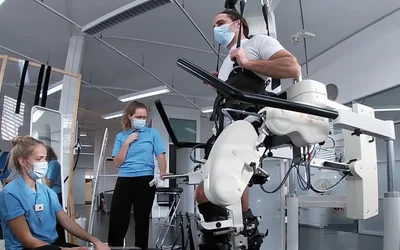
Scientists at .Neurorestore (EPFL/CHUV/UNIL) have developed an approach that combines rehabilitation robotics with spinal cord stimulation to restore movement in people with spinal cord injuries. The technology enhances rehabilitation and enables activities like cycling and walking outdoors.

3 minutes read
MIT engineers developed a way to grow artificial tissues that look and act like their natural counterparts.
This article explores a vital power-saving technique in digital design, covering core concepts, implementations, and the differences between fine-grained, coarse-grained, and software-controlled methods. Learn why clock gating is crucial for energy efficiency, its applications in diverse systems.
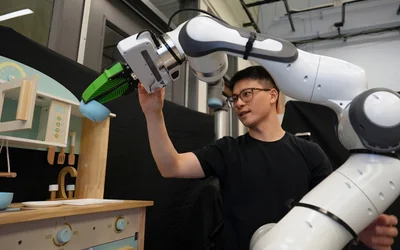
New research could allow a person to correct a robot’s actions in real-time, using the kind of feedback they’d give another human.