Featured
Mastering the art of coding for the new age of compact computing.
Mastering the art of coding for the new age of compact computing.
Mastering the art of coding for the new age of compact computing.
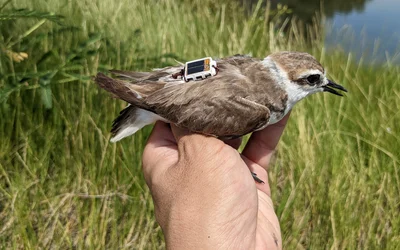
Wearable wildlife tracking solutions using cellular IoT, and Bluetooth LE can revolutionize environmental research and contribute significantly to the preservation of ecosystems and biodiversity.
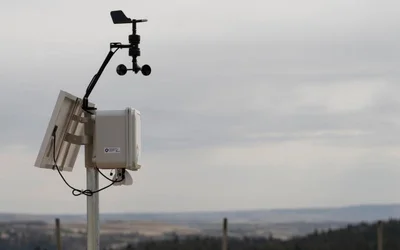
Sensors are ubiquitous in our modern world, playing pivotal roles in numerous sectors. This article delves into their fundamental principles, diverse types, and their significant impact across industries.
How Bluetooth mesh works: managed flooding, node features, provisioning, security keys, Mesh 1.1, measured latency, and how it compares with Zigbee and Thread.
26 minutes read.
15 minutes read.
18 minutes read.
19 minutes read.
18 minutes read.
17 minutes read.

Semiconductors
Nordic Semiconductor is a fabless semiconductor company specializing in wireless technology that powers the IoT.
181 Posts

High Tech
High Tech Campus Eindhoven is Europe's smartest square km and has the ultim...
49 Posts

University for science and technology
Freedom and individual responsibility, entrepreneurial spirit and open-min...
43 Posts

Higher Education
Work together. Create smart machines. Serve society. University of Michiga...
40 Posts
A JFET is a normally-on, voltage-controlled semiconductor device that regulates current through a conductive channel by varying its depletion region using an electric field.
A common-source MOSFET amplifier is a voltage-amplifier circuit with input at the gate, output at the drain, and source as the common reference. It provides voltage gain with an approximately 180 degree phase shift between input and output.
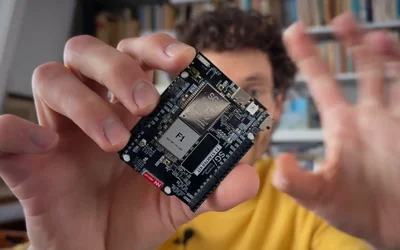
The F1 Starter Kit, built around the F1 Smart Module which supports cellular, LoRa, BLE and WiFi
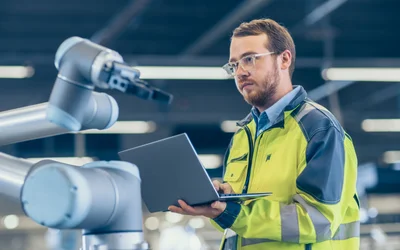
This guide to robotics programming covers offline, lead-through, and teach pendant methods, key vendor languages, C++ alongside Python, ROS 2 integration, and safety limit implementation.
ROS is not an operating system. It is the open-source middleware and toolset that much of the robotics industry builds on, and this guide explains what is ROS, how it works, what changed in ROS 2, and when you should use it.
Mario Mauerer, maxon's Global Business Development Manager, Robotics, discusses what it takes for robotic deployments to be successful in complex real-world environments.
Join Prof. Fei Chen as he explores advanced bimanual manipulation and teleoperation techniques shaping the future of intelligent human-like robots in this expert-led robotics session.
Mastering the art of coding for the new age of compact computing.
Wearable wildlife tracking solutions using cellular IoT, and Bluetooth LE can revolutionize environmental research and contribute significantly to the preservation of ecosystems and biodiversity.
Sensors are ubiquitous in our modern world, playing pivotal roles in numerous sectors. This article delves into their fundamental principles, diverse types, and their significant impact across industries.
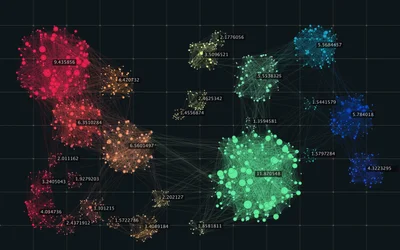
Unsupervised learning is a machine learning approach that finds patterns, structure, or useful representations in unlabeled data. It groups similar observations, compresses high-dimensional features, detects outliers, discovers item relationships, and supports modern representation learning.
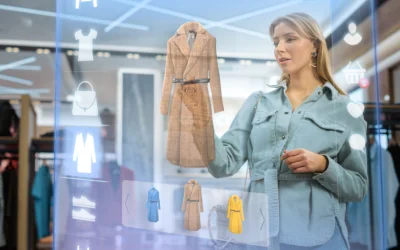
Not that the future of retail is offline or online, it’s both, but the key to success for physical retail in the digital age is to enhance the customer experience and maximize profits simultaneously. To do so, retailers are embracing wireless technology like never before.

4 minutes read
As we navigate our way into an increasingly digital realm, the Internet of Things continues to revolutionize how we monitor our environments, control our surroundings and increase efficiency in everyday life. As our reliance on IoT grows, so does our need for secure communication.

5 minutes read
Qube was designing IoT devices that needed to be deployed in remote environments and required very little maintenance. They needed a platform that offered low power, was affordable, and that could scale across the world.

10 minutes read
Introducing the Bringing Intelligence to the Edge Series: Exploring how Artificial Intelligence is moving to embedded systems, transforming technology across various applications.
In this episode, we discuss a novel new approach for increasing the field of view of autonomous systems by leveraging reflections of blindspots on reflective bodies.

13 minutes read
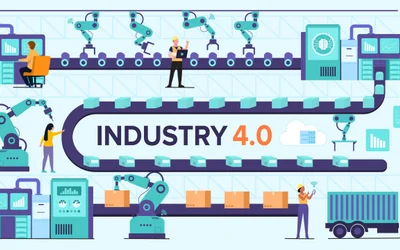
Digitization, connectivity, and the IoT are manifesting the next frontier in factory production.

5 minutes read
How IoT devices and SBCs improve the quality of life and care for elderly people
Exploring the design, development, connectivity, security, and more aspects of IoT devices
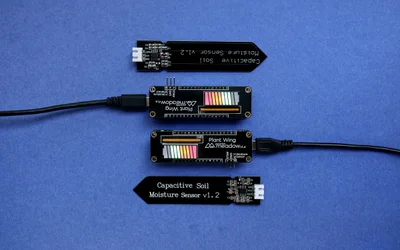
As IoT technology evolves, automation will play a more important role by, for instance, automatically stopping the watering process once the soil has received a sufficient level of moisture. Furthermore, analysis of irrigation data transmitted to Cloud computing can help ensure that watering occurs at the optimal time (for example, overnight or at cooler times during the day) to minimize evaporation losses.
4 minutes read
Exploring the key concepts related to Unsupervised vs Supervised Learning, understanding the fundamental principles, major algorithms and their real-world applications, and practical distinctions between supervised and unsupervised learning.
Artificial intelligence (AI) is a wide-ranging tool that enables people to rethink how we integrate information, analyze data, and use the resulting insights to improve decision making