Robotics Software

What to Consider When Selecting Your Edge AI Hardware and Software.



Learn why Secure Boot, a process for authenticating IoT device firmware, is critical for building safer connected products.

Engineers Wiki. Most Asked Questions.
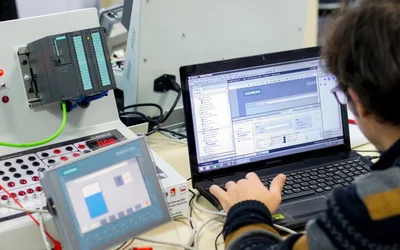
This article is a practical PLC programming guide covering the five IEC 61131-3 languages, the scan cycle that governs how your code actually runs, ladder and structured text examples, and the mistakes that cost engineers the most commissioning time.
STM32 vs ESP32: Choosing the Right Microcontroller for Your Design
23 minutes read.
What Is a PLC? A Complete Guide to Programmable Logic Controllers
18 minutes read.
What Is a Programmable Automation Controller (PAC)?
18 minutes read.
What Is Unsupervised Learning? Types, Algorithms, and Examples (2026)
15 minutes read.
NPU vs GPU: Understanding the Key Differences and Use Cases
13 minutes read.
TPU vs GPU: Comprehensive Technical Comparison
17 minutes read.
ORGANIZATIONS. SHAPING THE INDUSTRY.
Nordic Semiconductor
Semiconductors
Nordic Semiconductor is a fabless semiconductor company specializing in wireless technology that powers the IoT.
181 Posts


High Tech Campus Eindhoven
High Tech
High Tech Campus Eindhoven is Europe's smartest square km and has the ultim...
49 Posts

ETH Zurich
University for science and technology
Freedom and individual responsibility, entrepreneurial spirit and open-min...
43 Posts

University of Michigan
Higher Education
Work together. Create smart machines. Serve society. University of Michiga...
40 Posts
TAGGED WITH embedded software

embedded world North America is the premier trade show and conference dedicated to the community of innovators and developers in the embedded tech ecosystem.


How Embedded Systems, AI, and Human-Centered Design Are Driving the Future of Robotics

Learn why teams still lose half their development time to test and fix, and what changes when you get real visibility into the target.
TAGGED WITH robot operating system (ros)
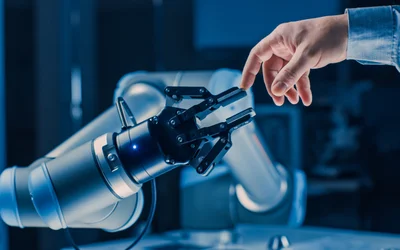
Mario Mauerer, maxon's Global Business Development Manager, Robotics, discusses what it takes for robotic deployments to be successful in complex real-world environments.

Join Prof. Fei Chen as he explores advanced bimanual manipulation and teleoperation techniques shaping the future of intelligent human-like robots in this expert-led robotics session.

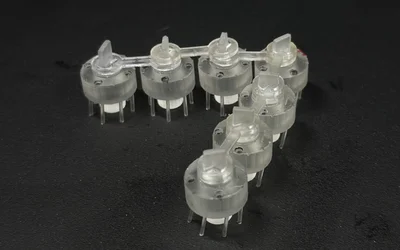
'Link-bots' can move, explore, cooperate without sensing or computation
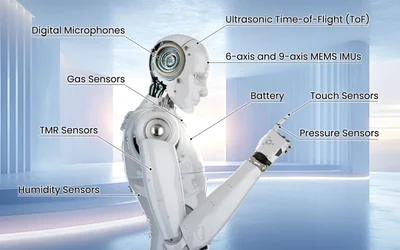
This article is part 4 of a 4-part article series on TDK's advanced robotics.
Latest Posts
What to Consider When Selecting Your Edge AI Hardware and Software.
How Edge AI is Transforming Industries and Application Areas.
Learn why Secure Boot, a process for authenticating IoT device firmware, is critical for building safer connected products.

7 minutes read
The greater the amount of high-quality data you have, the better your machine learning model will be. This post looks at the challenges (and solutions) involved in creating and organizing a dataset when you’re starting from scratch.

5 minutes read


Switzerland experiences notable seasonal fluctuations with expected water demand on the rise. In this article, we look at how IoT systems can play a crucial role to ensure efficient conservation of water.

3 minutes read


Based on the revised Food Sanitation Act, the institutionalization of hygiene management in accordance with HACCP started in Japan in June 2021. HACCP is an acronym for Hazard Analysis and Critical Control Point.

3 minutes read

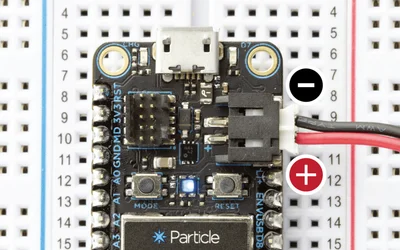
In the evolving landscape of IoT, explore how microcontroller-based IoT development kits such as the Particle Photon 2 are driving innovation in product research and development.
As IoT evolves, projects are shifting from being experimental and exploratory to business critical. This makes them more complex, ensures they receive more scrutiny and, inevitably, increases the opportunities for things to go wrong. This is even more true when you consider that IoT devices and solutions have a long shelf life, making long-term success only possible if you’re properly planning and building today for the unknown factors in the future.

3 minutes read

Ring topology is one of the early implementations in the world of computer networking. Its simplicity in transmission, fair access control for modes, sequential data management, and other concepts continue to influence the evolution and designs of modern computer science.

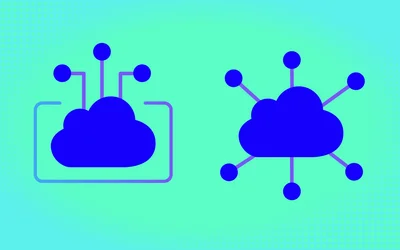
Choosing between computing on the cloud or on the edge is a decision that can impact things like your device’s cost or efficiency. Here’s how you can ensure you make the right decision early on in your product development roadmap.
5 minutes read

Discover the intricacies of cybersecurity operations as we delve into the intricacies of Red Team vs. Blue Team, a comprehensive understanding of their roles, methodologies, and practical applications in the field of cybersecurity.

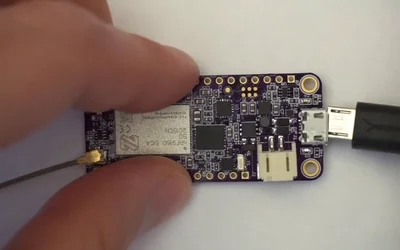
A guide to resources related to the Nordic Semiconductor nRF9160 Development Kit and Soracom connectivity to help you launch your Connect For Good Low Power Wireless Sustainability Challenge submission.

Mesh topology is the most used network topology, as all computer networks are connected. Each computer sends signals and relays the data from other computer networks. The dedicated link transmits information from one node to another and connects all the nodes.


Batteries are essential for billions of IoT products worldwide, and demand looks set to grow. The global Li-ion battery market was estimated to be worth over $40 billion in 2020 and is expected to increase to more than ten times this amount by 2030 according to analyst Statista.

4 minutes read


Humans sharing a workspace and collaborating with robots has become a reality that companies and their smart factories just can’t do without, as it allows flexible manufacturing in variable batch sizes with maximum efficiency. In short, successful human-machine interaction is key for future-proof manufacturing.

4 minutes read