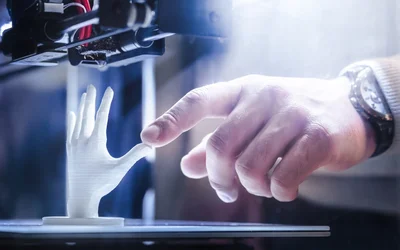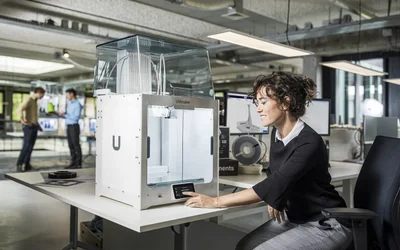

What is 3D printing? This article goes over the basics of 3D printing, otherwise known as additive manufacturing, covering its engineering principles and applications.
What is 3D printer filament made of? This guide examines polymers, additives, and composites, offering practical tips for digital design and hardware engineers.
Learn everything you need about the full adder circuit. From binary addition theory to low-power hardware implementations and modern ASIC/FPGA design flows, this technical article equips digital design engineers, hardware engineers with practical insights and current research trends.
Explore how a transistor works from first principles through practical circuit design. This in depth guide explains BJT and FET operation, switching and amplification modes, design calculations, modern market trends, and FAQs, ideal for digital design engineers, hardware engineers, and students.
Advanced 3D scanning delivers comprehensive, high-accuracy inspection for massive grinding roller shells. It replaces manual measurement with fast, traceable digital analysis, enabling smarter maintenance and reduced operational costs.
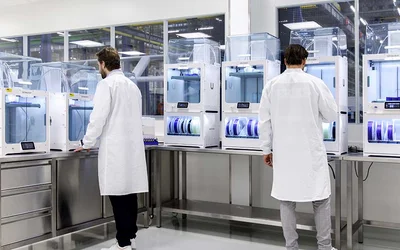
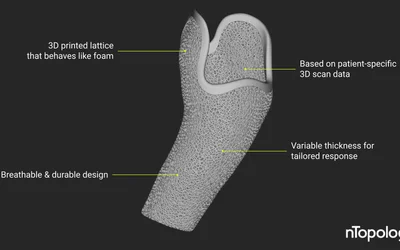
While additive manufacturing enables a totally new era of complex parts, it is still necessary to have a robust toolset that allows an engineer, designer, or product team to fully utilize these new manufacturing capabilities.
With the reusable workflows in nTop Platform and FDM 3D printing, industrial designers are able to rapidly iterate and prototype the design of functional parts.
Small manufacturers play a critical role in keeping the world’s supply chain moving, yet adoption of Industrial IoT solutions by the group is lagging. What can be done?
The fastest flow controller manufacturer in the world doubles production to support skyrocketing COVID-19 ventilator demand for mass flow meters, mass flow controllers, and pressure controllers.
If you were to ask a software developer what the most exciting industry for software will be in the next five years, they might mention retail, or healthcare, entertainment or security, or perhaps Fintech, Edutech, or Agritech.
Over the past 50 years, the manufacturing industry has undergone a complete transformation with the introduction of automation and industrial robotics.
Julio Aleman, a Bioengineering PhD student needed two different microwell array system with individual wells that would support injection moulding of hydrogels and serve as “master moulds”
Pneumatic systems comprise a number of complex and interlinked components, which need comprehensive and careful tuning to run at their optimal performance. Needless to say, optimal performance is not always the norm.
Laser cutting is the process of using a laser beam to vaporize, melt, or otherwise gradually remove material. Computer Numerical Control (CNC) laser cutting commonly uses optics, an assist gas, and a guidance system to direct and focus the laser beam into the workpiece.
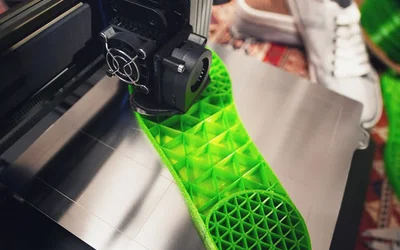
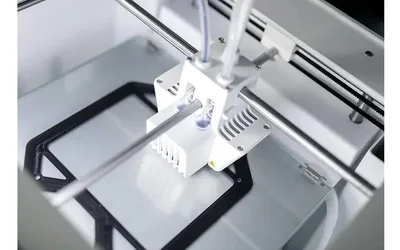
The FDM process creates plastic 3D models by superimposing multiple layers of melted thermoplastic polymer material into a predefined area via a computer controlled printing nozzle.
Whether you’re a 3D printing enthusiast who dreams about printing and sharing designs, or an engineer who’s familiar with mechanical or industrial design looking for new ways to use 3D design skills, these ideas will help you better understand how to get started with artistic design for 3D printing.
Typically, a lithophane is described as thin translucent porcelain that has been etched or carved with an image and is viewed when back lit with a light source.
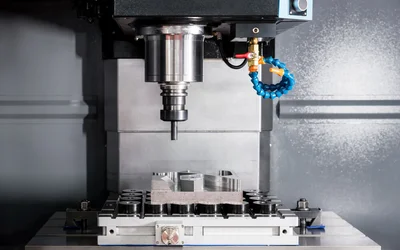
Computer Numerical Control is a manufacturing process in which tools or cutting head paths are pre-programmed with the use of computer software. Before CNC equipment existed, machining and cutting were completed by operating hand wheels, levers, or mechanical cams that followed a fabricated pattern.