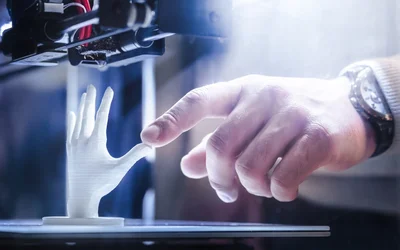


What is 3D printing? This article goes over the basics of 3D printing, otherwise known as additive manufacturing, covering its engineering principles and applications.
What is 3D printer filament made of? This guide examines polymers, additives, and composites, offering practical tips for digital design and hardware engineers.
Learn everything you need about the full adder circuit. From binary addition theory to low-power hardware implementations and modern ASIC/FPGA design flows, this technical article equips digital design engineers, hardware engineers with practical insights and current research trends.
Explore how a transistor works from first principles through practical circuit design. This in depth guide explains BJT and FET operation, switching and amplification modes, design calculations, modern market trends, and FAQs, ideal for digital design engineers, hardware engineers, and students.
Advanced 3D scanning delivers comprehensive, high-accuracy inspection for massive grinding roller shells. It replaces manual measurement with fast, traceable digital analysis, enabling smarter maintenance and reduced operational costs.
Reverse engineering is the process that identifies a physical object’s properties by performing a comprehensive analysis of its structure, functions and operations.
Cody Cochran is the cofounder of Azoth LLC, an Ann Arbor, Michigan-based organization that focuses on combined traditional manufacturing quality with the efficiencies of rapid prototyping. He is also one of 2020’s Ultimaker Innovators.
By rolling out a plan to 3D print in multiple locations within your organization – such as warehouses, factories, or assembly lines – you’ll soon enjoy a wealth of benefits, from increased productivity to cost savings.
By combining cost-effective 3D printing with affordable electronics and wireless technology, new accessibility solutions empower children with limb differences.
Commercially pure copper is a highly desirable material for heat exchangers and electrical components due to its excellent thermal and electrical properties. While these properties are beneficial for the application, they also turn the process of using copper in AM into a challenge.
Production technology is moving quickly. This means that you can now customise and mass customise products more cost effectively than ever before. In this Insight video we look at how you can use this new manufacturing technology without breaking the bank.
For a startup manufacturer getting that first product right is crucial for your reputation and future sales. First impressions really do count when you are building up your company and brand equity.
For Carl Zeiss Optical Components, a subsidiary of Carl Zeiss Industrielle Messtechnik, precision matters – sometimes down to the hundredth of a millimeter. The company manufactures microscopes, multi-sensoric machines, and optical sensors for industrial measurement and quality assurance purposes
The customer needed to automate the process of picking heavy metal spherical objects from a container. These metal balls are semi-finished products for ball bearings. The task is currently performed manually.
Check how the Bin Picking Studio solved this problem
Automation in the postal service will play an important role in the upcoming years. Reaching challenging cycle times and pick rates is something where we continuously strive to push the boundaries further. The solution has an amazing 1.8 second cycle time allowing it to pick up to 2,000 objects/hour