Featuredcase study
Flying robots have emerged as an innovative solution for conducting ship inspections.
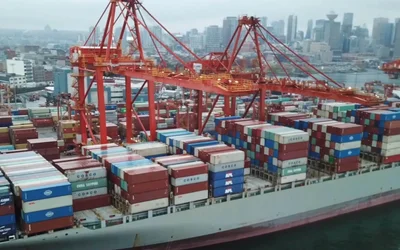
Flying robots have emerged as an innovative solution for conducting ship inspections.
Flying robots have emerged as an innovative solution for conducting ship inspections.
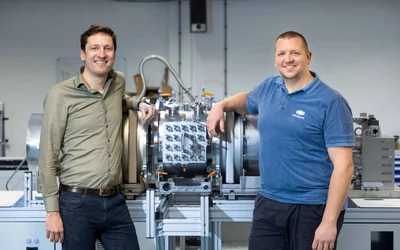
The prototype machine that Carbyon and Demcon have built together is essentially nothing more than a large-scale vacuum cleaner, wheels including. Eventually, there will be entire fields of these machines worldwide, running on green energy and continuously extracting CO2 from the air.
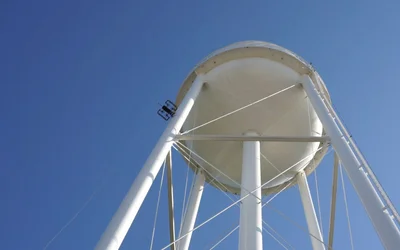
Using an intelligent flying robot for NDT inspections of water tanks helps to access hard-to-reach areas
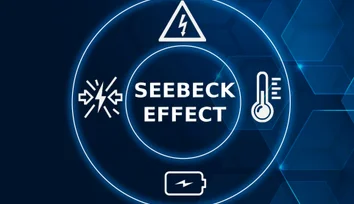
The Seebeck effect converts a temperature difference across a conductor or junction of two materials into a voltage. This article reviews the physics, Seebeck coefficients, thermoelectric materials, figure of merit, thermocouples, and generator design.

Semiconductors
Nordic Semiconductor is a fabless semiconductor company specializing in wireless technology that powers the IoT.
181 Posts

Robotics & Automation
READY Robotics is a robotics software company that vastly simplifies robot ...
24 Posts
Automation Machinery Manufacturing
DEEPRobotics Technology Co., Ltd; leading the quadruped robots industrial a...
6 Posts
ZenCell by PriscoZen leverages the Arduino® UNO™ Q dual architecture to replace two boards with one.
Perceived Barriers and Strategic Solutions for Implementation
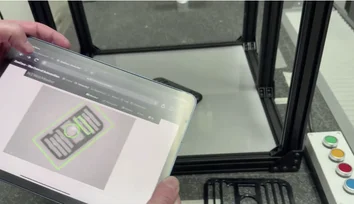
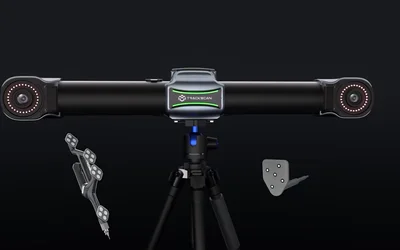
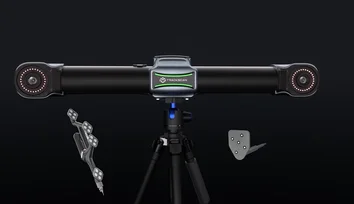
SCANOLOGY's 6D Pose Tracking System transforms industrial robots into high-precision experts, enabling rapid calibration, real-time pose compensation, and accurate positioning—boosting efficiency, product quality, and reliability in advanced manufacturing environments.
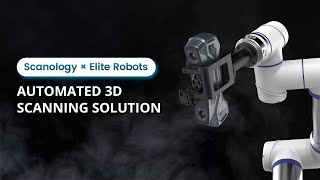
Scanology AM-DESK and Elite Robots deliver a plug-and-play automated 3D inspection solution, combining precision, flexibility, and speed to transform quality control for modern manufacturing and empower truly smart, data-driven factories.
The Seebeck effect converts a temperature difference across a conductor or junction of two materials into a voltage. This article reviews the physics, Seebeck coefficients, thermoelectric materials, figure of merit, thermocouples, and generator design.
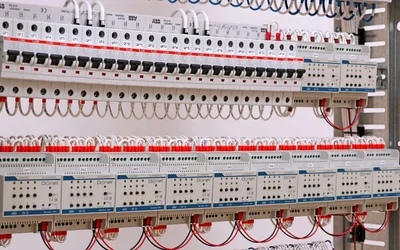
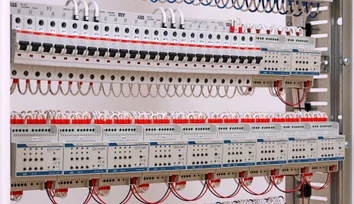
Today's world is dominated by technology that uses either digital or analogue I/O modules to convert physical signals into digital format and vice versa. I/O modules, or input/output modules, are a mechanism by which information is communicated in electronic systems.
IAQ monitoring includes tracking PM, VOCs, NOx, CO₂, RH/T, and more. Sensirion's SEN6x, available through Mouser Electronics, integrates these sensing needs into a single module, reducing system complexity while enabling scalable, compliance-ready solutions.
Learn how compact methane sensors use TDLAS, 1.6 µm detection, and InGaAs photodiodes to deliver stable, repeatable sub-ppm CH₄ measurements in industrial environments.
Flying robots have emerged as an innovative solution for conducting ship inspections.

3 minutes read
The prototype machine that Carbyon and Demcon have built together is essentially nothing more than a large-scale vacuum cleaner, wheels including. Eventually, there will be entire fields of these machines worldwide, running on green energy and continuously extracting CO2 from the air.

6 minutes read
Using an intelligent flying robot for NDT inspections of water tanks helps to access hard-to-reach areas
2 minutes read
Article #7 of Transforming Industrial Manufacturing with Industry 4.0 Series: Customer needs are driving innovation in industrial automation, with manufacturing environments trending towards new characteristics such as being agile, accessible, data-driven, collaborative, and resilient.
Article #4 of Transforming Industrial Manufacturing with Industry 4.0 Series: Industrial robots combined with advanced analytics and interactions play a key role in building a complete Industry 4.0 ecosystem that achieves great results.
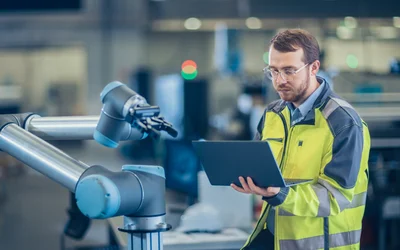
Discover How Industrial Robots in Various Shapes, Sizes, and Designs are Tackling Complex Challenges, Enhancing Efficiency, and Revolutionizing the Manufacturing Industry for a Safer, Smarter Future
In this episode, we talk about how robotics and artificial intelligence are being used in the sheet metal forming industry to improve safety, efficiency and precision.
Intelligent flying robots can perform Non-Destructive Testing inspections on various assets across various industries, including tanks, towers, pipes, flare stacks, ships, and more.
Find out the drivers and challenges that are facing the industrial robotics industry

3 minutes read
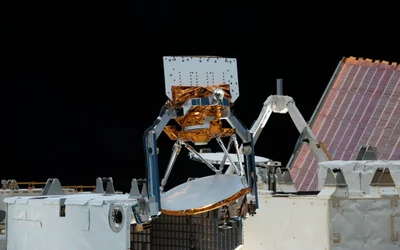
In this episode, we talk about a new satellite system from NASA that leverages technologies used in other missions to accomplish the same performance that has been delivered by heritage satellites but smaller and less complex while also being a fraction of the cost.
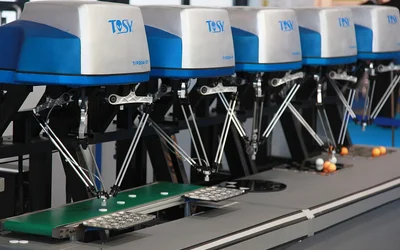
Delta arms are high-performance robotic arms that use parallel linkages and jointed construction to provide fast, precise, and flexible movement, making them ideal for various industrial and manufacturing applications.
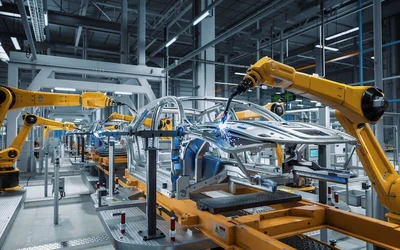
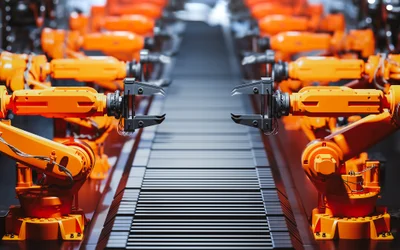
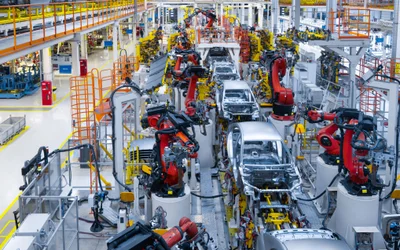
Explore how assembly line automation integrates robotics, control systems, and smart technologies to boost efficiency, quality, and flexibility in manufacturing!
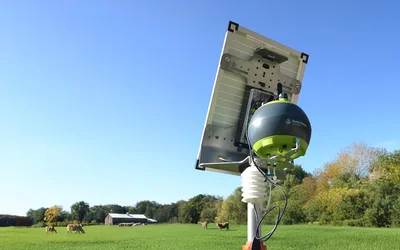
Here's what you should consider when designing a successful remote sensor.

6 minutes read
In places across the U.S., tree cover is shrinking – forests are burned by wildfires on the West Coast and drowned by rising sea levels along the East. From the ground, it’s hard to assess the scale of the losses and the effects disappearing trees have on atmospheric carbon dioxide levels and climate change.
Intelligent Flying Robots have revolutionized NDT inspections by conducting accurate ultrasonic thickness (UT) and visual inspections in challenging conditions.