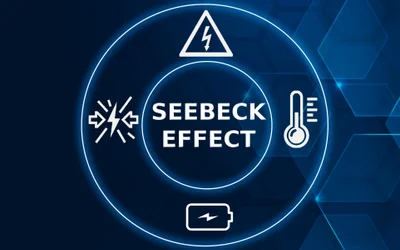
The Seebeck effect converts a temperature difference across a conductor or junction of two materials into a voltage. This article reviews the physics, Seebeck coefficients, thermoelectric materials, figure of merit, thermocouples, and generator design.
Be the first to know.
Get our environmental monitoring weekly email digest.
Tagged with
environmental monitoring
Latest Posts


Today's world is dominated by technology that uses either digital or analogue I/O modules to convert physical signals into digital format and vice versa. I/O modules, or input/output modules, are a mechanism by which information is communicated in electronic systems.



IAQ monitoring includes tracking PM, VOCs, NOx, CO₂, RH/T, and more. Sensirion's SEN6x, available through Mouser Electronics, integrates these sensing needs into a single module, reducing system complexity while enabling scalable, compliance-ready solutions.

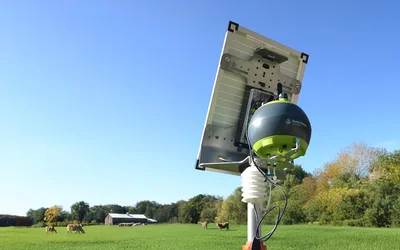
Learn how compact methane sensors use TDLAS, 1.6 µm detection, and InGaAs photodiodes to deliver stable, repeatable sub-ppm CH₄ measurements in industrial environments.



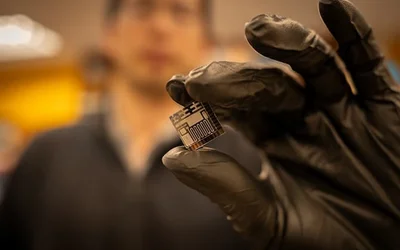
The integrated design achieves accurate micro gas chromatography and can help reduce the cost of monitoring chemical synthesis, natural gas pipelines or at-home air quality.

4 minutes read


Enable scalable, long-range, low-power IIoT connectivity with LoRa technology — built for industrial environments where reliability, remote monitoring, and multi-year device lifecycles are essential.

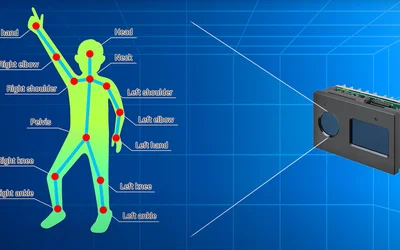
Aratas's B5L 3D Time-of-Flight sensor and OKAO Vision AI-powered Human Pose Estimation software enable privacy-conscious, real-time fall detection and posture monitoring in healthcare settings, ensuring reliable, lighting-independent, and camera-free human-aware automation.


Enhance environmental control with the customizable RHT1 module by ScioSense, delivering precise, reliable humidity and temperature sensing for smarter, more efficient electronic systems.

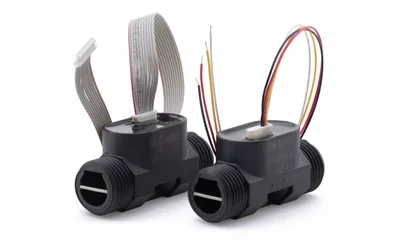
This article discusses how ultrasonic flow conversion works, its advantages over traditional sensing methods, and how ScioSense's UFM-02 module brings these benefits into practical, real-world applications.

Come with us on a journey of integration – from prototype to production – in the narrative framework of fictional company Precision Parts Inc.

4 minutes read


Small devices can loft into mesosphere for climate sensing

4 minutes read

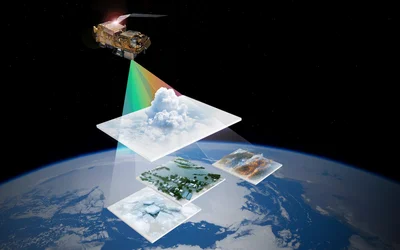
METimage will deliver highly accurate global measurements of clouds, water vapour and aerosols, land- and sea-surface temperatures, ice cover, vegetation and wildfires.



When the NASA-ISRO SAR satellite launches into orbit on July 30, it will ping nearly all of the planet's land and ice surfaces with a form of imaging called synthetic aperture radar twice every 12 days.

4 minutes read


Engineers have harnessed quantum physics to detect the presence of biomolecules without the need for an external light source, overcoming a significant obstacle to the use of optical biosensors in healthcare and environmental monitoring settings.

3 minutes read