Featuredcase study
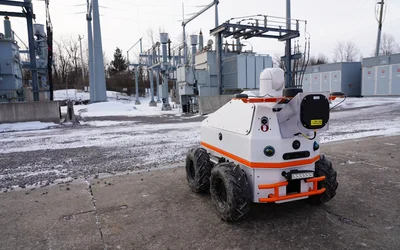
SKYRON marked history as the pioneer in contact-based NDT inspection on a massive offshore platform, setting a new standard for safety and efficiency.

SKYRON marked history as the pioneer in contact-based NDT inspection on a massive offshore platform, setting a new standard for safety and efficiency.
SKYRON marked history as the pioneer in contact-based NDT inspection on a massive offshore platform, setting a new standard for safety and efficiency.
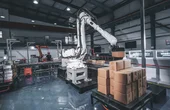
In the past two decades, the impetus of Industry 4.0 has pushed developments ahead at a much faster pace. This doesn’t mean that it’s all plain sailing from here on in – and many challenges in industrial robotics still remain.
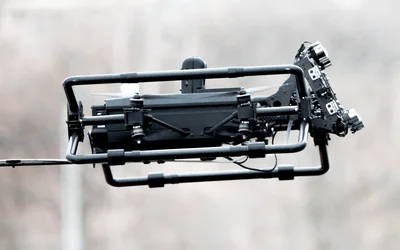
The Rotary Arm has the ability to attach to different surfaces shapes, vertical, horizontal, angular, and even curved surfaces.
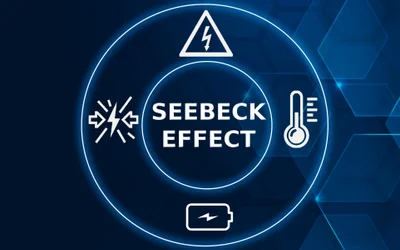
The Seebeck effect converts a temperature difference across a conductor or junction of two materials into a voltage. This article reviews the physics, Seebeck coefficients, thermoelectric materials, figure of merit, thermocouples, and generator design.
Semiconductors
Nordic Semiconductor is a fabless semiconductor company specializing in wireless technology that powers the IoT.
181 Posts

Robotics & Automation
READY Robotics is a robotics software company that vastly simplifies robot ...
24 Posts
Automation Machinery Manufacturing
DEEPRobotics Technology Co., Ltd; leading the quadruped robots industrial a...
6 Posts
ZenCell by PriscoZen leverages the Arduino® UNO™ Q dual architecture to replace two boards with one.
Perceived Barriers and Strategic Solutions for Implementation
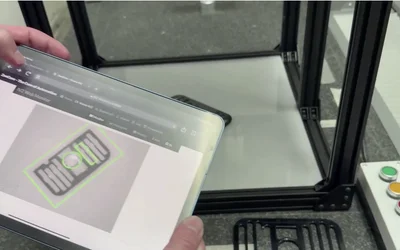
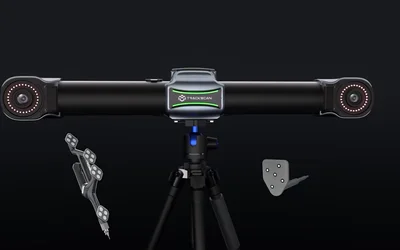
SCANOLOGY's 6D Pose Tracking System transforms industrial robots into high-precision experts, enabling rapid calibration, real-time pose compensation, and accurate positioning—boosting efficiency, product quality, and reliability in advanced manufacturing environments.
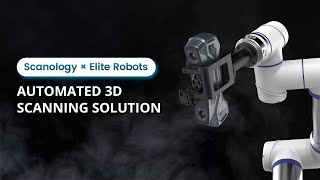
Scanology AM-DESK and Elite Robots deliver a plug-and-play automated 3D inspection solution, combining precision, flexibility, and speed to transform quality control for modern manufacturing and empower truly smart, data-driven factories.
The Seebeck effect converts a temperature difference across a conductor or junction of two materials into a voltage. This article reviews the physics, Seebeck coefficients, thermoelectric materials, figure of merit, thermocouples, and generator design.
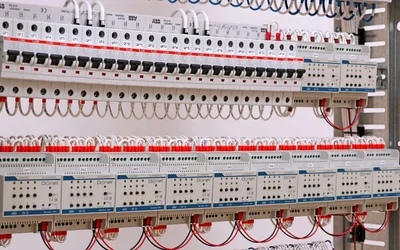
Today's world is dominated by technology that uses either digital or analogue I/O modules to convert physical signals into digital format and vice versa. I/O modules, or input/output modules, are a mechanism by which information is communicated in electronic systems.
IAQ monitoring includes tracking PM, VOCs, NOx, CO₂, RH/T, and more. Sensirion's SEN6x, available through Mouser Electronics, integrates these sensing needs into a single module, reducing system complexity while enabling scalable, compliance-ready solutions.
Learn how compact methane sensors use TDLAS, 1.6 µm detection, and InGaAs photodiodes to deliver stable, repeatable sub-ppm CH₄ measurements in industrial environments.
SKYRON marked history as the pioneer in contact-based NDT inspection on a massive offshore platform, setting a new standard for safety and efficiency.

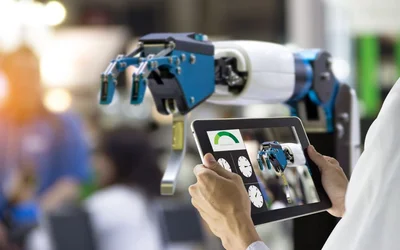
In the past two decades, the impetus of Industry 4.0 has pushed developments ahead at a much faster pace. This doesn’t mean that it’s all plain sailing from here on in – and many challenges in industrial robotics still remain.
The Rotary Arm has the ability to attach to different surfaces shapes, vertical, horizontal, angular, and even curved surfaces.
2 minutes read
Discover How SKYRON Transforms NDT Practices for Safety and Efficiency Boost
Sensors are ubiquitous in our modern world, playing pivotal roles in numerous sectors. This article delves into their fundamental principles, diverse types, and their significant impact across industries.
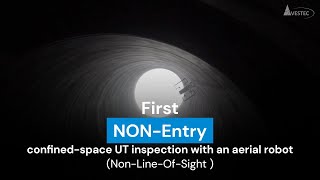
First NON-entry confines space Ultrasonic Thickness inspection with an aerial robot.
3 minutes read
This comprehensive article dives deep into the world of robotics, exploring the history, types, engineering components, applications, and future trends of robots, offering readers an in-depth understanding of how these remarkable machines work and shape our lives.
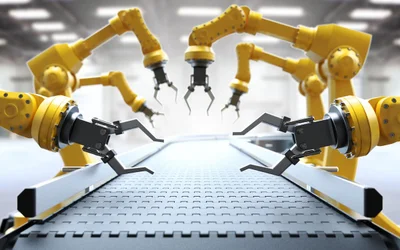
Delineating cobots and industrial robots, this analysis drives deep into their respective roles and divergent characteristics that make each a vital cog in the machinery of Industry 4.0.
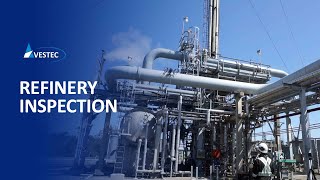
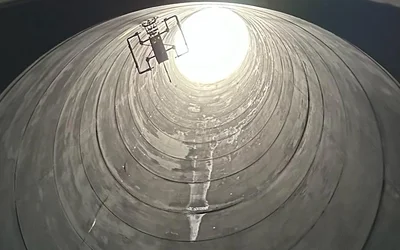
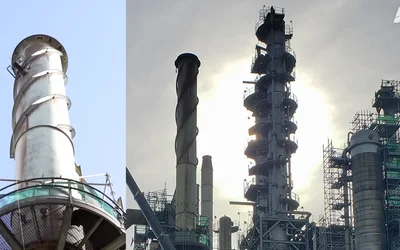
The inspection of stack interiors presents challenges due to limited access and poor visibility. Avestec overcame these obstacles by employing the remote capabilities of their aerial robot.
This guide delves into the basics and components of PID control, implementation, application examples, impacts, challenges, and solutions aiming to provide readers with a thorough understanding of this integral concept.
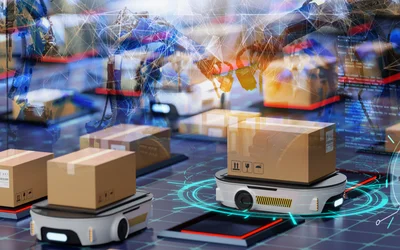
Automated Guided Vehicles (AGV) Have Evolved into Smart Autonomous Mobile Robots (AMR) and Are Improving the Efficiency of Operations in Factories

5 minutes read
Intelligent flying robots emerged as an alternative to overcome the challenges of stacks inspections
3 minutes read
HMI is a dashboard or user interface that play as the communication bridge between humans and systems, machines, or devices. Read on to know the history, characteristics, advantages, and applications of HMI in different industries.
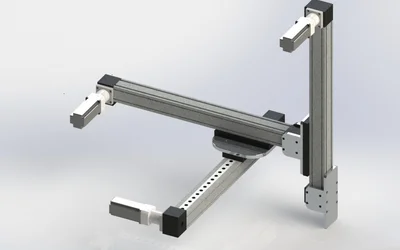
Gantry systems are industrial robots with a mechanical framework that uses a movable trolley over a linear bridge. They have become an indispensable part of various industries due to their unmatched precision, speed, and flexibility.
A new machine-learning model makes more accurate predictions about ocean currents, which could help with tracking plastic pollution and oil spills, and aid in search and rescue.