Featured
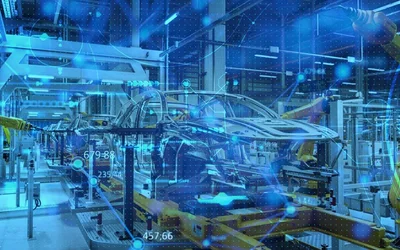
This article explores the role of robotics and Artificial Intelligence (AI) in sheet metal forming. The utilization of AI and automation has accelerated and enhanced the speed and accuracy of centuries-old manufacturing processes.
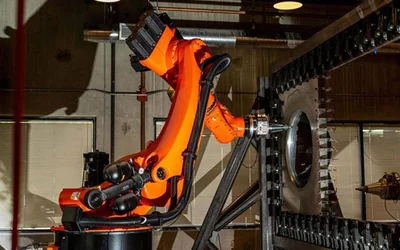
This article explores the role of robotics and Artificial Intelligence (AI) in sheet metal forming. The utilization of AI and automation has accelerated and enhanced the speed and accuracy of centuries-old manufacturing processes.
This article explores the role of robotics and Artificial Intelligence (AI) in sheet metal forming. The utilization of AI and automation has accelerated and enhanced the speed and accuracy of centuries-old manufacturing processes.
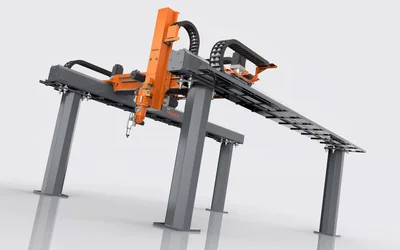
Robot gantries are powerful tools in modern manufacturing and automation, offering increased precision, flexibility, and efficiency in a range of applications, as explored in this comprehensive article.
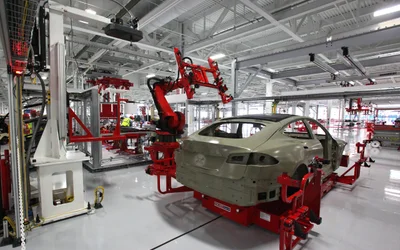
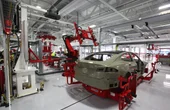
Robotic assembly lines have revolutionized production processes, enabling manufacturers to achieve high levels of efficiency, productivity, and quality.
The Seebeck effect converts a temperature difference across a conductor or junction of two materials into a voltage. This article reviews the physics, Seebeck coefficients, thermoelectric materials, figure of merit, thermocouples, and generator design.

Semiconductors
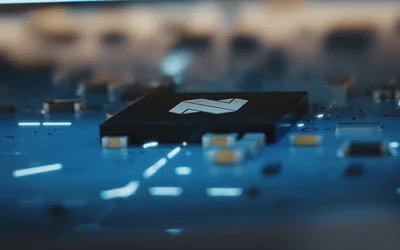
Nordic Semiconductor is a fabless semiconductor company specializing in wireless technology that powers the IoT.
181 Posts

Robotics & Automation
READY Robotics is a robotics software company that vastly simplifies robot ...
24 Posts
Automation Machinery Manufacturing
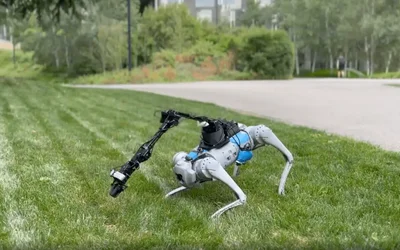
DEEPRobotics Technology Co., Ltd; leading the quadruped robots industrial a...
6 Posts
ZenCell by PriscoZen leverages the Arduino® UNO™ Q dual architecture to replace two boards with one.
Perceived Barriers and Strategic Solutions for Implementation
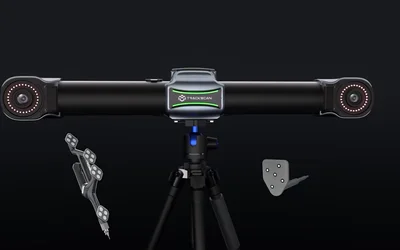
SCANOLOGY's 6D Pose Tracking System transforms industrial robots into high-precision experts, enabling rapid calibration, real-time pose compensation, and accurate positioning—boosting efficiency, product quality, and reliability in advanced manufacturing environments.
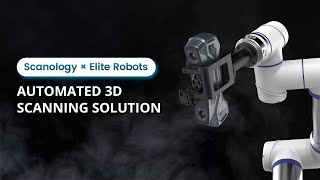
Scanology AM-DESK and Elite Robots deliver a plug-and-play automated 3D inspection solution, combining precision, flexibility, and speed to transform quality control for modern manufacturing and empower truly smart, data-driven factories.
The Seebeck effect converts a temperature difference across a conductor or junction of two materials into a voltage. This article reviews the physics, Seebeck coefficients, thermoelectric materials, figure of merit, thermocouples, and generator design.
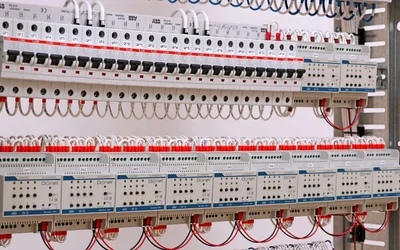
Today's world is dominated by technology that uses either digital or analogue I/O modules to convert physical signals into digital format and vice versa. I/O modules, or input/output modules, are a mechanism by which information is communicated in electronic systems.
IAQ monitoring includes tracking PM, VOCs, NOx, CO₂, RH/T, and more. Sensirion's SEN6x, available through Mouser Electronics, integrates these sensing needs into a single module, reducing system complexity while enabling scalable, compliance-ready solutions.
Learn how compact methane sensors use TDLAS, 1.6 µm detection, and InGaAs photodiodes to deliver stable, repeatable sub-ppm CH₄ measurements in industrial environments.
This article explores the role of robotics and Artificial Intelligence (AI) in sheet metal forming. The utilization of AI and automation has accelerated and enhanced the speed and accuracy of centuries-old manufacturing processes.
Robot gantries are powerful tools in modern manufacturing and automation, offering increased precision, flexibility, and efficiency in a range of applications, as explored in this comprehensive article.
Robotic assembly lines have revolutionized production processes, enabling manufacturers to achieve high levels of efficiency, productivity, and quality.
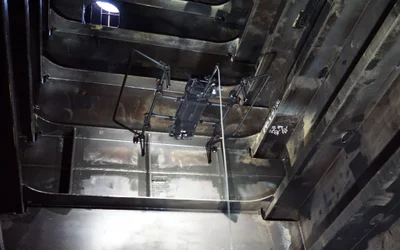
A large metal vessel of a Floating Storage and Offloading (FSO) unit requires an extensive inspection from every angle, but cramped spaces and high temperatures make the inspection challenging. This inspection was done with a flying robot to avoid putting people in the small and hot areas.

In recent years, the use of devices and systems that utilize data to function in an intelligent manner has become commonplace. Machines that make high-level decisions comparable to humans and those that surpass humans in performing work depending on how they are applied have also appeared.

6 minutes read
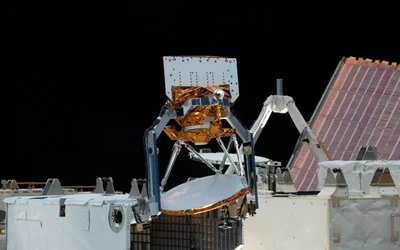
Known as COWVR and TEMPEST, the duo is demonstrating that smaller, less expensive science instruments can play an important role in weather forecasting.
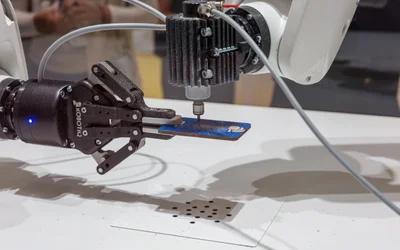
End effectors are critical components of robotic systems, enabling robots to interact with and manipulate their environment in various ways.
Using an Intelligent Flying Robot, inspectors can safely perform measurements and inspections without exposure to potential hazards.
Robots have helped us solve some of the most challenging problems in the industries. They come in all shapes and sizes and take care of many repetitive and hazardous tasks. Based on their design, they can be classified into cartesian, articulated, cylindrical, delta, polar, SCARA, and cobots.
The world's first high-temperature aerial platform for Close and General Visual Inspection performs a job at 65°C on an offshore platform.
Artificial intelligence provides new evidence our planet will cross the global warming threshold of 1.5 degrees Celsius within 10 to 15 years. Even with low emissions, we could see 2 C of warming. But a future with less warming remains within reach.

4 minutes read
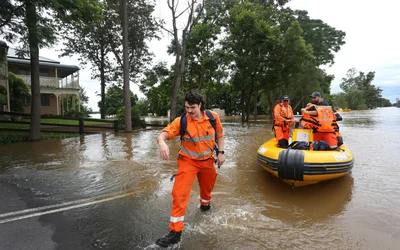
Wildfires have always been a part of human history, but there has been a significant increase in their severity and frequency over the past few decades. And this trend is only set to get worse, with UN researchers noting that wildfire events will become 50 percent more common by the end of the century.

4 minutes read
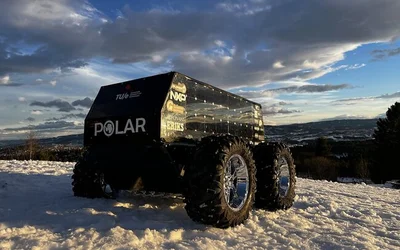
On January 20, Team POLAR showcases its first vehicle for independent climate research in icy, inhospitable regions such as the North and South Poles.
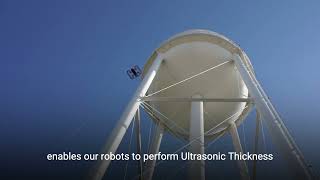
Intelligent flying robots are making their way into the Non-Destructive Testing industry. These robots are gaining attention in providing the industry with a safer and superior alternative to traditional methods.
Could this be the time we say goodbye to robotic awkwardness and hello to seamless motion? This article highlights the groundbreaking concept of whole-body control, a coordinated robotic motion technique that resembles natural movement. Imagine a robot smoothly navigating its environment, performing tasks with grace and precision. This innovative approach allows for improved efficiency and greater versatility in real-world settings.