
Be the first to know.
Get our Electronics  weekly email digest.

Category

Electronics

ORGANIZATIONS.

SHAPING THE INDUSTRY.

Mouser Electronics

Electronics

Mouser Electronics is a worldwide leading authorized distributor of semiconductors and electronic components.

219 Posts

MacroFab

EMS manufacturing

A better way to build electronics through a redefined experience, innovativ...

79 Posts

TechBlick

Electronics

TechBlick is a year round platform for onsite and online conferences, class...

65 Posts

Movella

Appliances, Electrical, and Electronics Manufacturing

Movella | Xsens digitizes movement.

47 Posts

Murata Electronics

Electrical and Electronics Manufacturing

Murata is a global solution provider and the market leader in the design, m...

37 Posts

View more

TAGGED WITH microchips

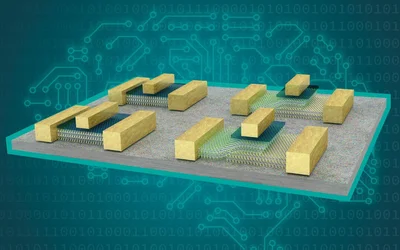
Focused laser-like light that covers a wide range of frequencies is highly desirable for many scientific studies and for many applications, for instance quality control of manufacturing semiconductor electronic chips.

Uniting the Light Spectrum on a Chip

Latest Posts

Chips and wafers are the integral components of a semiconductor device. Find out the differences between chip wafers and chips and understand their role in semiconductor manufacturing.

Chips and Wafers: What's the Difference?

Solder flux has a large impact on final product quality. This article reviews how to use flux during soldering and how to decide on the right technology options for your project.

A Practical Guide to Solder Flux

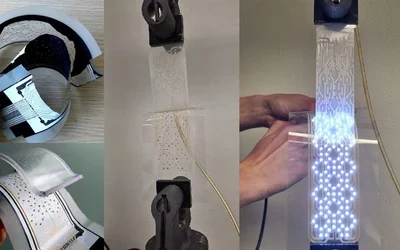
Sometimes manufacturers would like to install heating in objects that are difficult to heat. The armrest of your car. Your sporty winter coat. Bags for food delivery. Sleeping bags. etc This has been difficult to achieve until now. Read more about printed heater technology

The advantages and functioning of PTC heaters

In the Providentia++ project, researchers at the Technical University of Munich (TUM) have worked with industry partners to develop a technology to complement the vehicle perspective based on onboard sensor input with a bird’s-eye view of traffic conditions. This improves road safety – also for autonomous driving.

Bird's-eye view improves safety of autonomous driving

Wearable electronic textiles are a demanding environment for reliable interconnects – the ability to function with movement and survive multiple cleanings and reuse. Good adhesion is particularly challenging in these wearable and conformable electronics applications. While solders provide the most conductive electrical connection, they are rigid and require not only the addition of an underfill adhesive but usually a post bond encapsulation. This Anisotropic Conductive Epoxy, provides reliable interconnections between electronic components and circuitry on textiles with excellent structural bonding, without encapsulation, even under repeated stretching and washings. This technology has been shown as a scalable assembly process for e-Textile manufacturing in an SMT line.

Reliable, Scalable, Anisotropic Interconnect Solution for Wearable Electronics

Wafer thinning is a part of the semiconductor manufacturing process. It is essentially grinding off the backside of the wafers to control their thickness and is useful for the production of ultra-thin wafers. These flattened wafers are used to effect stacked and high-density packaging in compact or microelectronic devices. This article discusses the meaning of wafer thinning, along with its various techniques and significance.

Wafer Thinning: Investigating an essential part of semiconductor fabrication

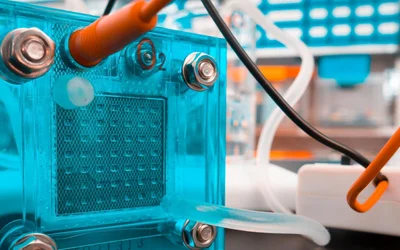
This article describes the TAeTTOOz printable battery technology developed by Evonik and acquired by InnovationLab for upscaling and mass production. In this article, you can learn about the operating principles, the key working characteristics, the material set, production techniques, and emerging applications of this technology

How rechargable disposable thin printed batteries can be produced and used to reliability power IoT products?

The progress of screen printing towards fine line printing has been incredible going from 100 µm features before 2010 to 70 µm to 2015 to 40 µm in 2018 and now pushing - in development- towards 20 µm and less. In parallel, the wet thickness of the printed line have gone down from 12um or so in 2018 to now just 4um.