Featured
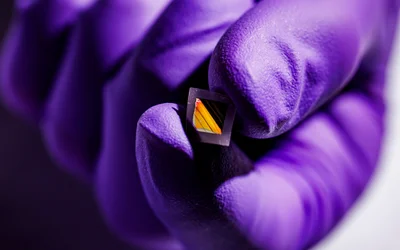
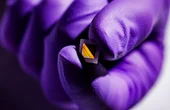
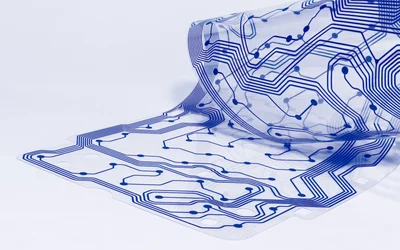
MIT engineers developed ultrathin electronic films that sense heat and other signals, and could reduce the bulk of conventional goggles and scopes.

This guide is written for engineers and technical teams building connected devices who need clear, field-ready guidance without getting lost in standards documentation.
PCB Trace Width Calculator
MIT engineers developed ultrathin electronic films that sense heat and other signals, and could reduce the bulk of conventional goggles and scopes.
Explore how TDKs Direct Retinal Projection DRP technology offers a breakthrough, enabling compact, energy-efficient AR glasses designed for all-day wear.
With help from recent gifts, the Stanford Wearable Electronics Initiative eWEAR-X is supercharging its efforts to transform researchers inspiration into reality by augmenting the Ideation and Prototyping Lab and providing seed funding for members of the university community.
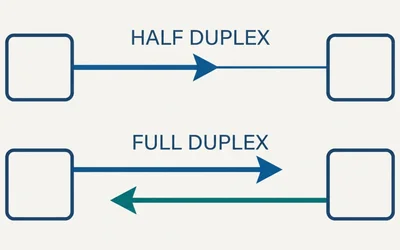
Half-duplex links take turns, while full-duplex links talk in both directions at once. This guide explains how each mode is built on real hardware, from Ethernet and RS-485 to Wi-Fi and 5G, what each costs you in throughput and latency, and how to choose between them.
14 minutes read.
15 minutes read.
17 minutes read.
26 minutes read.
24 minutes read.

Electronics
Mouser Electronics is a worldwide leading authorized distributor of semiconductors and electronic components.
219 Posts
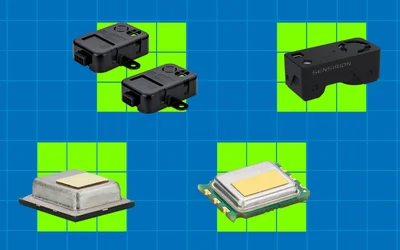
Discover how SGD4x, SFA40, STCC4, and SEN6x sensors by Sensirion help engineers measure refrigerants, formaldehyde, CO₂, and multiple air quality parameters in compact, low-power designs.
Exploring the shift to additive digital printing in modern electronics fabrication.
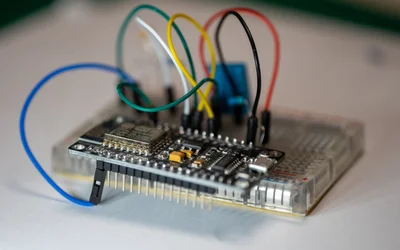
This article explains the ESP8266 pinout, covering GPIO mapping, boot-strapping pins, safe-to-use pins, flash connections, ADC limits, deep-sleep functions, and NodeMCU and D1 mini pin labels.
Learn how a Hall Effect Current Sensor works, including principles, topologies, specifications, comparisons and engineering applications.
Controlled impedance is the control of PCB trace impedance within specified tolerances. This article covers microstrip and stripline designs, IPC-2141A formulas, stackup selection, impedance tolerances, routing practices, and TDR testing for signal integrity.
Agent part of Cadence's ChipStack software generates Verilog RTL through C++ and high-level synthesis
One year after unveiling a first-of-its-kind 'microwave brain' microchip capable of computing on ultrafast data and wireless signals, researchers from the Cornell Duffield College of Engineering have shown how the chip can encode information into its own language.
Ultra-efficient chip design enables extremely strong cryptography algorithms to run on energy-constrained edge devices.
MIT engineers developed ultrathin electronic films that sense heat and other signals, and could reduce the bulk of conventional goggles and scopes.
Explore how TDKs Direct Retinal Projection DRP technology offers a breakthrough, enabling compact, energy-efficient AR glasses designed for all-day wear.
With help from recent gifts, the Stanford Wearable Electronics Initiative eWEAR-X is supercharging its efforts to transform researchers inspiration into reality by augmenting the Ideation and Prototyping Lab and providing seed funding for members of the university community.

4 minutes read
In this episode, we explore how organ-on-a-chip technology is advancing our understanding of cancer behavior.

10 minutes read
Learn how to calculate impedance in AC circuits – from basic RLC components to complex transmission lines and PCB traces. This guide covers the theory, formulas, methods, and tools needed to determine impedance accurately and ensure proper impedance matching in their designs.
Surface Mount Technology PCB assembly is a revolution in electronics design, enabling smaller and more reliable circuits. This guide explores the basics of SMT PCB assembly, how it works, and industry standards. This article is for electronics designers to help understand critical SMT design aspects.
This article is a detailed guide on Vcc vs Vdd power rail naming conventions in analog and digital circuits (CMOS vs bipolar), with practical tips for schematics, PCB layout, and IC selection!
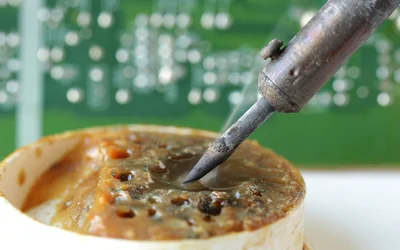
Is soldering paste the same as flux? This technical article clarifies the differences for electronics engineers, covering their functionalities and practical implementations in both manual soldering (repairs, prototyping) and automated soldering (SMT reflow assembly)
Has your electric motor failed? Ensuring that your motor is operational is critical to businesses. All electric motors have a predetermined life-span. Usually, this is around 30,000 to 40,000 hours. This is highly dependant on proper maintenance and care.
Conformal coatings are polymeric films on printed circuit boards (PCBs) that protect against hazards like moisture, pollution, chemicals, and temperature changes. This layer of material is vital for the longevity and reliability of electronic parts.
Lightweight, conformable, and cost-effective, new forms of printed flexible electronics open up a world of possibilities in consumer electronics, healthcare, and beyond.
Printed electronics are used in a wide range of devices, including flexible displays, thin-film transistors, sensors, and photovoltaic cells. In this article, we look at five aspects of printing equipment that can be improved by switching to laser sintering.
Ambiq’s ultra-low-power edge AI technology is pushing health monitoring by enabling always-on, intelligent wearable devices that track vital signs in real time without relying on cloud connectivity.
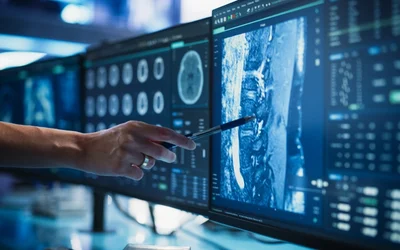
Healthcare is facing a critical workforce shortage, with AI emerging as a key tool to support clinicians by improving diagnostics, treatment planning, and efficiency without replacing human expertise.
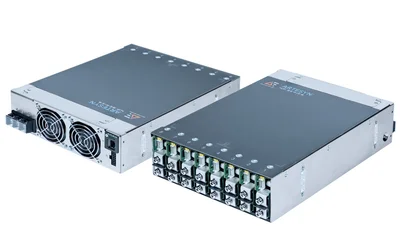
Configurable power supplies combine the flexibility of custom designs with the speed and cost-efficiency of modular systems. By enabling tailored voltage, current, and control features, they help engineers address evolving requirements across industrial and medical applications.