

Protect sensitive electronics by understanding the current limiting resistor, learning how to calculate appropriate values, and applying them in LEDs, transistors, microcontroller inputs and other circuits.
This guide explains how potentiometer pins interact with mechanical rotation, resistive tracks, and load conditions across various circuit configurations. It provides clarity for both low-power electronic designs and high-precision embedded systems.
This technical article explains the theory behind potentiometer schematics. It shows how to implement mechanical and digital potentiometers in practical circuits, tailored for engineers, and students.
Engineering teams can achieve AI-ready design data with five-level maturity model by Keysight. The unified, traceable data accelerates design cycles, boosts IP reuse, and reduces costly re-spins.
Focused laser-like light that covers a wide range of frequencies is highly desirable for many scientific studies and for many applications, for instance quality control of manufacturing semiconductor electronic chips.
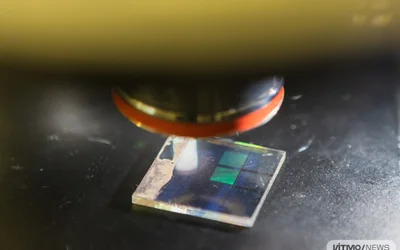
Scientists at ITMO have come up with a new way to protect microelectronics devices from counterfeit. The new technology is based on gold and silicon nanoparticles with unique optical properties that make it possible to create unclonable functions with a record information density.
An international team of scientists was first to demonstrate that halide perovskites can serve as a base for nonlinear on-chip optical components. As an example, they can be used to build ultrafast optical chips and transistors, and, potentially, other integrated optical systems.
The integration of Git for hardware platform AllSpice addresses communication silos between firmware, software, and hardware teams, enhancing synergy and efficiency within tech enterprises.
Combining insights from two ancient art forms, Princeton engineers used a single sheet of material to create 3D structures with adjustable flexibility that could guide sound and light to perform complex tasks.
This technical guide explores the framework of IPC classes, their hierarchical structure, modern implementation methodologies, and the significant role they play in the global intellectual property landscape.
A comprehensive technical analysis comparing High Bandwidth Memory 2 (HBM2) and GDDR6 memory architectures, examining architectural differences, performance metrics, and system integration considerations. Essential reading for system architects working with high-performance computing systems.
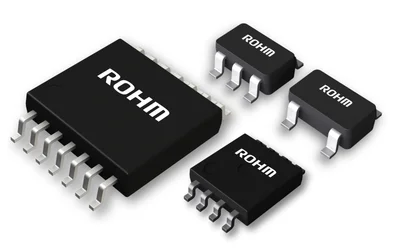
Products with harmful chemicals can hinder your manufacturing operations and harm consumer health. To safeguard, the EU’s RoHS and REACH regulations set the benchmark for protecting human health and the environment. Let’s explore the differences between the two, their scope, and regulations.

In this comprehensive guide, we will explore the design, manufacturing process, advantages, and limitations of single sided PCBs, helping you understand their critical role in modern electronics.
The rapid evolution of ADAS boosts demand for real-time processing and complex power management, requiring high-performance processors and advanced solutions like the 80V LM5137F-Q1 and 6V, 30A TPS62883-Q1 buck converters to ensure optimal operation and meet top safety standards like ASIL D.
In this episode, we explore how traditional Chinese medicine has inspired the development of innovative pulse sensor technology and discover how ancient wisdom and modern tech are coming together to revolutionize health monitoring and diagnostics.
Researchers at Stanford Engineering have developed an ultrathin material that conducts electricity better than copper and could enable more energy-efficient nanoelectronics.
At CES2025, Wevolver caught up with Petter Myhre, Product Marketing Director, Nordic Semiconductor, who shared with us exciting new updates on the newly launched nRF54L Series.
Metamaterials are artificial substances that allow wave phenomena such as light and other electromagnetic waves and sound (sound waves) to be controlled as desired by behaving in ways not found in substances in the natural world. "Meta" is a Greek word that means "transcending."
Researchers from ITMO and Almazov National Medical Research Centre have created a new metal-organic framework-based material that can be used to make fast-acting, durable sensors for detecting water and toxic molecules.
Specialized microchips that manage signals at the cutting edge of wireless technology are astounding works of miniaturization and engineering. They’re also difficult and expensive to design.