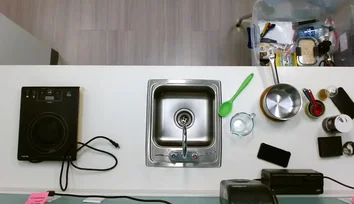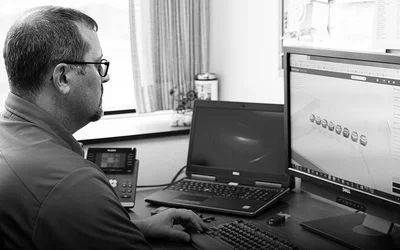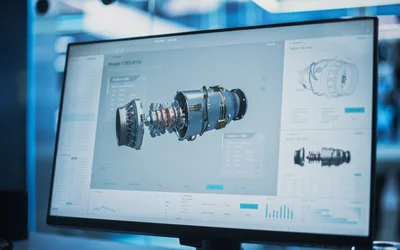

Cornell Tech researchers have developed a mixed-reality (XR) driving simulator system that could lower the cost of testing vehicle systems and interfaces, such as the turn signal and dashboard.
New Airspeeder EXA pilot Fabio Tischler AKA @fabreezy has been training hard in our Speeder flight simulator, in preparation for his first-ever flight test in the field.
Designing efficient data center cooling systems requires a deep understanding of thermodynamics, energy metrics, airflow management, and emerging liquid cooling technologies. This article explains these concepts and provides practical guidance on implementing sustainable cooling solutions
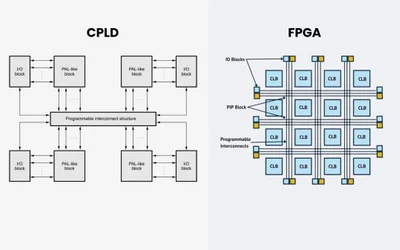
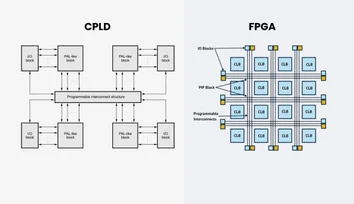
This article presents a comprehensive technical analysis of CPLD vs FPGA, focusing on their architectural distinctions, performance metrics, design flows, and implementation methodologies.
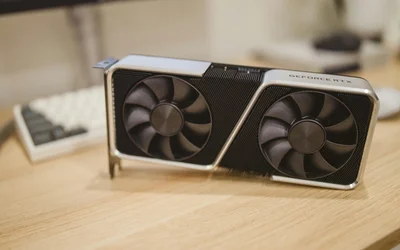
CUDA Cores and Tensor Cores are specialized units within NVIDIA GPUs; the former are designed for a wide range of general GPU tasks, while the latter are specifically optimized to accelerate AI and deep learning through efficient matrix operations.
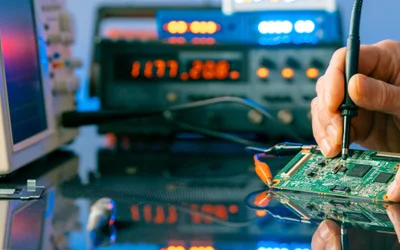
Discover the critical role of in-circuit testing in modern engineering, exploring its foundational principles, technological advancements, and real-world applications.
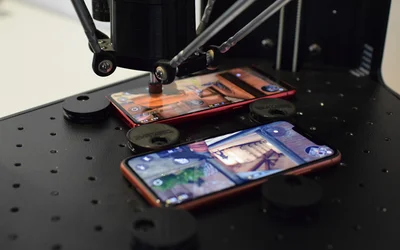
Measured in milliseconds, the response time to a tap on a smartphone’s screen might not be a “show stopping” issue, but a delay between an action and its reaction in the mobile gaming industry can make an important difference.
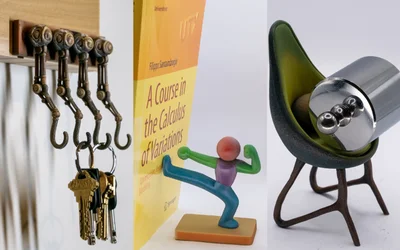
To help generative AI models create durable, real-world accessories and decor, the PhysiOpt system runs physics simulations and makes subtle tweaks to its 3D blueprints.
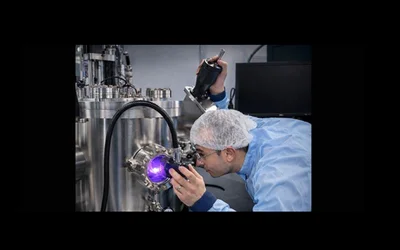
Fabricated as a single chip, the new implant is orders of magnitude faster and smaller than today's state-of-the-art brain-computer interfaces, offering an opportunity for more efficacious treatment of a number of neurological conditions.

In this episode, we explore MIT's new system that turns spoken ideas into physical assemblies by linking speech-to-text, text-to-CAD, CAD-to-assembly, and robotic fabrication - pointing to a future where making hardware could be as easy as prompting an AI with your voice.
Cornell Tech researchers have developed a mixed-reality (XR) driving simulator system that could lower the cost of testing vehicle systems and interfaces, such as the turn signal and dashboard.
New Airspeeder EXA pilot Fabio Tischler AKA @fabreezy has been training hard in our Speeder flight simulator, in preparation for his first-ever flight test in the field.
A team of researchers has reviewed the state-of-the-art in ultra-compact batteries, finding challenges that lie in the path of dust-mote computing — and has proposed a clever approach to packing the power required into a tiny footprint.
Lightweighting isn’t a new concept in engineering, but its relevance and importance are evolving. Find out why lightweighting matters today and how you can maximize its potential benefits by applying the latest developments in engineering design technology.
Hardware and software engineers will be the lifeblood of tomorrow's connected world. Academia is working hard to ensure a steady supply, in part by adapting engineering education to train the next generation of IoT innovators.

Lightweighting means more than just reducing mass. Through smart design techniques, you can maximize product functionality and minimize costs. Here are seven design tips for efficient structural design.
In this article, we look at two tinyML projects for education. We show how Backyard Brains uses low-cost experiment kits to make neuroscience education more accessible. We also introduce our readers to a specialisation offered by Harvard & Google to help students learn tinyML like never before.
In this article, we take a look at two tinyML projects related to healthcare. The first project helps gather Mean Radiant Temperature data outdoors to protect people from extreme heat, and the other one is a solution for affordable, accurate, & rapid detection of pneumonia.